Miso-Glazed Aubergine (Nasu Dengaku)
Silky aubergine under a lacquer of sweet-savoury miso
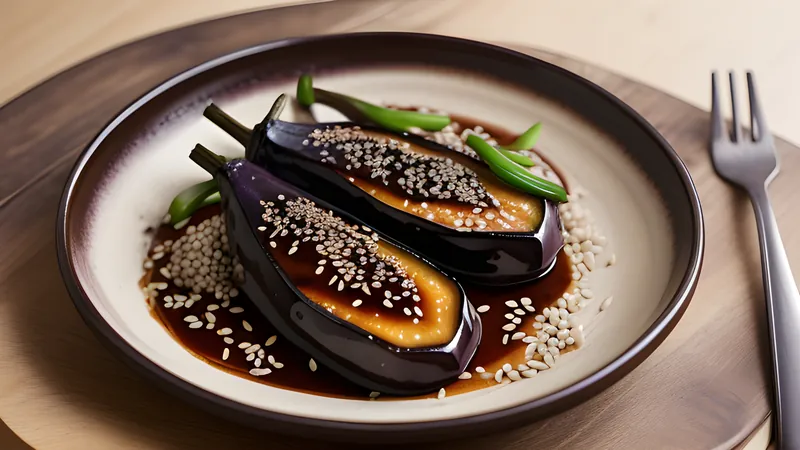
There is a particular kind of magic in nasu dengaku, the Japanese dish of grilled aubergine lacquered with sweet miso. The aubergine, so often dense and squeaky when undercooked, turns meltingly soft and creamy, while the glaze caramelises into a glossy, savoury-sweet crust that smells faintly of toffee and the sea. My one small twist is to char the cut faces hard in a dry pan before the glaze goes on, so the dish carries a layer of smoky bitterness underneath all that sweetness. It takes barely half an hour and feels like something you would be charged a small fortune for in a good izakaya.
Miso-Glazed Aubergine (Nasu Dengaku)
Ingredients
- 2 large aubergines, halved lengthways
- 2 tbsp neutral oil (such as sunflower or rapeseed)
- 3 tbsp white miso paste (shiro miso)
- 1 tbsp mirin
- 1 tbsp sake (or dry sherry)
- 1 tbsp caster sugar
- 1 tsp soy sauce
- 1 tsp toasted sesame oil
- 1 tbsp toasted sesame seeds, to serve
- 2 spring onions, finely sliced, to serve
Method
- Score the cut face of each aubergine half in a deep criss-cross pattern, without cutting through the skin.
- Char the aubergines cut-side down in a dry, hot frying pan for 3 to 4 minutes until blackened in patches.
- Brush the cut faces with oil, turn the heat to medium, cover and steam-fry for 8 to 10 minutes until soft; heat the grill to high.
- Whisk the miso, mirin, sake, sugar, soy sauce and sesame oil into a smooth, thick glaze.
- Arrange the aubergines cut-side up on a lined tray and spoon the glaze over, spreading it into the grooves.
- Grill for 3 to 5 minutes, watching closely, until the glaze bubbles and the edges blister and darken.
- Scatter with toasted sesame seeds and sliced spring onions and serve hot.
3 The Story
Dengaku is one of those Japanese culinary terms that carries a whole little history inside it. It originally referred to dengaku-mai, a rustic field dance performed to pray for a good rice harvest, in which dancers balanced on tall single stilts. Someone, somewhere, looked at a skewer of tofu standing upright over the coals, brushed with miso, and saw the resemblance: a pale block on a single leg, dressed in a robe of brown. The name stuck, and dengaku came to mean any ingredient grilled and glazed with sweetened miso.
Aubergine, or nasu, became the most celebrated canvas for the treatment. It is a vegetable that almost demands fat and bold seasoning to come alive, and the miso glaze obliges on both counts. Traditionally the glaze, called dengaku miso, might be tinted and flavoured in different ways: red miso for a deeper, saltier hit, white miso for the mellow sweetness I have used here. In the Kansai region around Kyoto, white miso reigns, and the dish leans gentle and almost dessert-like in its sweetness.
The clever, modern flourish in many kitchens is to deal with the aubergine’s texture properly, and this is where my hard char comes in. Aubergine flesh is full of tiny air pockets that drink up oil and turn greasy if you are not careful, yet stay rubbery if you rush them. By charring the cut faces in a dry pan first, you drive off moisture and build a smoky, almost bitter backbone before any oil or sugar arrives. The subsequent steam-frying under a lid then collapses the flesh into something closer to custard than vegetable. Only once it is properly soft does the glaze go on, so the miso never has the chance to scorch while the inside is still tough.
A few practical notes will see you right. White miso varies a great deal in saltiness between brands, so taste your glaze before committing and pull back the soy if it leans too savoury. Keep a close eye under the grill, because the sugar in mirin and miso tips from glossy to burnt in seconds, and a blistered edge is wonderful while a blackened one is acrid. If you cannot find sake, dry sherry stands in admirably, and even a splash of dry white wine will do at a pinch.
As for variations, this template is endlessly forgiving. Swap the aubergine for thick rounds of firm tofu, wedges of sweet potato or halved baby turnips, adjusting the cooking time so each is tender before glazing. A pinch of grated yuzu zest or a little finely grated ginger stirred into the miso lifts the whole thing, and a few toasted pine nuts in place of sesame add a buttery crunch. Serve it as a starter with a bowl of plain steamed rice, or alongside grilled fish as part of a larger spread, and you have a dish that punches far above its modest effort.
4 Making It Ahead
One of the quiet joys of nasu dengaku is how well it suits a relaxed dinner. The aubergines can be charred and steamed until soft hours in advance, then left at room temperature on their tray, glaze and all, until you are ready to eat. A final blast under a hot grill brings them back to life in minutes, so the only last-minute work is scattering the sesame and spring onion. The miso glaze itself keeps happily in a jar in the fridge for a week or more, thickening slightly as it sits, which makes it worth doubling the batch.
I have come to think of that jar of glaze as a small kitchen insurance policy. It is wonderful brushed over grilled tenderstem broccoli, spooned onto roasting squash for the last ten minutes in the oven, or thinned with a little hot water into a dressing for soba noodles. Once you have made the dish a couple of times you stop measuring and start cooking by eye and nose, judging the glaze by its gloss and the aubergine by how readily a spoon sinks into it. That is when a recipe stops being instructions and becomes a habit, which is exactly what the best weeknight dishes ought to be.
Related Content