Miso-Butter Roasted Squash
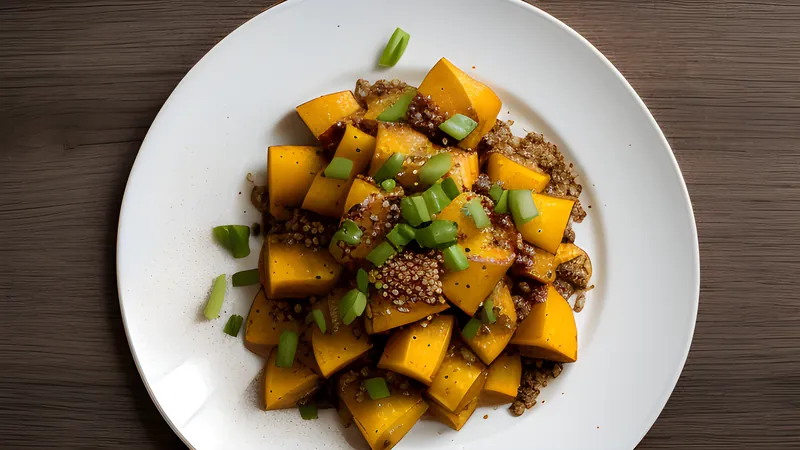
Wedges of squash roasted until their edges caramelise, glazed with a salty-sweet miso butter that turns sticky in the heat
Contents
↓ Jump to recipeRoasted squash has a habit of being merely fine — sweet, soft, a little one-note, the sort of thing that sits on a plate being pleasant and forgettable. The problem is that squash is almost all sugar and water, so left to itself it leans sugary and needs something to push against. Miso is that something. Fermented soybean paste brings deep, savoury salt and a background funk that grabs onto the squash’s sweetness and turns the whole thing complex. Mashed into soft butter with a little mirin and maple, it becomes a glaze that you brush on partway through roasting, where it bubbles and darkens into sticky, umami-loaded edges. This is a five-minute idea that makes an ordinary vegetable taste like you tried much harder than you did.
Miso-Butter Roasted Squash
Ingredients
- 1 medium crown prince or butternut squash (about 1.2kg)
- 50g unsalted butter, softened
- 2 tbsp white or brown miso paste
- 1 tbsp mirin
- 1 tbsp maple syrup or honey
- 1 tbsp neutral oil
- 1 tsp toasted sesame oil
- 2 tsp toasted sesame seeds
- 2 spring onions, finely sliced
- 1/2 tsp chilli flakes (optional)
Method
- Heat the oven to 200C fan (220C conventional, gas mark 7). Halve the squash, scoop out the seeds, and cut into wedges about 3cm thick at the widest point, leaving the skin on.
- Toss the wedges with the neutral oil and a pinch of salt, spread cut-side down on a large tray with space between them, and roast for 25 minutes until the undersides are browning and a knife slides in with a little resistance.
- Meanwhile, mash the softened butter with the miso, mirin, maple syrup and toasted sesame oil into a smooth, spreadable paste.
- Take the tray out, turn each wedge onto its other cut side, and brush the exposed surfaces generously with the miso butter.
- Return to the oven for 12-15 minutes, until the glaze is bubbling, deeply caramelised at the edges and the squash is completely tender.
- Transfer to a warm platter, scrape any sticky glaze from the tray over the top, and scatter with sesame seeds, spring onions and chilli flakes if using.
- Serve hot or warm.
Miso, and why it belongs on a vegetable
Miso is one of the oldest and most important seasonings in Japanese cooking, a paste made by fermenting soybeans with salt and koji, the mould Aspergillus oryzae cultivated on rice or barley. The technique arrived in Japan from China well over a thousand years ago and became a domestic staple, with regional styles ranging from pale, sweet, short-fermented white miso to dark, punchy, long-aged red. During fermentation the koji’s enzymes break the soybean proteins down into free amino acids, chief among them glutamate — the compound responsible for savoury depth, the taste the chemist Kikunae Ikeda identified in 1908 and named umami. That glutamate is why a spoonful of miso makes food taste rounder and more satisfying without simply tasting of salt.
Pairing miso with butter is not traditional Japanese cooking; it’s a cross-cultural marriage that took hold in Western kitchens over the last couple of decades and earns its place completely. Butter carries fat-soluble flavour and browns beautifully, miso brings salt and glutamate and its own gentle acidity from the ferment, and the two together coat a vegetable in something that tastes far more developed than the sum of its parts. The natural sugars in miso — and the maple and mirin I add alongside — caramelise in the oven’s heat, so the glaze doesn’t just season the squash, it lacquers it. I lean on white or brown miso here rather than the fiercest red, so the glaze stays balanced instead of turning aggressively salty.
Getting real colour on the squash
The single decision that makes or breaks roasted squash is space. Squash sheds a lot of water as it cooks, and if the wedges are crammed together on the tray that water has nowhere to go, so it pools and steams the vegetable to a pale, damp softness. Give each wedge room and lay them on a cut face, and the underside sits in direct contact with the hot metal while the released steam escapes into the oven, so that face browns and caramelises properly. I roast the squash naked for the first 25 minutes precisely so it can develop this colour and drive off surface moisture before the glaze goes anywhere near it.
The reason the miso butter goes on partway through, rather than at the start, is that its sugars and its miso proteins will scorch if given the full roasting time. Sugar and amino acids browning together is exactly the reaction you want, but past a certain point it tips from caramelised into acrid and bitter. By brushing the glaze on for only the last twelve to fifteen minutes, you get enough heat to make it bubble and darken to a sticky lacquer while stopping well short of burning. Turn the wedges onto their fresh cut face when you glaze them, so you’re painting the butter onto a surface that hasn’t yet browned, and both cut sides end up caramelised by the time it’s done.
Choosing your squash
Not all squash roast the same. Crown prince, kabocha and other dense, dry-fleshed varieties are the ones I reach for: they have a lower water content and a firmer, chestnut-like flesh that concentrates rather than collapses, and their skin softens enough to eat once roasted, which saves the fiddle of peeling. Butternut is more widely available and works perfectly well, though it’s wetter and sweeter, so it benefits from a slightly longer initial roast to drive off moisture. Whatever you use, cut the wedges to an even thickness so they cook at the same rate, and don’t go thinner than about three centimetres or they’ll turn to mush before the glaze has caramelised.
The recipe
Serves 4 as a side.
Ingredients
- 1 medium crown prince or butternut squash (about 1.2kg)
- 50g unsalted butter, softened
- 2 tbsp white or brown miso paste
- 1 tbsp mirin
- 1 tbsp maple syrup or honey
- 1 tbsp neutral oil
- 1 tsp toasted sesame oil
- 2 tsp toasted sesame seeds
- 2 spring onions, finely sliced
- 1/2 tsp chilli flakes (optional)
Method
- Heat the oven to 200C fan. Halve and deseed the squash, and cut into 3cm-thick wedges, skin on.
- Toss with the neutral oil and a pinch of salt, spread cut-side down on a large tray with space, and roast 25 minutes.
- Mash the butter with the miso, mirin, maple and sesame oil into a smooth paste.
- Turn each wedge onto its other cut side and brush generously with the miso butter.
- Roast another 12-15 minutes, until the glaze is caramelised and the squash is tender.
- Transfer to a platter, scrape over any tray glaze, and scatter with sesame, spring onions and chilli.
- Serve hot or warm.
Tips, substitutions and storage
If you’re avoiding dairy, a good plant butter works fine in the glaze, and the miso does most of the flavour work anyway. Any miso you have will do — just taste and adjust, using a touch less of a dark red miso and a touch more maple to balance it. No mirin? A teaspoon of rice vinegar plus a little extra maple gets you close to its sweet-tart character. The glaze is worth keeping in mind for other vegetables entirely: it’s lovely brushed over roasting aubergine, and a thinned-down version makes a fine dressing for roasted squash, farro and pomegranate when you want a warm grain bowl.
Leftovers keep three days in the fridge and reheat well in a hot oven, where the glaze re-crisps a little. They’re excellent cold, too, chopped into a lunch bowl. Squash doesn’t freeze in wedge form without going watery, so I don’t recommend it here.
Variations
For a more substantial dish, roast the squash as above and serve it over a bowl of short-grain rice with a soft-boiled egg and extra glaze spooned over — it becomes a proper meal. A handful of toasted walnuts or pumpkin seeds adds crunch and a little bitterness that cuts the sweetness nicely. If you like heat, stir a teaspoon of gochujang into the miso butter for a Korean-leaning version with more fire and colour. And for a vegetable spread built around bold, savoury glazes, this sits beautifully next to whole roasted cauliflower with green tahini, the two of them anchoring a table where nobody misses the meat.
Related Content