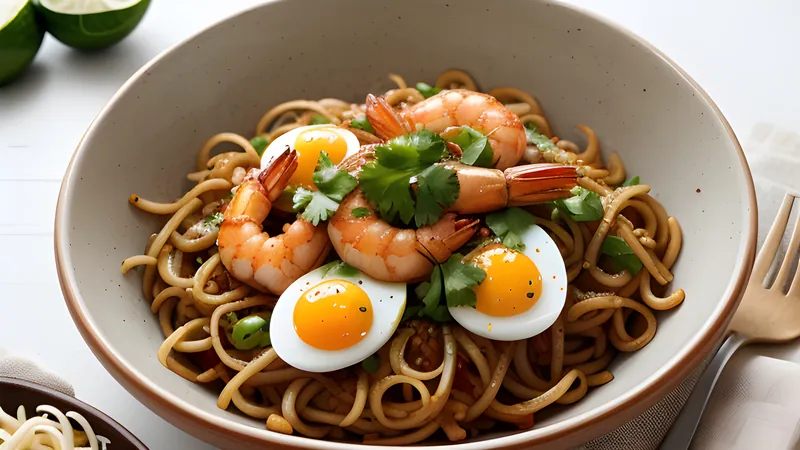
Mee Goreng with Prawn and Tofu
The mamak stall's sweet, spicy, ketchup-red fried noodles
Contents
↓ Jump to recipeMee goreng is the noodle you eat at midnight under fluorescent lights, at a mamak stall where the cook works two woks at once and the order goes in with a shout and a hand signal. It is sweet, it is chilli-hot, it is stained a cheerful ketchup red, and it is one of the great street dishes of Malaysia and Singapore. For years I under-rated it because the tomato ketchup made it sound like a student fridge-raid. Then I ate the real thing in George Town and understood that the ketchup is doing a proper job: sweetness, acidity and a glossy body all in one squeeze.
This is a home cook’s version, built for two, with prawns and golden tofu and a soft scramble of egg running through it. It comes together in about twelve minutes of actual wok time, which means the prep matters more than the cooking. Everything wants to be chopped, measured and lined up before the pan gets hot.
Mee Goreng with Prawn and Tofu
Ingredients
- 300g fresh yellow Hokkien noodles (or 180g dried egg noodles, boiled)
- 8 raw prawns, peeled and deveined
- 150g firm tofu, cut into 2cm cubes
- 1 small potato, boiled and cut into 1.5cm dice
- 2 eggs, beaten
- 100g choy sum or Chinese cabbage, cut into 4cm lengths
- 80g beansprouts
- 4 garlic cloves, minced
- 2 shallots, thinly sliced
- 2 tbsp neutral oil, plus more for the tofu
- 3 tbsp tomato ketchup
- 2 tbsp kecap manis (sweet soy sauce)
- 1 tbsp light soy sauce
- 2 tbsp sambal oelek or chilli-garlic paste
- 2 tsp tamarind paste
- 1 tsp caster sugar
- 1 lime, halved
- Fried shallots and coriander, to serve
Method
- Pat the tofu dry and fry in a shallow pool of oil over medium-high heat until golden on all sides, about 6 minutes. Drain and set aside.
- Whisk together the ketchup, kecap manis, soy, sambal, tamarind and sugar in a small bowl to make the sauce.
- Heat 1 tbsp oil in a wok until smoking. Pour in the beaten eggs, let them set for 20 seconds, then scramble roughly and lift out.
- Add the remaining oil, fry the shallots and garlic for 30 seconds until fragrant, then add the prawns and cook 1 minute until pink.
- Add the potato and choy sum stems, toss 1 minute, then add the noodles and the sauce.
- Toss hard over the highest heat for 2 to 3 minutes so the sauce coats every strand and catches slightly on the wok.
- Fold through the tofu, egg, beansprouts and choy sum leaves, tossing just until the sprouts start to wilt but keep their snap.
- Plate up, squeeze over lime, and scatter with fried shallots and coriander. Serve immediately.
A dish of the mamak stall
The word goreng means fried across the Malay-speaking world, and mee is the yellow alkaline wheat noodle brought by Chinese migrants. Mee goreng as we know it grew up in the Indian-Muslim mamak stalls of Malaysia, cooks of Tamil Muslim heritage who took a Chinese noodle, seasoned it with the sweet-spicy palate of the Malay Peninsula, and sold it deep into the night. It is a genuinely creole dish, Chinese in its noodle, Indian in its stall, Malay in its chilli, and nobody’s single property.
That mixed parentage explains the shopping list. Kecap manis, the thick sweet soy, is Indonesian by origin. Sambal is Malay. Ketchup arrived through the British port trade. Tofu and beansprouts are Chinese pantry staples. A plate of mee goreng is a small map of who has passed through the Straits of Malacca, and it tastes all the better for knowing it. Every stall guards small differences too: some add cuttlefish, some a splash of evaporated milk, some a fried egg draped on top. The version below is the everyday one, the plate you would actually order at one in the morning.
If you like the wok-charred school of noodle cookery, it shares a grandmother with Char Kway Teow with Prawn and Chinese Sausage, and it is a close weeknight relative of the crisp Mì Xào Giòn: Vietnamese Crispy Egg Noodles.
My clever twist: tamarind against the sweet
The honest weakness of a lot of home mee goreng is that it tips over into one-note sweetness. Ketchup plus kecap manis plus sugar is a lot of sugar in one wok. The mamak cooks balance it with the tang of their chilli paste and a squeeze of lime at the pass, and I go one step further by whisking two teaspoons of tamarind paste straight into the sauce. Tamarind brings a deep, fruity sourness that ketchup’s sharp vinegar tang cannot match, and it pulls the whole plate back into balance so the sweetness reads as glossy rather than cloying. It is the single change that made my version taste like the stall and not the approximation.
If you cannot find tamarind, a tablespoon of lime juice stirred in at the end does part of the job, though it lacks tamarind’s rounded, almost date-like depth.
Technique: heat, then speed
Two things decide whether your mee goreng sings. The first is the tofu. Fry it properly, in a genuine shallow pool of oil over a decent heat, until each face is gold and slightly crusted. Pale, wobbly tofu will collapse into the noodles and add nothing but sog. Golden tofu holds its shape and soaks up sauce like a little sponge.
The second is heat. A yellow Hokkien noodle needs a screaming wok to catch and char at the edges, which is where the smoky wok hei character comes from. If your hob is domestic and gentle, cook in a single portion at a time rather than crowding the pan, because a cold, overloaded wok steams the noodles into a pale tangle. Keep the noodles moving, let them sit against the metal for a few seconds between tosses, and you will hear the sauce start to sizzle and catch. That catch is flavour.
Add the beansprouts and the choy sum leaves right at the end. They want to keep a raw snap against the soft noodles, so ten seconds of residual heat is plenty. Overcooked sprouts go limp and watery and thin your sauce.
What can go wrong
- A pale, steamy plate. Your wok was not hot enough or too full. Split the batch and get the pan smoking before the noodles go in.
- Gluey noodles. Fresh Hokkien noodles are often oiled and clumped in the packet; rinse them under warm water and loosen the strands with your fingers before they hit the wok.
- A sauce that tastes flat and sweet. You skipped the tamarind or under-did the sambal. This dish needs sour and hot pushing hard against the sugar.
- Rubbery prawns. They cook in a minute, then finish in the residual heat of the toss. Pull them the moment they turn pink and stop worrying.
Substitutions and make-ahead
- Noodles: fresh yellow Hokkien noodles are ideal and freeze well. Dried egg noodles, boiled until just tender and rinsed, are a fine stand-in. Rice noodles change the dish but still work.
- Protein: swap prawns for sliced chicken, or leave them out and double the tofu for a vegetarian plate; use a vegetarian mushroom sauce in place of any oyster-based paste.
- Heat: sambal oelek is a straight chilli paste, so start at two tablespoons and climb. Mamak mee goreng runs genuinely hot.
- Prep ahead: boil the potato and fry the tofu earlier in the day, and mix the sauce in advance. The wok stage then takes minutes.
The potato is worth defending, because newcomers often query it. A few cubes of boiled potato are traditional in the Penang style; they soak up sauce and give the plate soft, starchy pockets between the chew of the noodles. Leave them out if you must, but they earn their place.
Serving
Pile it high, squeeze over the lime at the table so the acid is fresh and bright, and finish with a heavy shower of crisp fried shallots and torn coriander. A green chilli sliced into a saucer of light soy is the classic side for anyone who wants to push the heat further. Mee goreng wants no side dish and no ceremony; it is a whole meal in a bowl, best eaten a little too fast while it is a little too hot. For a second noodle on the table, the fierier Drunken Noodles (Pad Kee Mao) with Holy Basil makes a fine, herby counterpoint to all this sweet red gloss.
Related Content