Matcha White Chocolate Cookies with Flaky Salt
Ceremonial-grade bitterness set against sweet white chocolate and a finishing crackle of flaky salt
Contents
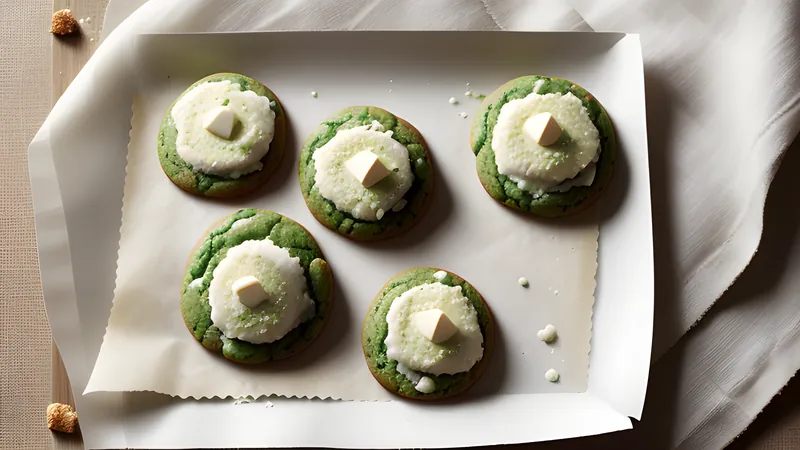
↓ Jump to recipeMatcha is genuinely bitter, more so than most people expect from a green powder marketed mostly on its colour, and that bitterness is the entire point of this cookie. Set against sweet, milky white chocolate and finished with a crackle of flaky salt, the matcha reads as savoury-adjacent and grown-up rather than merely decorative. The one condition is the matcha itself: buy a culinary-grade one that’s actually vivid and fresh, because a dull, khaki-coloured tin will give you a dull, khaki-coloured cookie that tastes of not very much at all.
Matcha White Chocolate Cookies with Flaky Salt
Ingredients
- 225g unsalted butter, softened
- 150g caster sugar
- 100g soft light brown sugar
- 1 large egg, room temperature
- 1 tsp vanilla extract
- 300g plain flour
- 3 tbsp culinary-grade matcha powder
- 1 tsp baking soda
- 1/2 tsp fine salt
- 200g white chocolate, roughly chopped into chunks
- Flaky sea salt, for finishing
Method
- Cream the softened butter, caster sugar and brown sugar together with an electric mixer for 3-4 minutes, until pale, light and fluffy.
- Beat in the egg and vanilla extract until fully incorporated.
- Sift the flour, matcha powder, baking soda and salt together into a separate bowl, breaking up any matcha clumps with the back of a spoon.
- Add the dry ingredients to the butter mixture and mix on low speed until just combined, no streaks of flour visible.
- Fold in the chopped white chocolate by hand until evenly distributed.
- Cover the dough and chill for at least 1 hour, or up to 48 hours, to firm the butter and deepen the matcha flavour.
- Preheat the oven to 170C fan (190C conventional, Gas 5) and line two baking trays with parchment.
- Scoop the dough into 50g balls (about 3 tbsp each) and space them 6cm apart on the trays.
- Bake for 11-13 minutes, until the edges are just set and matte but the centres still look slightly underdone and glossy.
- Immediately sprinkle each cookie with a pinch of flaky sea salt while still hot from the oven.
- Leave on the tray for 5 minutes to finish setting, then transfer to a wire rack to cool completely.
Matcha’s two grades, and why the tin you buy matters more than the recipe
Matcha is stone-ground green tea leaf, shade-grown for the final weeks before harvest to boost chlorophyll and amino acids, then steamed, dried and milled to a fine powder. It has been central to Japanese tea ceremony (chanoyu) since Zen monks brought powdered tea preparation from Song-dynasty China in the 12th century, refined over the following centuries by figures like Sen no Rikyu into the deliberate, ritualised practice still taught today. Ceremonial-grade matcha, whisked with hot water alone and drunk directly, is the top tier: young first-harvest leaves, vivid emerald green, naturally sweet with a lingering umami rather than sharp bitterness. Culinary-grade matcha, made from later harvests and coarser processing, is more bitter, more astringent, and a duller, more olive green, and it’s the grade meant for baking, lattes and cooking generally, where it’s diluted by sugar, fat and other ingredients.
The trap in home baking is buying the cheapest tin available, which is usually old stock, poorly stored, oxidised toward brown, and correspondingly flat in flavour; matcha loses its bright colour and grassy vegetal notes within months of grinding if not kept airtight, refrigerated and away from light. A good culinary matcha, freshly opened, should smell distinctly grassy and vegetal, almost like fresh-cut lawn crossed with steamed spinach, and should be a genuinely bright, saturated green, closer to a Sharpie highlighter than khaki. If your matcha smells like not much at all, your cookies will taste like not much at all, no matter how carefully you follow the method.
Matcha’s dessert life in Japan, and where this cookie sits outside it
In Japan, matcha’s sweet applications sit almost entirely within the wagashi tradition, the confectionery developed alongside tea ceremony to be eaten just before a bowl of whisked tea, on the theory that a little sweetness beforehand sets off the tea’s bitterness. Warabimochi dusted with kinako and matcha, nerikiri shaped into seasonal flowers, and matcha-dusted castella cake all follow the same logic: the sweet element is restrained, and the matcha is often left plain rather than baked into a batter, so its bitterness stays sharp and deliberate rather than folded into fat and sugar. Matcha ice cream and matcha soft serve, sold from convenience stores across Japan, do fold the powder into a rich dairy base, and are the closer cousin to what’s happening in this cookie, since cream plays much the same tempering role that butter does here. The Western matcha dessert boom of the last decade or so — lattes, cheesecakes, KitKats made for the export market rather than domestic shelves — pushes the balance further toward sweetness than most Japanese confectionery ever does, and this cookie sits somewhere between the two: sweeter and richer than a wagashi, but with enough bitterness left in to stop it reading as a green-tinted vanilla cookie with no real matcha character.
Why the bitterness needs the fat, and why the bake stays short
Matcha’s bitterness comes mostly from catechins, a class of tannin-like polyphenols concentrated in tea leaves, and from caffeine, both of which read as sharp and drying on the tongue in isolation. Fat is what tempers that; butter coats the palate and slows the release of those bitter compounds, which is exactly why a matcha cookie loaded with butter reads as balanced where a thin matcha biscuit can taste unpleasantly astringent. This is also why I don’t skimp on butter here relative to flour; a leaner dough would let the matcha’s harsher edges dominate.
White chocolate does more than add sweetness. Its high cocoa-butter content (and near-total absence of the bitter cocoa solids found in dark and milk chocolate) makes it the sweetest, creamiest chocolate available, which is precisely the counterweight matcha needs; a dark chocolate chip here would just stack bitterness on bitterness. As the chocolate melts slightly in the oven, it also keeps pockets of the cookie soft and glossy against the firmer, matcha-dry crumb around it, giving good textural contrast in every bite.
The short bake and the flaky salt both matter for the same underlying reason: control. Matcha’s colour and flavour are heat-sensitive and degrade with prolonged high heat, turning muddier and more bitter the longer and hotter you push it, so I bake these to a slightly underdone centre, which also keeps the crumb soft rather than crisp. Flaky salt on top, added the moment the cookies leave the oven so it sticks to the residual butter sheen, brightens the whole cookie by contrast, the same principle that makes salted caramel work; a little sodium sharpens both the sweetness and the bitterness, making each taste more fully itself.
The recipe, step by step
Cream softened butter with caster and brown sugar until genuinely light and fluffy, a full 3-4 minutes rather than a quick mix; this beats air into the fat that gives the cookie some lift. Beat in the egg and vanilla. Sift together flour, matcha, baking soda and salt, breaking up any matcha clumps by hand, since sifting alone doesn’t always shift them. Mix the dry ingredients into the wet just until no flour streaks remain, then fold through chopped white chocolate. Chill the dough for at least an hour, ideally overnight; this firms the butter (so the cookies spread less and hold a thicker, chewier shape) and gives the matcha time to hydrate fully into the dough, deepening its flavour noticeably.
Scoop into 50g balls, space well apart, and bake at 170C fan for 11-13 minutes. Pull them when the edges look matte and just set but the centre still looks slightly glossy and underdone; they firm up entirely as they cool on the tray. Salt immediately while hot, then leave to finish setting for 5 minutes before moving to a rack.
Tips, substitutions, storage
On sourcing: you don’t need ceremonial-grade matcha for this recipe, and buying it would be a genuine waste of money, since its delicate, umami-forward flavour is designed to be tasted plain and gets flattened by butter and sugar regardless of how good it is. Look instead for a mid-range culinary matcha sold specifically for baking or lattes, usually a fair bit cheaper than ceremonial grade, sold in resealable pouches rather than the small ceremonial tins. Specialist Japanese grocers and tea shops, in person or online, are more reliable than the small novelty tins sometimes sold in general supermarkets, which can sit on a shelf for a long time before purchase. A rough guide to freshness beyond colour and smell: matcha bought within the last six months, kept airtight and refrigerated, should still taste distinctly grassy rather than flat or hay-like; if you’re not sure how old a tin is, the smell test at the point of opening is the most reliable check you have.
If your matcha genuinely looks dull straight out of the tin, no recipe will save it; buy a fresh tin from a shop with reasonable turnover rather than pushing through with what you have. The dough freezes excellently as pre-scooped balls: freeze on a tray until solid, then bag, and bake straight from frozen adding 2 extra minutes. Baked cookies keep in an airtight tin for 4 days, though the crisp-edge, soft-centre contrast is best on day one and two. Dark chocolate chunks can replace the white if you want a more bitter, more grown-up cookie throughout, though you lose the deliberate sweet-bitter contrast that’s the whole idea here. If your dough spreads more than expected in the oven, the butter was likely too warm going in; chill the next tray of scooped balls for 15 minutes before baking, and check your oven temperature with a separate thermometer, since many domestic ovens run hotter than their dial suggests. Weigh your matcha rather than measuring by the tablespoon if your kitchen scale allows it; the powder compacts and aerates unpredictably in a spoon, and a few grams either way makes a real difference to how bitter the final cookie tastes. Store any leftover matcha in an airtight tin in the fridge, away from strong-smelling neighbours, since the powder absorbs odours readily and a tin kept next to onions or coffee grounds will taste of them within a week.
Variations
A tablespoon of black sesame paste worked into the dough alongside the matcha adds a toasty, nutty depth that many Japanese bakeries pair with green tea flavours. White chocolate can be swapped for chopped macadamias for a less sweet, more textural version. If you’re building out a Japanese-leaning spread for guests, these sit well on a table alongside something properly savoury, a plate of chicken karaage or a katsu sando, with the cookies saved for last so the bitterness of the matcha resets the palate after all that fried food.
Related Content