Matcha Latte, Whisked Properly
Sifted, whisked to a jade foam, with a pinch of salt to tame the edge
Contents
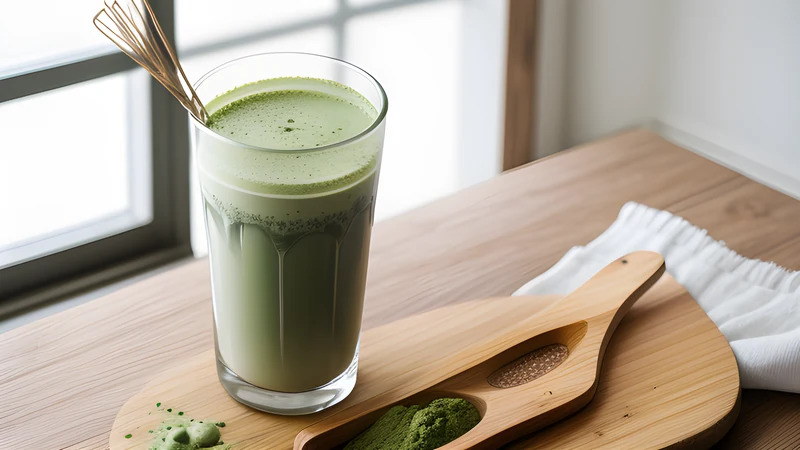
↓ Jump to recipeA matcha latte gets a bad name from the café version: a teaspoon of dusty powder stirred into hot milk with a long spoon, lumps clinging to the side of the glass, the whole thing tasting of spinach and chalk. Made properly at home it is a different drink entirely, smooth and grassy and faintly sweet, and it takes about four minutes. The small clever move that lifts mine above the coffee-shop default is a single pinch of salt whisked in with the powder: it rounds off the bitter edge that puts so many people off matcha, the same way a pinch of salt does for a bitter coffee or a grapefruit.
Matcha Latte, Whisked Properly
Ingredients
- 2g culinary or ceremonial-grade matcha (about 1 slightly heaped tsp)
- 60ml water at 75–80°C (just off the boil, rested for two minutes)
- 1 very small pinch of fine sea salt
- 200ml whole milk, or oat milk
- 1–2 tsp honey or maple syrup, optional, to taste
Method
- Sift the matcha through a fine tea strainer directly into a wide bowl or a mug to break up every lump.
- Add the pinch of salt and the 60ml of 75–80°C water.
- Whisk briskly with a bamboo chasen or a small hand whisk in a light W or M motion for 15–20 seconds, keeping the whisk near the surface, until a fine even foam covers the top and no powder streaks remain.
- Warm the milk in a pan or by steaming until it is hot but not boiling, around 60–65°C, frothing it if you like.
- Pour the warm milk gently into a serving glass or mug.
- Pour the whisked matcha slowly over the back of a spoon on top of the milk for a layered look, or tip it straight in and stir.
- Sweeten with honey or maple syrup to taste and drink straight away, before the foam settles.
A powdered tea with a nine-hundred-year history
Matcha is green tea leaves ground to a fine powder, and the reason you drink the whole leaf rather than steeping and discarding it is the whole point of the flavour. The technique arrived in Japan from China in the twelfth century, carried back by the Zen monk Eisai, who had studied Buddhism on the mainland and brought both the tea seeds and the practice of drinking powdered tea with him around 1191. In China the powdered-tea habit later faded in favour of loose-leaf steeping, but in Japan it took hold and grew into the codified tea ceremony, chanoyu, refined in the sixteenth century by the tea master Sen no Rikyū into something closer to a moving meditation than a drink.
What makes good matcha taste the way it does happens in the field, weeks before harvest. For roughly the last three to four weeks of growth the tea bushes are covered with reed or cloth screens that block most of the sunlight. Starved of light, the plant floods its leaves with chlorophyll, which deepens the colour to that vivid jade, and holds onto its amino acids, particularly L-theanine, rather than converting them to the catechins that make tea taste astringent. That is why properly shaded, well-made matcha tastes savoury and almost sweet, with the specific rounded quality the Japanese call umami, while cheap unshaded powder tastes flat and bitter. The best leaves are picked, steamed, dried, stripped of stems and veins to become tencha, then stone-ground slowly into powder, a process gentle enough that a single stone mill produces only around 30 to 40 grams an hour.
Grades, and which one to buy
Matcha is usually sold as either ceremonial grade or culinary grade, and the labels matter less than the colour and the price. Ceremonial grade comes from the youngest first-harvest leaves and is meant to be drunk with just water, whisked into the traditional bowl of usucha; it is smoother, sweeter and considerably more expensive. Culinary grade is a slightly more robust powder meant to stand up to milk, sugar and baking, which makes it a sensible and cheaper choice for a latte, where the milk is doing some of the smoothing anyway.
Colour is the honest signal. Good matcha is a bright, almost electric green; a dull, yellowish or khaki powder has usually been made from older, less-shaded leaves or has oxidised on a shelf, and it will taste hay-like and bitter no matter how well you whisk it. Buy it in small tins, keep it sealed in the fridge once opened, and use it within a couple of months, because matcha stales fast once air and light get to it. If you have bought a good tin, it is worth trying it once as straight usucha with only water, so you know what you are working with before the milk goes in.
The recipe, step by step
Sift 2g of matcha, about one slightly heaped teaspoon, through a small fine strainer straight into a wide bowl or a mug. This single step is the one most people skip and the one that saves you from lumps, because the powder is so fine it clumps in the tin and those clumps will not whisk out once wet. Add your pinch of salt over the top.
Boil the kettle, then let it stand for a couple of minutes so the water drops to around 75 to 80°C. Water straight off a rolling boil scorches matcha and drags out its bitterness, which is a large part of why café matcha so often tastes harsh. Pour 60ml of the cooled water over the powder.
Now whisk. If you have a bamboo chasen, hold it lightly and move it briskly back and forth in a W or M shape, keeping the tines just under the surface rather than grinding them into the bottom of the bowl. A small metal hand whisk or even a milk frother works nearly as well. After 15 to 20 seconds of quick whisking you want a smooth, even liquid with a fine layer of pale foam across the top and no darker streaks of unmixed powder. Warm 200ml of whole milk or oat milk until it is hot but not simmering, around 60 to 65°C, frothing it if you have the means. Pour the milk into your glass, then pour the whisked matcha over it, sweeten if you want to, and drink it while the foam is still there.
Why the salt, the temperature and the milk all matter
The salt is the quiet trick. Matcha’s bitterness comes largely from catechins, and a tiny amount of salt suppresses the tongue’s perception of bitterness while nudging the tea’s natural umami and sweetness forward, which is exactly what a pinch of salt does in a pot of coffee or a bitter braise. You want a genuinely small pinch, enough to round the edges without making the drink taste salty.
Temperature is the other half. L-theanine and the sweeter amino acids dissolve happily at 70 to 80°C, while the harsher catechins extract more aggressively the hotter the water gets, so cooler water gives you a sweeter, gentler cup. This is why traditional whisking uses water well below boiling. As for the milk, whole dairy gives the creamiest result and its fat carries the grassy flavour beautifully; oat milk is the best plant option because its slight natural sweetness and body flatter matcha, whereas thin almond milk tends to leave the tea tasting watery and split.
If your latte still tastes bitter after all that, the usual culprits are cheap powder, water that was too hot, or too much matcha for the amount of milk; drop to a level teaspoon and taste before adding more. A gritty, sandy texture means the whisking was too brief or the sift was skipped, so the powder never fully dispersed. And a thin, watery cup with no foam almost always comes down to a tired chasen or a half-hearted wrist: the foam is aeration, and it needs genuine speed for those fifteen seconds rather than a gentle stir.
Iced, sweetened and stored
For an iced version, whisk the matcha with the same 60ml of cool water and salt, pour it over a glass of ice and cold milk, and stir; the method is identical and it is glorious in summer. If you want it richer and more like the coconut-forward café style, try my iced matcha with coconut, which leans on coconut milk for body and a natural sweetness.
Sweeteners are a matter of taste. Honey and maple both suit the grassy flavour; a spoonful of vanilla syrup makes it dessert-like. Keep any sugar restrained at first, because good matcha barely needs it. Whisked matcha does not keep, so make it to order rather than in a jug. The powder itself, sealed and cold, is your store-cupboard staple: the same tin that makes this latte will fold into cookies, ice cream or a warm cup of golden turmeric milk if you want another gently spiced, warming drink for the evening. Four minutes, one pinch of salt, water that is not too hot, and you will never go back to lumpy café matcha again.
Related Content