Massaman Beef Curry with Peanuts and Potato
Mild, rich and aromatic
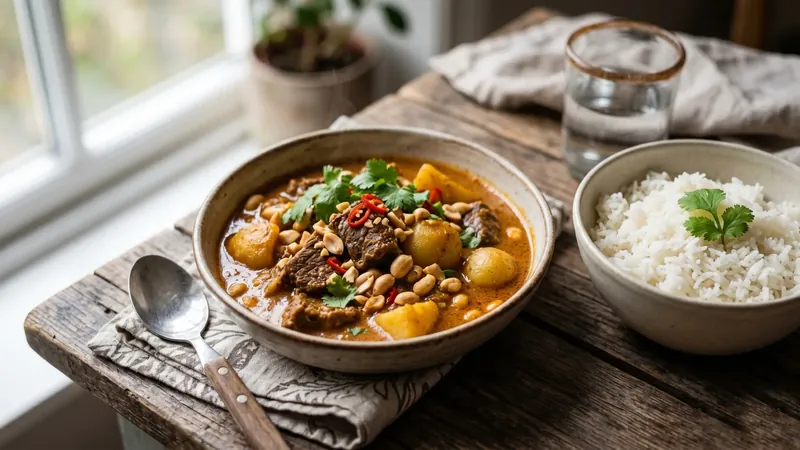
Massaman is the gentle giant of the Thai curry world: mild, deeply spiced and richly comforting, owing as much to warm whole spices as to chilli heat. The twist here is to toast those whole spices before they go in, deepening the curry’s aroma, then finish with tamarind and peanuts for a sweet-sour, nutty edge. Beef shin braised low and slow turns silky, and waxy potatoes soak up the fragrant sauce. Serve with plenty of jasmine rice.
Massaman Beef Curry with Peanuts and Potato
Ingredients
- 800g beef shin or chuck, cut into large chunks
- 1 tbsp neutral oil
- 4 tbsp massaman curry paste
- 400ml tin coconut milk
- 300ml beef stock
- 2 star anise
- 1 cinnamon stick
- 4 cardamom pods, bruised
- 3 cloves
- 1 tsp coriander seeds
- 2 tbsp fish sauce
- 2 tbsp palm or light brown sugar
- 2 tbsp tamarind paste
- 400g waxy potatoes, cut into chunks
- 1 onion, cut into wedges
- 80g roasted unsalted peanuts
- Steamed jasmine rice, to serve
- Coriander leaves, to garnish
Method
- Heat the oil in a large heavy pot and brown the beef chunks well in batches, then set aside.
- Toast the star anise, cinnamon, cardamom, cloves and coriander seeds in the dry pot for 1 minute until fragrant.
- Spoon the thick cream from the top of the coconut milk into the pot and fry the massaman paste in it for 3-4 minutes until aromatic and split.
- Return the beef, then add the rest of the coconut milk, the stock, fish sauce, sugar and tamarind paste. Stir to combine.
- Bring to a gentle simmer, cover and cook for 1½ hours, stirring occasionally, until the beef is becoming tender.
- Add the potatoes, onion wedges and half the peanuts, then simmer uncovered for 30-40 minutes until the beef is meltingly soft and the sauce has thickened.
- Taste and balance with more fish sauce, sugar or tamarind as needed.
- Scatter with the remaining peanuts and coriander and serve with steamed jasmine rice.
3 The Story
Massaman curry stands a little apart from the other curries of Thailand, and its character tells the story of why. Where green and red curries lean on fresh chillies, lemongrass and galangal for a bright, fiery punch, massaman is built around warm, dry spices: cinnamon, cardamom, cloves, star anise and cumin. That spice profile points to its roots in the culinary exchange between Thailand and the Muslim trading communities and Persian and Indian merchants who brought these aromatics along the spice routes. The name itself is generally understood to relate to this Muslim heritage, and massaman remains especially associated with the south of Thailand.
This blending of influences gives massaman its distinctive gentleness. It is one of the mildest Thai curries, rich and rounded rather than hot, which makes it a fine introduction for anyone wary of fierce chilli heat. The base is coconut milk, which carries the spices and softens any sharpness, while potatoes and onion give it a hearty, almost stew-like quality unusual among Thai curries. Beef is a classic choice, and a well-marbled cut such as shin rewards the long, slow braise that the dish demands, turning tender enough to fall apart under a fork.
Toasting the whole spices is the refinement that makes the most of massaman’s aromatic backbone. A brief turn in the dry pan releases the fragrant oils locked in cinnamon, cardamom and star anise, lending the finished curry a deeper, more resonant warmth. Frying the curry paste in the thick coconut cream until it splits and turns glossy is another key step, blooming the paste and drawing out its flavour before the liquid goes in.
The finish is what gives massaman its signature balance. Tamarind brings a fruity sourness that lifts the richness, palm sugar adds a gentle caramel sweetness, and fish sauce supplies the savoury salt that ties everything together. Roasted peanuts, stirred through and scattered on top, contribute texture and a nutty depth that is part of the dish’s identity. The art lies in adjusting these three poles, sour, sweet and salty, until the curry sings. Served over fragrant jasmine rice, it is the kind of slow-cooked dish that tastes even better the next day.
Related Content