Masala Dosa with Two-Day Fermented Batter
A slow, proper ferment for the batter that gives real dosas their crackle and sour tang
Contents
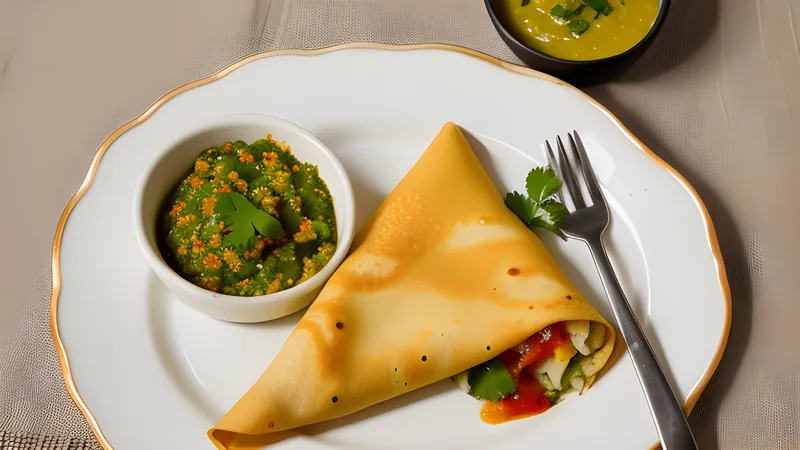
↓ Jump to recipeA proper dosa should crackle when you break it, with a lace-thin, deeply golden crust giving way to a soft, faintly sour interior. Most home versions never get there because the batter never gets the time it needs — a rushed overnight ferment produces something flat and gummy that sticks to the pan and tastes of raw rice. This version stretches the ferment over two full days: a warm twelve-to-eighteen-hour rise to get the batter alive and bubbling, followed by a slow, cold second stage that deepens the sourness properly. It takes patience, almost none of it active, and the difference on the tawa is unmistakable.
Masala Dosa with Two-Day Fermented Batter
Ingredients
- 300g idli rice (or short-grain white rice)
- 100g whole urad dal (split, skinned black gram)
- 1 tsp fenugreek seeds
- 1 tsp fine sea salt, plus more to taste
- Water, as needed for soaking and grinding
- 3 tbsp neutral oil, plus more for cooking
- 3 large potatoes, boiled and peeled
- 1 tsp black mustard seeds
- 1 tsp cumin seeds
- 1 tsp urad dal (for tempering)
- 1 tsp chana dal (for tempering)
- 10-12 fresh curry leaves
- 2 green chillies, finely chopped
- 1 large onion, thinly sliced
- 1cm ginger, finely grated
- 1/2 tsp ground turmeric
- Handful fresh coriander, chopped
- Salt, to taste
Method
- Wash the rice and urad dal separately until the water runs mostly clear. Soak the rice in one bowl and the urad dal with the fenugreek seeds in another, both covered generously with water, for 5-6 hours or overnight.
- Drain the urad dal and fenugreek, reserving the soaking water, and blend to a smooth, thick, pale batter using as little of the reserved water as needed to keep the blades moving; it should triple in volume when whisked and feel light and airy.
- Drain the rice and blend separately, using its own soaking water, to a slightly grainy paste (not perfectly smooth) — this texture is what gives the finished dosa its characteristic crisp surface.
- Combine both batters in a large bowl (leaving plenty of headroom for rising), stir in the 1 tsp salt with your hand to help feed the natural yeasts, cover loosely, and leave in a warm spot for 12-18 hours until visibly risen, bubbled and smelling pleasantly sour.
- Stir the risen batter gently to knock it back, then refrigerate, still covered, for a further 24-36 hours. This second, cold stage deepens the sourness and improves the texture without over-fermenting.
- For the filling, heat the oil in a pan and add the mustard, cumin, urad dal and chana dal. Once the mustard seeds pop and the dals turn golden, add the curry leaves and green chillies.
- Add the sliced onion and cook for 5-6 minutes until soft and translucent, then stir in the ginger and turmeric and cook for 1 minute.
- Crumble in the boiled potatoes by hand, add a splash of water, season with salt, and mash roughly, mixing everything together over the heat for 3-4 minutes until it comes together as a soft, well-spiced mash. Stir through the coriander and set aside, keeping warm.
- Bring the batter to room temperature and thin with a little water to a pourable, single-cream consistency.
- Heat a flat cast iron or non-stick tawa over medium-high heat. Test with a drop of water — it should sizzle and evaporate instantly.
- Wipe the hot tawa with an oiled cloth, then pour a ladleful of batter in the centre and spread it outward in a thin, even spiral using the base of the ladle, working from the centre out.
- Drizzle 1/2 tsp oil around the edges and cook undisturbed for 2-3 minutes until the underside is deep golden and crisp and the edges lift easily from the pan.
- Spoon a line of the potato filling across the centre, fold the dosa over into a cylinder or half-moon, and slide onto a plate. Repeat with the remaining batter, re-oiling the tawa between each dosa.
Where this comes from
The dosa belongs to South India’s fermented-grain tradition, a family that also includes idli, uttapam and appam, all built on the same basic pairing of rice and urad dal left to ferment together. Its documented history stretches back at least a thousand years — the Tamil Sangam-era texts and later Kannada literature both reference dosa-like griddle breads — though the crisp, thin dosa most people recognise today, and the filled masala dosa in particular, is generally credited to the coastal Udupi region of Karnataka, spread nationally and then globally through the network of Udupi restaurants that opened across India from the mid-twentieth century onward.
What makes the dish distinctive against the wider world of griddle breads is that ferment. Rice alone doesn’t ferment readily; it’s the urad dal, rich in the proteins and starches that wild yeasts and lactic acid bacteria feed on, that drives the process, with the rice along for the ride and contributing the crisp structure. Traditionally the batter was left to rise on its own schedule, governed by ambient warmth and whatever wild yeast happened to be resident in the kitchen, which is why South Indian households in humid coastal climates could get a proper ferment overnight while a colder northern kitchen might need two days — a fact this recipe leans into deliberately rather than fighting.
The masala filling of spiced, mustard-tempered potato is itself a later addition, thought to date to the nineteenth century, and it’s the combination — thin, sour, crisp dosa wrapped around warm, soft potato — that made the dish the singular South Indian breakfast export it is today, sold from Chennai tiffin rooms to takeaway counters far from India.
Look closely at a South Indian menu and “dosa” splits into several distinct dishes rather than one. The plain masala dosa served here, wrapped thin around spiced potato, is the everyday version found at breakfast stalls from Chennai to Bangalore. Mysore masala dosa goes a step further: a layer of fiery red garlic chutney is spread across the batter before the potato goes in, a habit traced to Mysore’s Vinayaka Mylari and CTR (Ceetharamanjaneya Tiffin Room), two hotels still cited as the dish’s origin points. Paper dosa, thinner again and rolled into a cone rather than folded flat, needs an even more fluid batter and a hotter tawa, and is usually served without filling at all, just alongside the same coconut chutney and sambar. MTR — Mavalli Tiffin Room, in Bangalore, founded in 1924 — is often credited with formalising the modern masala dosa’s proportions and presentation, plated with a single ladle of sambar and two chutneys, a format most Udupi-style restaurants still follow today.
Why the two-day ferment matters
Fermentation here is doing two jobs at once, and rushing either one shows up directly on the plate. The first job is lift: the wild yeasts and lactic acid bacteria naturally present on rice and dal consume the starches and produce carbon dioxide, which is what makes a well-fermented batter roughly triple in volume and turn light and full of tiny bubbles. A batter that hasn’t had enough time simply hasn’t built enough gas, and it spreads thick and dense on the tawa rather than thin and lacy — no amount of clever spreading technique fixes an under-fermented batter.
The second job is flavour, and this is where the extra day earns its keep. The initial warm rise, over twelve to eighteen hours, gets the fermentation properly underway and produces the lift, but the bacterial cultures responsible for dosa’s distinctive tang need more time at a gentler pace to build real sourness — pushed too hard and too warm, a batter can over-ferment into something sharp and unpleasantly boozy before the flavour has had time to round out. Moving the risen batter to the fridge for a second, slow, cold stage of a day or more lets that souring happen gradually and evenly, the same principle that makes a long, cold retard improve a sourdough loaf. The result is a batter with real depth — tangy, faintly funky, complex — rather than the flat, one-note sourness of a batter fermented once and used the same day.
Grinding the rice to a slightly coarse paste rather than perfectly smooth is a smaller but real detail: those tiny remaining grits are what catch the heat of the tawa first and give the finished dosa its audible crackle and craggy crisp surface, where a completely smooth batter fries up closer to a flat, soft pancake.
Ingredient sourcing matters more than the short ingredient list suggests. Idli rice — a short-grain parboiled rice sold specifically for this purpose in South Indian grocers — grinds to the starchy, slightly sticky consistency the batter needs; ordinary long-grain rice like basmati lacks the same starch content and produces a batter that never quite crisps on the tawa. Urad dal should be the split, skinned (white) variety rather than whole black urad dal with the skin still on, since the skins leave grey flecks through the batter and slow the grind considerably. If whole urad dal is all you can find, soak it a little longer than stated and expect to pick out any stray skins that float to the surface after blending.
The recipe
Makes 10-12 dosas.
Ingredients
- 300g idli rice
- 100g whole urad dal
- 1 tsp fenugreek seeds
- 1 tsp fine salt, plus more to taste
- 3 tbsp neutral oil, plus more for cooking
- 3 large potatoes, boiled and peeled
- 1 tsp black mustard seeds
- 1 tsp cumin seeds
- 1 tsp urad dal and 1 tsp chana dal (for tempering)
- 10-12 curry leaves
- 2 green chillies, finely chopped
- 1 large onion, thinly sliced
- 1cm ginger, finely grated
- 1/2 tsp ground turmeric
- Handful fresh coriander, chopped
Method
- Soak the rice and the urad dal with fenugreek separately for 5-6 hours or overnight.
- Blend the urad dal to a smooth, airy batter; blend the rice separately to a slightly grainy paste. Combine, salt, cover and leave in a warm spot 12-18 hours until risen and bubbled.
- Knock back gently, then refrigerate for a further 24-36 hours.
- For the filling, temper the mustard, cumin and dals in oil, add curry leaves and chillies, then soften the onion. Stir in ginger and turmeric, crumble in the potatoes, mash roughly with a splash of water, season, and stir through coriander.
- Bring the batter to room temperature, thin to a pourable consistency, and cook thin dosas on a hot, oiled tawa, spreading in a spiral from the centre.
- Cook undisturbed until deep golden and crisp, fill with the potato masala, fold, and serve immediately.
Tips, substitutions and storage
The batter keeps well in the fridge for up to five days once fully fermented, and if anything the flavour keeps improving for the first two or three, so this recipe rewards making a double batch. Don’t skip the fenugreek seeds — they contribute more to the ferment and the batter’s slightly nutty aroma than their small quantity suggests, and they also help preserve the batter’s freshness over its fridge life. If your kitchen runs cold, tuck the bowl into a switched-off oven with the light left on, or near (not on) a radiator, to hold a steady warm spot for the first rise. A tawa that isn’t properly seasoned or hot enough is the other common failure point: it needs to be genuinely hot before the batter goes on, or the dosa will stick and tear rather than lift cleanly.
This filling pairs naturally with the same South Indian pantry as dal tadka and chana masala, and a glass of mango lassi with cardamom and lime alongside makes a proper spread of a breakfast. Leftover potato filling keeps in the fridge for two days and reheats well in a dry pan.
Variations
For a rava dosa, skip the ferment entirely and use a quick batter of semolina, rice flour and buttermilk instead — a completely different, no-wait style worth knowing but not a substitute for the fermented original. For a cheese dosa, scatter grated cheese over the batter just before folding. If you want extra tang without extending the ferment further, a spoonful of the previous batch’s batter stirred into a fresh one acts like a sourdough starter, giving the culture a head start. However you fill it, the batter is the whole game here — give it its two days and the tawa does the rest.
Related Content