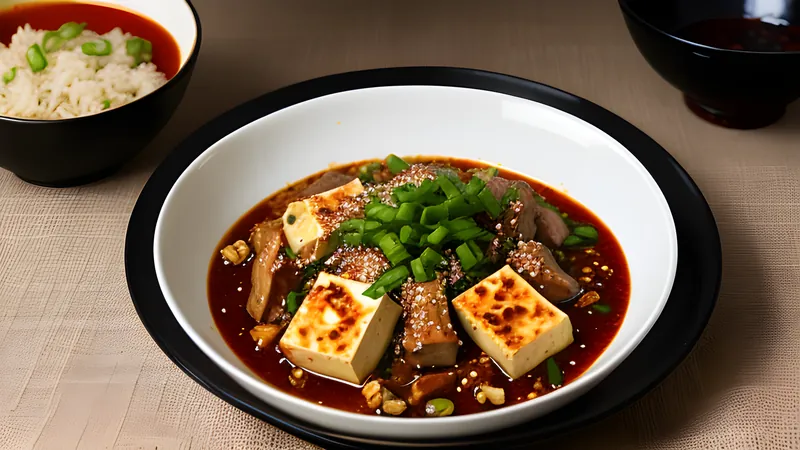
Mapo Tofu with Toasted Sichuan Peppercorn Oil
Silken tofu in a fiery, numbing pork sauce
Contents
↓ Jump to recipeMapo tofu is the dish that converts tofu sceptics, and it does it with a trick that has nothing to do with the tofu itself: a sauce so alive with fat, ferment and numbing spice that the tofu becomes a vehicle rather than the point. My twist is a small one but it matters, I toast whole Sichuan peppercorns twice, once bloomed slowly in the cooking oil to build a base layer of buzz through the whole dish, and once dry-toasted and ground fresh at the very end to scatter on top, so the first bite lands with a bright, citrusy tingle before the deeper background hum takes over. It is the difference between a mapo tofu that numbs and one that just tastes vaguely peppery.
Mapo Tofu with Toasted Sichuan Peppercorn Oil
Ingredients
- 500g silken or soft tofu, cut into 2cm cubes
- 3 tbsp neutral oil (groundnut or rapeseed)
- 2 tbsp whole Sichuan peppercorns, divided
- 200g minced pork (or beef)
- 3 tbsp doubanjiang (fermented chilli bean paste), finely chopped
- 1 tbsp fermented black beans, rinsed and roughly chopped
- 4 garlic cloves, finely chopped
- 1 tbsp finely chopped fresh ginger
- 3 spring onions, whites and greens separated, both sliced
- 250ml chicken or vegetable stock
- 1 tbsp light soy sauce
- 1 tsp caster sugar
- 1.5 tbsp cornflour mixed with 3 tbsp cold water
- 1 tsp ground Sichuan peppercorn (from the toasted whole ones), plus more to serve
- Steamed rice, to serve
Method
- Bring a pan of well-salted water to a bare simmer, add the tofu cubes and let them sit off the heat for 5 minutes to firm slightly and season, then drain gently.
- Heat the oil in a small pan over medium-low heat, add 1 tablespoon of the whole Sichuan peppercorns and toast for 90 seconds, swirling, until fragrant and just starting to darken, then strain, reserving both the oil and the peppercorns; grind half the toasted peppercorns to a coarse powder.
- Toast the remaining 1 tablespoon whole peppercorns in a dry wok over medium heat for 1 minute until fragrant, tip out and grind coarsely; set aside for the finish.
- Return the strained peppercorn oil to the wok over high heat, add the minced pork and stir-fry for 3 to 4 minutes, breaking it up, until browned and crisp at the edges.
- Add the doubanjiang, black beans, garlic and ginger, and stir-fry for 1 to 2 minutes until the oil turns red and deeply fragrant.
- Pour in the stock, soy sauce and sugar, bring to a simmer, then slide in the drained tofu and simmer gently for 4 to 5 minutes, spooning the sauce over rather than stirring hard.
- Stir the cornflour slurry again and pour it in gradually, stirring gently, until the sauce clings thickly to the tofu, about 1 minute.
- Stir in the spring onion whites and the ground toasted peppercorn from the oil infusion, then remove from the heat.
- Scatter with the second batch of freshly toasted ground peppercorn and the spring onion greens, and serve immediately over steamed rice.
The story
Mapo doufu, “pockmarked old woman’s tofu,” takes its name from a Qing-dynasty legend about a scarred innkeeper in Chengdu who ran a small restaurant near the Wanfu Bridge sometime in the 1860s. She fed labourers and porters who came through with jars of chilli bean paste and cuts of meat too tough to sell whole, and she chopped what she had into tofu simmered in a fierce, fatty sauce. The dish stuck, the nickname stuck with it, and two centuries on it is still one of the clearest expressions of Sichuanese cooking’s central idea: mala, the “numbing and hot” pairing of chilli heat with the electric tingle of Sichuan peppercorn.
The innkeeper’s actual name, according to the most commonly repeated version of the story, was Chen (her husband’s surname), and the restaurant she and her husband ran near Chengdu’s Wanfu Bridge is usually rendered today as Chen Mapo Doufu. A restaurant trading under that name still operates in Chengdu, on Xiyulong Street, and though two centuries of retelling make the finer details hard to verify precisely, the broad shape of the story — a resourceful cook feeding labourers cheaply with what was on hand — matches how a lot of China’s most enduring regional dishes actually originated, as practical, working-class food later adopted upmarket.
That numbing sensation, ma, comes from hydroxy-alpha-sanshool, a compound unique to Sichuan peppercorn (actually the dried husk of the prickly ash berry, unrelated to black pepper) that tricks the trigeminal nerve into registering a buzzing, slightly cold vibration rather than straight heat. Chengdu and Chongqing cooks lean on it constantly, and mapo tofu is the dish most people outside Sichuan meet it through first. The other pillar is doubanjiang, a fermented broad bean and chilli paste from Pixian county just outside Chengdu, aged in earthenware urns for months or years until it turns a deep rust-brown and smells like a cross between miso and chilli jam. Good doubanjiang is the single ingredient that makes or breaks this dish; without it you have a spicy stew, with it you have mapo tofu.
Not all doubanjiang on supermarket shelves is equal, and it is worth seeking out a version that actually names Pixian on the label — Juan Cheng and Dan Dan are two widely exported brands that do. Cheaper, unlabelled chilli bean pastes are often thinner, saltier and lack the long ferment that gives proper Pixian doubanjiang its rounded, almost raisiny depth; using one in place of the other changes this dish more than any other substitution in the recipe. Sichuan peppercorns, similarly, lose their numbing punch fast once ground and fairly quickly even once cracked whole, so buy them whole, store them in a sealed jar away from light, and toast just before using rather than keeping a tub of pre-ground pepper on the shelf.
Traditionally the dish uses beef, since Chengdu’s Hui Muslim butchers supplied much of the minced meat in the old city, though pork became the more common home version as the recipe spread. Either works. What never changes is the tofu itself: soft or silken, never firm, because the whole point is a custardy give that contrasts with the crisp, oily meat and the numbing crackle on top.
The method, explained
Two things separate a good mapo tofu from a merely edible one, and both are about heat control rather than ingredients.
First, the peppercorn bloom. Toasting whole Sichuan peppercorns in oil over low heat, rather than adding pre-ground pepper straight to a hot pan, does two jobs at once. It slowly renders their essential oils into the cooking fat itself, so every subsequent spoonful of sauce carries a base note of numbness rather than relying on a garnish to deliver it all at the end. And because the oil never gets hot enough to scorch the husks, none of that fragrance turns acrid or bitter, which is exactly what happens if you throw peppercorns into oil that’s already smoking. Strain them out before they blacken; overcooked peppercorns taste like burnt rubber and there’s no saving them.
Second, the tofu. Silken tofu is roughly 90 percent water held in a fragile protein matrix, and it will shatter if you stir it hard or drop it into violently boiling liquid. Blanching the cubes briefly in salted water firms the surface just enough to survive gentle handling, and it also seasons the tofu from the inside, since raw tofu dropped straight into a hot sauce tends to stay bland in the middle. Once it’s in the wok, spoon the sauce over the tofu rather than stirring with a spatula; a gentle swirl of the pan does the same job without breaking the cubes.
The cornflour slurry at the end isn’t just for thickness. A properly glossy mapo sauce clings to the tofu and coats the rice underneath rather than pooling thin and watery at the bottom of the bowl, and it’s added last, off the boil, because cornflour loses its thickening power if it’s simmered too long or too hard. You’ll know the sauce has come together properly when a spoon dragged through the middle of the pan leaves a brief trail before the sauce flows back in — thinner than that and it will pool watery under the rice; any thicker and it turns gluey rather than glossy.
The recipe
Serves 4. Prep 15 minutes, cook 20 minutes.
Blanch 500g cubed silken tofu in barely simmering salted water for 5 minutes, then drain gently. Warm 3 tablespoons neutral oil over medium-low heat, toast 1 tablespoon whole Sichuan peppercorns for 90 seconds until fragrant, then strain, keeping both the oil and the peppercorns; grind half the peppercorns. Separately, dry-toast another tablespoon of whole peppercorns in the wok for 1 minute, tip out and grind for the garnish.
Return the infused oil to the wok on high heat, fry 200g minced pork for 3 to 4 minutes until browned and crisping at the edges. Add 3 tablespoons finely chopped doubanjiang, 1 tablespoon rinsed and chopped fermented black beans, 4 chopped garlic cloves and 1 tablespoon chopped ginger, and stir-fry for a minute or two until the oil turns red. Pour in 250ml stock, 1 tablespoon light soy and 1 teaspoon sugar, bring to a simmer, slide in the tofu, and simmer gently for 4 to 5 minutes, spooning the sauce over rather than stirring. Stir in a slurry of 1.5 tablespoons cornflour with 3 tablespoons cold water, pour it in gradually until glossy and thick, about a minute. Off the heat, stir through the sliced spring onion whites and the reserved ground peppercorn from the oil. Scatter with the freshly toasted ground peppercorn and the spring onion greens, and serve at once over rice.
Tips, substitutions, make-ahead and storage
Fermented black beans (douchi) add a salty, almost cocoa-like depth but the dish still works without them if you can’t find them; increase the doubanjiang by half a tablespoon instead. If your doubanjiang is very salty, taste before adding extra soy. Vegetarians can skip the meat entirely and use shiitake stems or crumbled firm tofu fried until crisp for texture, though the doubanjiang and fermented black bean should stay, since they carry most of the savoury weight.
Mapo tofu keeps in the fridge for up to 2 days, though the tofu continues to release water and the sauce loosens, so reheat gently in a pan over low heat rather than the microwave, and add a splash of stock to bring the sauce back together. It doesn’t freeze well; the tofu’s texture turns spongy and grainy once thawed.
Variations
For a Chongqing-leaning version, add a small handful of dried whole chillies, torn and quickly toasted in the initial oil bloom, for a more aggressive red heat alongside the numbness. A vegetarian take swaps the pork for finely diced shiitake and rehydrated wood ear mushroom, fried hard in the peppercorn oil until the edges crisp before the doubanjiang goes in. If you like your mapo tofu closer to a soup, thin the final sauce with an extra 100ml stock and skip the second thickening pass, which suits a bowl of plain rice on the side rather than rice underneath.
Alongside this, dan dan noodles and a bowl of smacked cucumber salad round out a proper Sichuanese spread, one that leaves your lips buzzing well after the plates are cleared.
Related Content