Mango Sticky Rice with Toasted Coconut Cream
Glutinous rice and ripe mango under a salted, toasted-coconut sauce
Contents
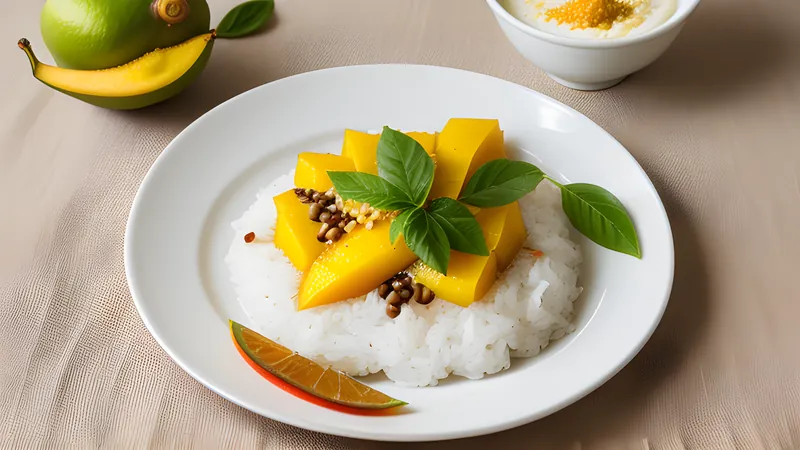
↓ Jump to recipeMango sticky rice is one of those desserts that needs almost no persuading — glutinous rice steamed until tender and faintly sweet, ripe mango cut into thick wedges, and a pool of warm coconut milk poured over both. My twist is in that pool: instead of the usual plain, barely-cooked coconut milk, I toast dried coconut until it is deep gold and nutty, then stir most of it into a lightly thickened, well-salted sauce. It changes the dish from pleasant to genuinely exciting, adding a roasted depth and a savoury edge that plain coconut milk cannot give you.
Mango Sticky Rice with Toasted Coconut Cream
Ingredients
- 300g Thai glutinous (sticky) rice
- 400ml tinned full-fat coconut milk, for the rice
- 400ml tinned full-fat coconut milk, for the sauce
- 60g caster sugar, for the rice
- 40g caster sugar, for the sauce
- 1 tsp fine salt, for the rice
- 1 tsp fine salt, for the sauce
- 2 pandan leaves, tied in a knot (optional)
- 40g desiccated coconut, for toasting
- 1 tsp cornflour, slaked in 1 tbsp cold water
- 3 ripe mangoes
- 1 tbsp toasted mung beans or white sesame seeds, to serve
Method
- Rinse the glutinous rice in several changes of water until it runs mostly clear, then soak in plenty of cold water for at least 4 hours, or overnight.
- Toast the desiccated coconut in a dry frying pan over a medium heat, stirring constantly, for 4 to 5 minutes until deep golden brown, then tip out onto a plate immediately to stop it cooking further.
- Drain the rice and spread it in a steamer basket lined with muslin or a clean tea towel, adding the pandan leaves on top. Steam over simmering water for 20 to 25 minutes, turning the rice over once halfway, until the grains are translucent and tender.
- While the rice steams, warm the first 400ml coconut milk with 60g sugar and 1 tsp salt in a small pan over a low heat, stirring until dissolved. Do not let it boil.
- Tip the hot cooked rice into a bowl and fold in two-thirds of the warm sweetened coconut milk. Cover and leave to rest for 15 to 20 minutes so the rice absorbs it, reserving the rest.
- For the sauce, heat the second 400ml coconut milk with 40g sugar and 1 tsp salt in a small pan and bring to a gentle simmer.
- Whisk in the cornflour slurry and cook for 2 to 3 minutes, stirring, until the sauce thickens enough to coat the back of a spoon.
- Stir two-thirds of the toasted coconut into the sauce, keeping the rest back for garnish.
- Peel and slice the mangoes into thick wedges.
- Spoon the rice into bowls with the mango alongside, pour the warm toasted coconut sauce generously over both, and finish with the reserved toasted coconut and the mung beans or sesame seeds.
Khao niaow mamuang, and the rice that makes it
Mango sticky rice — khao niaow mamuang in Thai — is sold from carts and market stalls across Thailand, piled with mango wedges beside mounds of glutinous rice kept warm under cloth, and it is eaten as a snack as readily as a formal dessert. It is at its best and most abundant during mango season, roughly March to June, when Nam Dok Mai mangoes are at their sweetest, though the dish is served year-round with whatever good mango is available.
The rice itself is not the same as the rice in a Thai curry. Glutinous rice, also called sticky or sweet rice, is a short-grain variety with almost no amylose starch, which is why it clumps into a cohesive, chewy mass rather than separating into individual grains the way jasmine rice does. It is central to the food culture of northern and northeastern Thailand, Laos and parts of Myanmar, where it is the everyday staple, eaten by hand and used to scoop up dips and grilled meats — a completely different role from the fragrant jasmine rice that dominates central Thai cooking. For this dessert you need the true glutinous variety, sold in Asian grocers as “sticky rice” or “sweet rice”; ordinary long-grain or even short-grain sushi rice will not give you the same chew, however long you cook it.
Soaking is not optional. Glutinous rice starts out hard and opaque, and steaming it dry, without a long soak first, leaves the centre of each grain undercooked no matter how long you leave it over the heat. A soak of at least four hours, or preferably overnight, lets water penetrate the grain fully, so that a comparatively short steam — twenty to twenty-five minutes — cooks it through evenly. Steaming rather than boiling matters too: boiled glutinous rice turns waterlogged and gluey, while steaming keeps the grains distinct within the sticky mass, each one glistening rather than collapsed.
Why toasting the coconut changes everything
Most versions of this dessert pour warm coconut milk, sweetened and lightly salted but otherwise unadorned, straight over the rice and mango. It is good. But coconut milk on its own is a fairly one-note flavour — rich, faintly sweet, a little flat — and dry-toasting a portion of desiccated coconut before it goes anywhere near the sauce introduces the kind of nutty, caramelised complexity that plain coconut milk cannot provide alone.
The chemistry is straightforward Maillard browning: as the residual moisture in desiccated coconut cooks off in a dry pan, the sugars and proteins on its surface start to brown and develop new, roasted compounds — the same reaction that turns raw cashews into something altogether more interesting once toasted. Do it low and slow. Desiccated coconut is thin and has very little moisture to buffer it, so it goes from pale to burnt in the time it takes to answer the phone; a medium heat, a constant stir with a wooden spoon, and your full attention for four or five minutes is the whole job. The moment it smells toasty and turns the colour of light brown sugar, it is done, and tipping it out of the hot pan immediately is essential — carryover heat in the pan itself will keep browning it towards bitter if you leave it sitting there.
Salt is the other half of the twist. A teaspoon in the sauce sounds like a lot for a dessert, but coconut milk is rich enough to absorb it without tasting salty; what it does instead is sharpen the sweetness and make the toasted coconut flavour taste more concentrated, the same trick that makes salted caramel taste more like caramel than caramel does on its own. Taste the sauce before you thicken it and it should taste slightly too savoury on its own — once it is poured over the sweet rice and ripe mango, the balance corrects itself completely.
The method, and where it can go wrong
The two coconut milks in this recipe do different jobs and are treated differently for a reason. The first is warmed only gently and folded through the hot rice while both are still warm — this is when the grains are most absorbent, and folding in cold coconut milk at this stage would seize the surface starch and stop it soaking in properly. The second is simmered and lightly thickened with a small amount of cornflour, which is what turns it from a thin milk into a sauce with enough body to cling to the rice and mango rather than pooling uselessly at the bottom of the bowl. Do not over-thicken it: you want it to coat a spoon, not stand up like custard, or it will taste starchy and mute the toasted coconut flavour.
Resting the rice under cover after folding in the sweetened coconut milk is the step most people skip, and it is the one that makes the biggest difference to texture. Fifteen to twenty minutes gives the rice time to fully absorb the liquid rather than sitting in a puddle of it, so what you serve is glossy, cohesive rice rather than rice swimming in excess milk.
The recipe
Rinse 300g Thai glutinous rice until the water runs mostly clear, then soak in plenty of cold water for at least 4 hours or overnight. Toast 40g desiccated coconut in a dry pan over a medium heat, stirring constantly, for 4 to 5 minutes until deep golden, then tip it out immediately.
Drain the rice and steam it over simmering water, in a lined steamer basket with 2 knotted pandan leaves on top if using, for 20 to 25 minutes, turning it once, until translucent and tender. Warm 400ml coconut milk with 60g sugar and 1 teaspoon salt until dissolved, without boiling, then fold two-thirds of it through the hot rice. Cover and rest for 15 to 20 minutes.
For the sauce, simmer a second 400ml coconut milk with 40g sugar and 1 teaspoon salt, whisk in a slaked teaspoon of cornflour, and cook for 2 to 3 minutes until it coats a spoon. Stir in two-thirds of the toasted coconut. Slice 3 ripe mangoes into wedges, plate with the rice, pour the sauce generously over both, and scatter with the remaining toasted coconut and a spoon of toasted mung beans or sesame seeds.
Choosing and ripening mango
The mango matters as much as the rice. Look for fruit that gives slightly under gentle thumb pressure, with a sweet, faintly resinous smell at the stem end; a rock-hard mango has no place here. Nam Dok Mai, with its slender shape and golden skin, is the classic choice in Thailand for its low fibre and honeyed flavour, but Ataulfo (also sold as Champagne or Honey mango) is the closest widely available substitute outside Asia and works beautifully. Avoid the fibrous, more acidic mangoes often sold simply as “mango” in UK supermarkets if you have any choice in the matter — their stringiness fights the smooth rice rather than complementing it. If your mangoes are still firm, leave them in a paper bag at room temperature for two or three days; this traps the ethylene gas they naturally give off and speeds ripening without refrigeration, which stalls the process and can leave the flesh mealy.
Tips, storage and variations
The rice is best eaten warm, within an hour or two of steaming, and does not reheat especially gracefully — it firms and dries as it cools, since the starch retrogrades once the water activity drops. If you must make it ahead, keep it wrapped and steam it again briefly, covered, to soften it back up; a microwave with a splash of water and a covered bowl works in a pinch too. The sauce keeps well in the fridge for up to three days and reheats gently in a small pan; loosen it with a splash of coconut milk if it has thickened too far on standing.
For a change, swap the desiccated coconut for coconut flakes, which toast to a coarser, more textured finish and look striking scattered over the top. A pinch of toasted black sesame alongside the mung beans adds visual contrast and a faint bitterness that plays well against the sweetness. If you cannot get glutinous rice at all, this dish genuinely does not work as a substitute recipe with other rice — it is worth seeking out from an Asian grocer rather than compromising, the same way a proper Thai green curry depends on real curry paste rather than a shortcut jar. Serve it alongside something bright and herbal earlier in the meal, like larb with toasted rice powder and lime, and the toasted coconut theme carries through the whole table.
Related Content