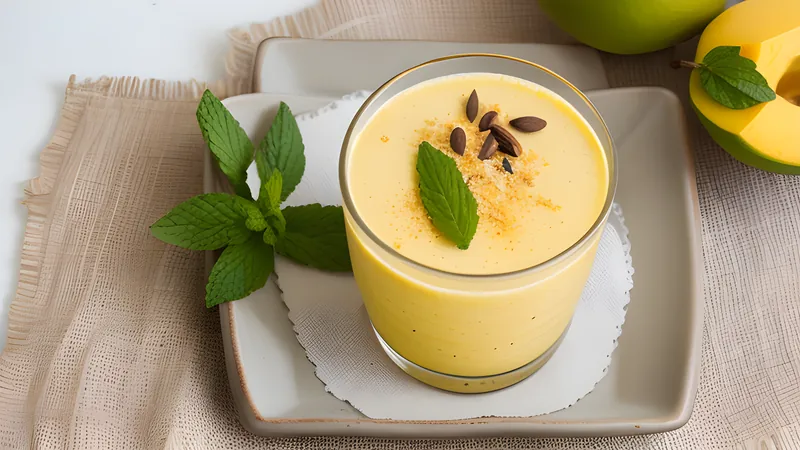
Mango Lassi with Cardamom and Lime
Ripe mango and cold yoghurt, warmed with green cardamom and cut sharp with lime at the very end.
Contents
↓ Jump to recipeA good mango lassi tastes like the mango arrived first and the dairy was invited along to keep it company. Too many versions swing the balance the wrong way — thick, cold, vaguely mango-scented yoghurt that could be any smoothie with the wrong sticker on it. This one keeps the fruit loud, warms it with a proper hit of green cardamom rather than a background whisper, and finishes with lime stirred in at the last second so the whole glass tastes lifted rather than just sweet. It takes ten minutes and no cooking at all.
Mango Lassi with Cardamom and Lime
Ingredients
- 2 ripe mangoes (about 500g flesh once stoned), or 400g tinned Alphonso mango pulp
- 300g full-fat plain yoghurt, well chilled
- 100ml whole milk, well chilled
- 4 green cardamom pods
- 2 tablespoons caster sugar, or to taste (start with 1 tablespoon if using sweetened tinned pulp)
- Juice of 1 lime (about 2 tablespoons)
- A small pinch of fine salt
- Ice cubes, to serve
- 1 tablespoon pistachios, finely chopped, to serve
- A pinch of ground cardamom, to serve
Method
- Split the cardamom pods with the flat of a knife, tip out the black seeds and discard the papery husks. Grind the seeds to a coarse powder in a mortar or spice grinder.
- If using fresh mangoes, cut the cheeks from the stone, score the flesh in a criss-cross and spoon it away from the skin. Blitz the flesh alone in a blender until completely smooth, scraping down the sides.
- Add the yoghurt, milk, ground cardamom, sugar and salt to the blender. Blitz again for 30 seconds until fully combined and pale gold, with no streaks of yoghurt visible.
- Taste and adjust sugar to the sweetness of your mango. Add the lime juice last, pulsing briefly just to combine rather than blending hard — a long blast after the acid goes in encourages the yoghurt to thin and split.
- Taste again; the lime should register as a clean edge at the back of the palate. Add more only in half-teaspoon increments.
- Fill two tall glasses with ice and pour the lassi over. Scatter with chopped pistachio and a light dusting of ground cardamom. Serve at once, with a spoon if the mango was fibrous.
Where lassi actually comes from
Lassi is Punjabi in origin, and older than most food writing likes to admit — versions of churned, spiced buttermilk drinks turn up in Ayurvedic texts as far back as 1000 BCE, well before refrigeration made a cold glass of anything a given. The point of the original drink wasn’t dessert. It was digestion and heat management: a farming region with brutal summers and a dairy surplus worked out that whisking yoghurt with water, salt and roasted cumin produced something that cooled the body and settled a heavy meal, and namkeen lassi — the salted, savoury version — is still the one you’ll find poured from a giant steel urn at a dhaba on the Grand Trunk Road, served in a clay kulhad that imparts its own faint mineral note and gets smashed on the ground when you’re done, a piece of disposable pottery that’s also a small act of hygiene theatre nobody minds.
The sweet, fruited lassi that most people outside India picture is the newer branch, though “newer” still means generations old. Mango lassi specifically rides on the Alphonso and its cousins — mangoes so perfumed and custardy that Mughal-era courts reportedly kept orchards purely for royal enjoyment, and Alphonso is still named, by most trade bodies, the most exported mango cultivar from India despite a growing season that lasts barely ten weeks a year. Street vendors in Amritsar and Delhi built the fruited version around whatever the market offered that week, and mango — with its density, its sweetness, its colour — became the standard-bearer, the one you’ll see on menus from Lahore to Leicester. Amritsar in particular has a handful of famous, decades-old lassi counters — Ahuja Milk Bhandar near the Golden Temple is one of the best known — where the drink arrives in a tall steel glass with a full slab of fresh white butter floating on top, a far richer, more savoury-leaning style than anything you’ll get from a blender at home, and a reminder that even the “sweet” branch of lassi never fully let go of the dairy-forward, almost meal-like original. Cardamom rode along with it because cardamom rides along with nearly every North Indian sweet dairy dish: it’s the spice of saffron and cardamom rice pudding, of gulab jamun, of anything meant to read as festive rather than everyday. If you’ve made gulab jamun in cardamom-rose syrup, you already know the way cardamom and milk solids amplify each other — the same trick is doing quieter work here.
Why the method matters more than the recipe suggests
This looks like a five-minute blender job, and it mostly is, but there are three places it goes wrong, and all three are about when things happen rather than what happens.
First: blitz the mango alone before you add anything dairy. Mango flesh, especially near the stone, holds thin fibrous threads that a blender will happily leave whole if there’s already liquid diluting the blade’s grip. Puree it neat first and you get a genuinely smooth base; add the yoghurt too early and you’ll be picking strings out of your teeth.
Second: grind your own cardamom, and grind it just before you use it. Pre-ground cardamom loses its volatile top notes — the ones that read as bright and citrusy rather than just “warm spice” — within about a week of grinding, because those aromatic oils are the first thing to evaporate once the seed’s surface area goes up. A pod cracked and ground at the counter carries a lemony sharpness that vanishes from a jar within a month of purchase, however well sealed.
Third, and the one everyone gets wrong: add the lime after the dairy is fully blended, and pulse rather than blend. Citric acid denatures milk proteins — it’s literally how paneer is made, by adding lime or lemon juice to hot milk and watching it curdle into curd and whey. Yoghurt already carries some acidity of its own, which is why it stays liquid rather than solid, but hit it with a fresh dose of lime juice and a long, high-speed blend and you can tip it over the edge into a grainy, thin-looking drink. A brief pulse just to fold the lime through keeps the proteins from over-agitating while the acid is doing its work, and you get a clean, cohesive lassi rather than something that looks slightly split.
Choosing the mango matters more than any technique in the method. A ripe mango should give gently under thumb pressure at the shoulder near the stalk, the way a ripe peach does, and smell distinctly sweet and floral through the skin at that end — a mango with no smell at all is under-ripe and will need extra sugar and still taste thin. Alphonso and Kesar both turn a deep, almost custardy orange-yellow when ripe; a mango that’s still mostly green-skinned and rock-hard needs another two or three days at room temperature, not the fridge, before it’s worth using here.
The recipe
Makes 2 large glasses (about 700ml). Prep 10 minutes. No cooking.
Ingredients
- 2 ripe mangoes (about 500g flesh), or 400g tinned Alphonso mango pulp
- 300g full-fat plain yoghurt, chilled
- 100ml whole milk, chilled
- 4 green cardamom pods
- 2 tablespoons caster sugar, or to taste
- Juice of 1 lime
- A pinch of fine salt
- Ice, to serve
- Chopped pistachio and ground cardamom, to finish
Method
Crack the cardamom pods, tip out the seeds, and grind them to a rough powder. Cut the mango flesh from the stone and blitz it alone until completely smooth. Add the yoghurt, milk, cardamom, sugar and salt, and blitz again until pale gold and streak-free. Taste for sweetness — ripe mango varies wildly, so this is the moment to correct it, before the lime goes in. Add the lime juice and pulse briefly, just enough to combine. Taste once more: you want a clean citrus edge at the back of the palate. Pour over ice, scatter with pistachio and a dusting of cardamom, and drink it before the ice has a chance to water it down.
Full-fat yoghurt isn’t optional here in the way it might be in other recipes. Low-fat yoghurt is thinner and more acidic pound for pound, which pushes the curdling risk higher and gives you a drink that separates in the glass within minutes rather than staying glossy. If you only have low-fat, cut the milk to 50ml and add a tablespoon of double cream to compensate.
Substitutions and storage
Frozen mango chunks work well outside the short Alphonso season — thaw them fully first and drain off the excess liquid they release, or the lassi will be watery rather than rich. Kesar or Ataulfo mangoes are good substitutes with a similar custardy texture; watery, stringy varieties like some supermarket “ready to eat” mangoes will need the sugar adjusted up and won’t blend quite as silkily. Tinned Alphonso pulp, sold under brands like Ratna or Swad in South Asian grocers, is worth keeping in the cupboard for exactly this recipe — it’s usually already lightly sweetened, which is why the ingredient list halves the sugar when you use it, so always taste before adding the full amount.
Greek yoghurt can stand in for regular plain yoghurt if that’s what’s in the fridge, but its lower water content and firmer set make for a noticeably thicker, almost milkshake-like lassi rather than the pourable, glass-friendly texture of the original — thin it with an extra splash of milk if you go that route, added gradually until it drops off a spoon rather than clings to it.
For a dairy-free version, use a thick coconut yoghurt and oat milk in place of the dairy — the coconut fat mimics the richness reasonably well, though you lose some of the tang that yoghurt’s live cultures provide, so add an extra squeeze of lime to compensate.
Lassi doesn’t keep. The yoghurt and mango begin to separate within about twenty minutes at room temperature and the texture is never the same again once re-blended — this is a drink to make right before you drink it. If you must prep ahead, puree the mango and store that (up to two days, covered, in the fridge), then blend fresh with the dairy just before serving.
Variations
A pinch of saffron, bloomed in a teaspoon of warm milk for five minutes before it goes into the blender, turns this into a more festive, Diwali-table version — the colour deepens and the flavour picks up saffron’s faint hay-like sweetness alongside the cardamom. For a savoury pivot back toward the drink’s roots, skip the mango and sugar entirely, whisk yoghurt with iced water, roasted cumin, black salt and a few mint leaves for a namkeen lassi — genuinely one of the better hot-weather drinks there is, and a useful reminder that lassi’s whole first life was savoury. If you want something closer to a dessert, swirl in a tablespoon of rose syrup at the end rather than blending it — it sits in ribbons through the glass and pairs the same way it does with the syrup in gulab jamun in cardamom-rose syrup. Whichever way you take it, this is a drink best made in the last five minutes before it’s drunk, with fruit that’s properly ripe and spice that’s freshly cracked.
Related Content