Mango Chutney, Properly Spiced
sweet, sharp and warm, with a tarka stirred through at the end
Contents
↓ Jump to recipeThere is a jar of mango chutney in most British kitchens, brought home with a curry and then quietly resident in the fridge door for the next eighteen months. It is a decent thing, that jar, and it is also nothing like what you can make yourself in an afternoon. Homemade mango chutney is brighter, chunkier and far more aromatic, with real pieces of translucent fruit suspended in a glossy, spiced syrup and a warmth from whole spices that the smooth commercial stuff sands away. It is one of the most satisfying preserves to make, partly because it is nearly impossible to get wrong, and partly because it makes the house smell extraordinary.
Chutney came into British cooking through the colonial trade with India, an Anglicised version of the Hindi chatni, a family of fresh and cooked relishes eaten across the subcontinent. The sweet, jammy, vinegar-preserved style we call mango chutney is a hybrid — Indian spicing meeting the British preserving tradition of boiling fruit with sugar and vinegar to make something that keeps for a year. It sits comfortably alongside a tomato kasundi or a jar of homemade caramelised onion marmalade on the same shelf: fruit and sugar and acid, cooked down into something greater.
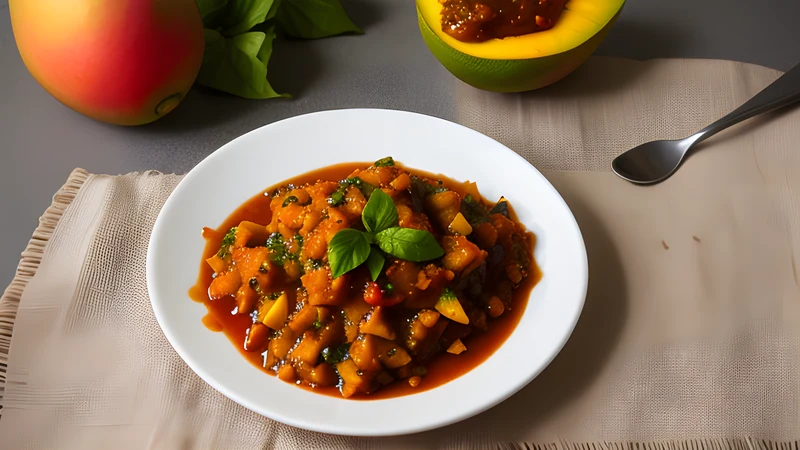
Mango Chutney, Properly Spiced
Ingredients
- 1kg firm, slightly underripe mango flesh (about 3–4 mangoes), diced
- 250g granulated sugar
- 200ml cider vinegar
- 50g fresh ginger, peeled and finely julienned
- 4 fat garlic cloves, thinly sliced
- 1 tsp fine sea salt
- 1/2 tsp chilli flakes, or to taste
- 6 green cardamom pods, lightly crushed
- 1 tsp cumin seeds
- 1 tsp coriander seeds
- 1/2 tsp ground turmeric
- 3 tbsp neutral oil, for the tarka
- 1 tsp black mustard seeds
- 1 tsp nigella (kalonji) seeds
- 2 dried red chillies
Method
- Toast the cumin and coriander seeds in a dry pan until fragrant, then lightly crush.
- Combine the mango, sugar, vinegar, ginger, garlic, salt, chilli flakes, cardamom, toasted spices and turmeric in a wide heavy pan.
- Bring to a simmer, stirring until the sugar dissolves, then cook gently for 45–60 minutes, stirring often, until thick and jammy and the mango is translucent.
- Meanwhile heat the oil for the tarka in a small pan; add the mustard seeds and let them pop, then add the nigella seeds and dried chillies for 20 seconds until aromatic.
- Stir the hot tarka through the finished chutney.
- Spoon into warm sterilised jars, seal, and cool; leave at least 2 weeks before eating.
Choose the right mango, and cut it right
The single most important decision happens at the greengrocer. You want mangoes that are firm and slightly underripe, still a little tart, with flesh that holds its shape. A soft, sweet, ready-to-eat mango will collapse into a sludgy purée as it cooks, giving you a smooth jam rather than a chunky chutney with distinct pieces of fruit. Slightly green mangoes hold their bite, keep the chutney’s texture, and bring their own acidity to balance the sugar. If all you can find is ripe fruit, cut it into larger chunks and cook it a little less to compensate.
The Alphonso and Kesar varieties are prized for eating, but for chutney a firmer everyday mango is ideal precisely because it is less sweet and less inclined to disintegrate. Peel and dice the flesh into rough two-centimetre pieces; some will break down and thicken the syrup while others stay whole, which is the texture you are after.
Whole spices, toasted, and why it matters
Ground spice from a jar gives you a flat, one-dimensional warmth. Whole spices, toasted and added at the start, give depth and layers. Toasting cumin and coriander seeds in a dry pan for a minute until they smell nutty and start to jump wakes up their essential oils and deepens their flavour before they ever hit the pot. Green cardamom pods, lightly crushed so they open but stay whole, perfume the whole chutney with a floral, citrussy warmth that is the secret behind a really good version. You leave the pods in; anyone who bites one gets a fragrant little surprise, and you can fish them out before jarring if you prefer.
Ginger and garlic go in generously. The ginger, cut into fine matchsticks rather than grated, keeps its presence as little warm, slightly fibrous threads throughout, and its heat mellows into the syrup as it cooks. Turmeric gives colour and an earthy base note. Chilli flakes bring the heat, and you control how much — a half teaspoon gives a gentle warmth, a full teaspoon gives a chutney with a proper kick.
The clever twist: a tarka stirred through at the end
Here is the step that lifts this above every jarred chutney and most homemade ones too. A tarka — the Indian technique of blooming whole spices in hot oil — stirred through right at the finish. While the chutney cooks down, you heat oil in a small pan, crackle black mustard seeds until they pop, then add nigella seeds and dried chillies for a few seconds until aromatic. Poured hot into the finished chutney, this releases a final burst of fresh, toasty, fragrant spice that a long simmer would have cooked flat.
The genius of the tarka is timing. Spices added at the start dissolve their flavour into the whole pot, mellow and integrated; spices bloomed in oil and added at the end sit on top, vivid and alive. Doing both gives you a chutney with background depth and a bright aromatic finish at once. The nigella seeds — those little black teardrops, sometimes called kalonji — bring a distinctive oniony, oregano-like note that reads instantly as “properly spiced” and is the flavour I most associate with a good homemade chutney.
Cooking it down and knowing when it is ready
Use a wide, heavy-based pan so the mixture reduces efficiently and does not catch. Bring everything to a gentle simmer, stir until the sugar dissolves, then let it bubble away for the best part of an hour, stirring more often as it thickens to stop the sugars sticking and burning on the base. You are looking for the mango to turn translucent and tender, the syrup to go glossy and thick, and the whole thing to hold a channel for a second when you drag a spoon across the bottom of the pan. It thickens further as it cools, so stop just before it looks fully set.
The vinegar and sugar are your preservatives, and the ratio matters for a chutney that keeps. Do not be tempted to cut the vinegar for a sweeter result; the acidity is what makes it safe to store for a year, and its sharpness is essential to balance all that sugar and fruit. Taste near the end and adjust — a little more salt to season, more chilli for heat, a splash more vinegar if it tastes too sweet.
Jarring, maturing and eating
Spoon the hot chutney into warm sterilised jars — run them through a hot dishwasher cycle or heat them in a low oven — seal immediately, and let them cool. Sealed and stored in a cool dark cupboard, it keeps for up to a year; once opened, keep it in the fridge and use within a couple of months. Here is the hard part: leave it at least two weeks before you open the first jar, and a month is better. Fresh from the pan the flavours are sharp and separate, all raw vinegar and distinct spice. Time rounds everything off, the acidity softens, the spices marry, and the chutney becomes mellow and harmonious.
Obviously it belongs beside a curry, a poppadom and a spoon. But it does far more than that. It is superb in a cheese sandwich, particularly with a strong cheddar, where the sweet heat cuts the fat. It goes on a ploughman’s, into a sausage roll, alongside cold roast pork, or stirred into a marinade for chicken. Spooned over a wedge of baked brie it makes an instant party dish, and a spoonful stirred into a salad dressing or a mayonnaise gives an easy spiced lift. Once you have three jars of your own in the cupboard, the resident supermarket jar starts to look very sad indeed.
Variations and troubleshooting
The method takes happily to other fruit. Swap half the mango for firm peach or apricot in high summer, or add a handful of sultanas in the last ten minutes for pockets of extra sweetness that plump in the syrup. For a darker, deeper chutney, use jaggery or soft brown sugar in place of some of the white. If your batch sets too stiff once cold, it simply cooked a touch too long; loosen a spoonful with a little boiling water when you serve it. If it stays runny, tip it back into the pan and reduce further, since chutney thickens only when enough water has driven off. And if the colour looks pale, an extra pinch of turmeric at the tarka stage brings back the golden glow that makes a jar of this look as good as it tastes.
Related Content