Malawach: The Yemeni Flaky Flatbread
A coiled, laminated dough that unrolls into dozens of buttery layers
Contents
↓ Jump to recipeMalawach is a bread you fight with a little before you eat it, and that fight is the point. The dough gets stretched until it is nearly see-through, brushed with browned butter, rolled into a tight coil, then flattened and fried, so that every bite through the finished disc crosses dozens of thin, buttery layers stacked on top of each other — closer in construction to a croissant that got run over than to anything most people picture when they hear “flatbread.”
Malawach: The Yemeni Flaky Flatbread
Ingredients
- 500g strong white bread flour, plus extra for dusting
- 1 tsp fine salt
- 1 tsp caster sugar
- 300ml lukewarm water, approximately
- 150g unsalted butter
- 100ml neutral oil, for coating and frying
- 4 large eggs, for serving
- 4 ripe tomatoes, grated on a box grater, skins discarded
- 1 garlic clove, crushed, for the tomato
- 0.5 tsp salt, for the tomato
- Zhug, to serve
Method
- Mix the flour, salt and sugar in a large bowl, then work in the lukewarm water until a soft, slightly sticky dough forms; knead on a lightly floured surface for 8-10 minutes until smooth and elastic.
- Divide the dough into 8 equal balls, rub each generously with oil, place on an oiled tray, cover, and rest for at least 1 hour at room temperature, or overnight in the fridge, to fully relax the gluten.
- Melt the butter in a small pan over medium heat and cook until it turns golden brown and smells nutty, 4-5 minutes; strain into a bowl and cool until soft and spreadable but not solid.
- Working on a well-oiled surface, stretch one dough ball out by hand, pulling gently from the centre outwards, until it is paper-thin and almost translucent, patching any tears with a scrap of dough.
- Brush the stretched sheet generously with the browned butter, then loosely fold it in on itself and roll it up into a tight coil, tucking the loose end underneath.
- Flatten the coil gently with your palm into a round disc about 12cm across, keeping the spiral layers intact; repeat with the remaining dough, then rest the discs for 15 minutes.
- Heat a dry, heavy frying pan or griddle over medium heat. Cook one malawach at a time, pressing it flat with a spatula, for 3-4 minutes per side, brushing with more browned butter as it cooks, until deep golden and visibly layered.
- Keep cooked malawach warm, loosely covered, while you cook the rest, stacking them so the layers stay soft.
- Boil the eggs for 8 minutes for a just-set yolk, then cool, peel and halve. Stir the grated tomato with the crushed garlic and salt.
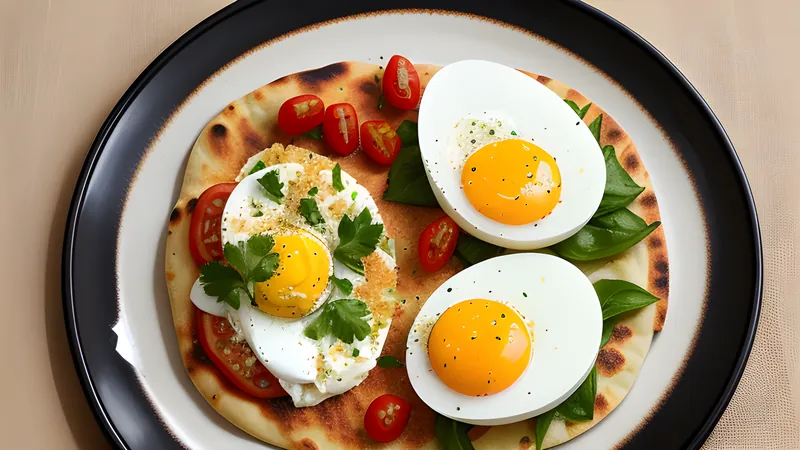
- Serve the malawach hot, torn into wedges, alongside the grated tomato, hard-boiled eggs and a generous spoonful of zhug.
A Shabbat bread that travelled to Israel
Malawach belongs to Yemenite Jewish cooking, and its original job was practical: Jewish law forbids cooking on Shabbat, so Friday’s kitchen work had to produce food that tasted right eaten the next day at room temperature or gently reheated. A rich, fully-laminated fried bread like malawach holds up beautifully under those conditions in a way that a plain yeasted loaf does not, which is exactly why it became a Shabbat-morning staple alongside its cousins jachnun and kubaneh, each solving the same problem with a slightly different dough and a slightly different amount of patience.
The dish crossed continents in a specific, dateable event. Between 1949 and 1950, Israel airlifted almost the entire Jewish population of Yemen — around 49,000 people — in an operation known as On Wings of Eagles, or Operation Magic Carpet, ending a Jewish presence in Yemen that stretched back roughly two thousand years. Yemenite Jewish cooks carried malawach, jachnun and kubaneh with them, and over the following decades those breads moved from immigrant kitchens into the Israeli mainstream so thoroughly that malawach now turns up in supermarket freezer aisles across the country, usually served the traditional way, with grated fresh tomato, hard-boiled egg and the fiery green chilli relish zhug.
The stretch, and why paper-thin actually matters
The technique here — rest a well-oiled dough ball, then stretch it by hand until it is nearly translucent — will look familiar to anyone who has pulled strudel dough or watched a roti canai vendor slap dough against a counter, and it is worth being clear that this is convergent technique rather than shared ancestry: laminating a dough by stretching it thin, coating it in fat, and coiling it up is one of those solutions that several food cultures arrived at independently, because it is simply the most efficient way to build many flaky layers without the equipment a French pâtissier would use for puff pastry. The thinner the initial stretch, the more distinct layers end up in the finished coil, and more layers mean a more dramatic contrast between crisp exterior and soft, buttery interior once it hits the pan.
A generously oiled work surface and oiled hands are what make the stretch possible without tearing the dough constantly — flour makes the dough grip and resist, where oil lets it slide and thin out evenly. Small tears are not a disaster; patch them with a scrap of dough pressed on top rather than starting over, since the coiling step buries most imperfections anyway.
Why browned butter earns a place in this dough
Traditional malawach is laminated with margarine or a neutral fat, chosen historically because it kept well without refrigeration and suited kosher dietary separation of meat and dairy for a bread eaten alongside all kinds of meals. Cooking at home removes that constraint, and butter, browned until the milk solids turn a deep golden brown and smell distinctly nutty, adds a savoury depth that plain melted butter or margarine cannot match — it’s the same flavour logic that makes browned butter worth the extra five minutes in a batch of biscuits. Cool the browned butter until it is soft and spreadable rather than pourable before brushing it onto the stretched dough; poured straight from the pan while hot, it runs off the thin sheet instead of coating it evenly, and you lose the layering the whole technique depends on.
Cooking the coil into a flatbread
Once flattened into a disc, the spiralled dough goes into a dry or barely oiled hot pan, pressed flat with a spatula and cooked slowly enough for the layers inside to set without the exterior burning first. Basting with a little extra browned butter as it cooks builds a deeper, more even crust across the whole surface, and a properly cooked malawach should show visible ridges and layers around its edge where the coil was cut — if the surface looks perfectly smooth and flat, the dough likely was not stretched thin enough before rolling.
Serve them the moment they come off the pan wherever possible; malawach loses some of its crisp-soft contrast as it cools, though it is still good reheated the next day in a dry pan, which is more or less the entire reason the dish exists.
The classic accompaniments, and why they belong together
Grated fresh tomato, seasoned simply with garlic and salt, cuts through the richness of the fried, buttery bread with acidity and moisture in exactly the way the dish needs. A soft-boiled or hard-boiled egg adds protein and turns the plate into a proper breakfast rather than a pastry. Zhug — the raw, punchy Yemeni green chilli relish built on coriander, garlic and cardamom — is the piece that ties the whole plate together, and it is worth making a batch of zhug specifically for this rather than reaching for a milder shop-bought hot sauce; the dish was built around that particular heat and herbal lift. If you already keep a jar of labneh with za’atar in the fridge, a dollop alongside the tomato and egg sits comfortably on the same table as an untraditional but genuinely good addition, worth trying at least once.
What goes wrong, and why
The single most common failure is a dough that will not stretch without tearing everywhere at once, and it almost always traces back to under-resting: gluten needs at least an hour at room temperature, or overnight in the fridge, to relax enough to be pulled paper-thin. If the dough springs back the moment you let go, rest it another 20 minutes rather than fighting it — forcing a tight dough just produces holes. The opposite problem, a coil that fries up dense and doughy rather than visibly layered, almost always means the initial stretch was not thin enough; a sheet you can read newsprint through gives noticeably more layers than one merely thinned to ordinary pizza-dough thickness, and those extra folds are what separate a good malawach from a merely acceptable one.
A malawach that browns on the outside before the middle sets is cooking too hot. Yemeni home cooks work over a moderate flame precisely because a laminated dough this rich needs time for the heat to travel inward between the layers; turn the pan down and extend the cooking time rather than chasing colour. If the finished bread tastes flat despite the browned butter, check the salt in the dough itself — at 1 teaspoon per 500g flour it should read as seasoned bread, not neutral pastry, and it is worth tasting a raw pinch of the dough before the first rest to confirm the salt has actually distributed evenly through the mix.
Variations worth trying
Malawach’s closest relatives, jachnun and kubaneh, both start from a similar laminated principle but travel in different directions: jachnun is rolled around the same browned-fat filling and then baked low and slow overnight, so it softens and caramelises rather than frying crisp, while kubaneh is a yeasted, pull-apart version baked in a covered pot. Anyone who enjoys the technique here has two obvious next projects once malawach feels comfortable.
A savoury filling folded into the coil before flattening turns the same base into something closer to a stuffed paratha: a spoonful of finely grated hard cheese, a scraping of crushed garlic and chilli flakes, or even leftover shakshuka vegetables patted dry work well, provided the filling stays thin enough not to split the layers apart as the dough is coiled. Ghee is a reasonable substitute for the browned butter where a household already keeps a jar on hand, though it lacks the toasted milk-solid flavour that makes browned butter specifically worth the extra step; margarine, historically the more common choice for reasons of shelf life and kosher dietary separation, produces a slightly blander but still legitimately traditional result.
A note on flour, since it changes the stretch more than most home cooks expect: strong white bread flour, with its higher protein content, builds the elastic gluten network that lets the dough stretch translucent-thin without simply falling apart, in a way that plain or “00” flour cannot quite match. If a stretched sheet keeps tearing along the same line no matter how long it rests, swap in a flour labelled specifically for bread rather than general purpose, and check the protein content on the packet — anything above roughly 12% is doing the job properly.
Storage and getting ahead
The dough balls, well-oiled and covered, keep in the fridge for up to two days before stretching, which makes this a realistic project to break across two sessions — dough one evening, stretching and frying the next morning. Cooked malawach freezes well stacked with baking paper between each disc; reheat from frozen in a dry pan over low heat until warmed through and crisp again. Browned butter keeps in the fridge for a week and is worth doubling for the batch, since it is just as good spooned over dal tadka or stirred through plain rice as it is brushed into another round of malawach dough.
Related Content