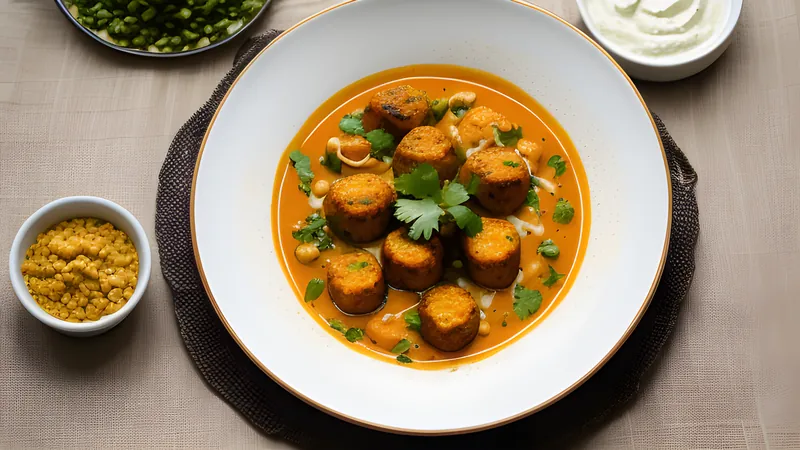
Malai Kofta in a Cashew-Tomato Gravy
The dinner-party curry worth the effort, made manageable
Contents
↓ Jump to recipeMalai kofta is the dish I order to judge an Indian restaurant, and the one I was most nervous to attempt at home. Soft, melting dumplings of paneer and potato, sitting in a gravy so silky and rich it is almost dessert-like in its luxury: it is the vegetarian showstopper of the North Indian menu, and it has a reputation for being temperamental. The kofta fall apart, the gravy splits, the whole thing feels like a project. It does not have to be any of those things, and the fix for the falling-apart dumplings is one simple ingredient.
That ingredient is cornflour, and the trick is treating the kofta mix like a dough you knead rather than a mixture you merely combine. Get the binding right and the rest is a straightforward, deeply satisfying curry. This is a weekend dish, an effort dish, a feed-people-you-like dish, and it is worth every one of its thirty-five minutes.
Malai Kofta in a Cashew-Tomato Gravy
Ingredients
- 200g paneer, coarsely grated
- 2 medium floury potatoes (about 300g), boiled and mashed
- 3 tbsp cornflour, plus more for shaping
- 2 tbsp finely chopped cashews and raisins (optional, for stuffing)
- 0.5 tsp garam masala
- 0.25 tsp ground cardamom
- salt, to taste
- neutral oil, for frying
- For the gravy: 60g cashews, soaked in hot water for 20 minutes
- 4 ripe tomatoes, roughly chopped (or 400g tin)
- 2 tbsp ghee or butter
- 1 large onion, finely chopped
- 1 tbsp ginger-garlic paste
- 1 tsp Kashmiri chilli powder
- 1 tsp ground coriander
- 0.5 tsp turmeric
- 0.5 tsp garam masala
- 1 tsp dried fenugreek leaves (kasuri methi)
- 1 tsp caster sugar
- 100ml double cream, plus more to finish
Method
- Make the kofta mix: combine grated paneer, mashed potato, cornflour, garam masala, cardamom and salt. Knead to a smooth, firm dough. If sticky, add a little more cornflour.
- Divide into 12. Flatten each piece, place a few chopped cashews and raisins in the centre if using, and seal into a smooth ball. Roll lightly in cornflour.
- Heat oil to 170C. Fry the kofta in batches, turning, for 3-4 minutes until deep golden all over. Drain on a rack. Do not crowd the pan.
- For the gravy, blend the soaked cashews with the tomatoes and a splash of water to a smooth purée.
- Melt the ghee in a pan, fry the onion until soft and golden, about 8 minutes, then add ginger-garlic paste and cook for 2 minutes.
- Add chilli, coriander, turmeric and garam masala; fry for 30 seconds. Pour in the cashew-tomato purée and cook, stirring, for 10-12 minutes until thick and the oil separates at the edges.
- Stir in the sugar, crushed kasuri methi and cream. Add water to loosen to a silky sauce and simmer gently for 3 minutes. Season.
- Add the kofta to the warm gravy just before serving, or pour the gravy over them on the plate. Finish with a swirl of cream.
What “malai” and “kofta” actually mean
The name tells you the character of the dish. Malai is the thick, clotted cream that rises to the top of boiled full-fat milk, and it signals richness and indulgence; it is the same word behind malai kulfi and countless other rich preparations. Kofta comes from the Persian and Turkish tradition of spiced meatballs, carried into the Indian subcontinent by the Mughals, who left an indelible mark on North Indian cooking. In its original form a kofta was a meatball; the vegetarian version, with its paneer-and-potato dumplings, is the Indian kitchen’s characteristic reinvention of a Mughlai idea for a vegetarian table.
So malai kofta is Mughlai food at heart: creamy, mildly spiced, aromatic with cardamom and fenugreek, built on the cashew-and-cream gravies that define the grand dishes of that court cuisine. It belongs to the same family as paneer butter masala and dal makhani with butter and cream, all of them leaning on the same luxurious, tomato-and-cream foundation that made Punjabi restaurant cooking famous across the world.
The kofta, and how to stop them collapsing
Everything about the kofta comes down to moisture and binding. The two classic failures are dumplings that disintegrate in the oil and dumplings that turn dense and heavy. Both are solvable.
First, the potato. Use floury potatoes, boil them whole in their skins so they absorb as little water as possible, and mash them while still warm but let them cool before mixing. A wet, waterlogged potato is the number-one reason kofta fall apart. Second, the paneer should be grated finely and worked into the potato so the mixture is even and smooth. Third, and most importantly, the cornflour. Three tablespoons bind the mixture into a proper dough, and you should knead it for a good minute until it is smooth, firm and holds a ball without cracking. If it feels tacky, add more cornflour a spoon at a time.
I stuff each kofta with a pinch of chopped cashews and raisins, which is traditional and gives a lovely sweet, nutty surprise in the centre, but it is optional. Seal the dumplings smoothly with no cracks, because cracks are where they split in the oil, and roll them lightly in cornflour before frying. Test one kofta first: drop it into 170C oil and if it holds together and browns, your mix is right. If it collapses, knead in another spoon of cornflour and test again.
Fry at a steady 170C, turning for an even deep-golden crust, and drain on a rack. Do not crowd the pan or the temperature crashes and they soak up oil.
The cashew-tomato gravy
The gravy is what makes this dish sing, and it rewards patience. Soaked cashews, blended smooth with tomato, give the sauce its signature velvety body and a gentle sweetness that balances the tomato’s acidity. This cashew paste is the secret behind so many rich restaurant gravies, and it does the work that in a European kitchen you might expect from a roux or a great deal of cream.
Start by frying the onion properly, until soft and golden, because that sweetness underpins everything. Bloom the ground spices in the fat for thirty seconds to wake them up, then add the cashew-tomato purée and cook it down seriously, for a good ten to twelve minutes, stirring, until it thickens and you see the oil begin to separate at the edges. That separation, called the masala coming together, is the visual signal that the raw tomato has cooked out and the base is ready. Rush this and the gravy tastes raw and sharp.
Finish with sugar to balance, cream for richness, and crushed dried fenugreek leaves, kasuri methi, rubbed between your palms as you add them. Kasuri methi is the defining aroma of this style of curry, faintly bitter and unmistakably North Indian, and it is worth seeking out; it lifts the whole dish above a generic creamy sauce.
Bringing it together without going soggy
Here is the one piece of timing that matters: keep the kofta and the gravy apart until the last possible moment. If the fried dumplings sit in the sauce for long, they soak it up and slump. The best approach is to warm the gravy, place the kofta in the serving dish or on the plate, and pour the sauce over just before it goes to the table. That way the dumplings keep a little structure and the contrast of soft kofta against silky gravy stays intact.
Serving, make-ahead and variations
What to serve with it. Malai kofta wants plain vehicles for its rich sauce: warm naan, buttered basmati or a simple jeera rice. A sharp side balances the richness; a kachumber salad of chopped onion, tomato and cucumber with lemon, or a bowl of cooling raita, does the job.
Make-ahead. This is a friendly dish for entertaining because both components hold. Make the gravy up to two days in advance; it improves overnight as the spices settle. Fry the kofta a few hours ahead and re-warm them in a low oven to crisp back up before serving. Assemble at the table.
Baked kofta. If you would rather not deep-fry, bake the dumplings at 200C for about 20 minutes, turning once, or use an air-fryer at 190C. They will be less crisp but perfectly good, and lighter.
Cheat’s binding. No cornflour? A couple of tablespoons of gram flour (besan), lightly toasted first, binds well and adds a nutty flavour. Some cooks use a slice of crustless bread blitzed to crumbs.
Nut-free gravy. Swap the cashews for a couple of tablespoons of blended melon seeds (magaz) or simply use more tomato and a touch more cream. The texture will be slightly less velvety but still rich.
Storage. The gravy keeps for three days in the fridge and freezes well. Freeze the fried kofta separately and reheat in the oven; freezing them in the sauce makes them mushy.
Serve it as the centrepiece of a small feast with a dal and a vegetable on the side, and it earns its reputation. The first time you cut into a kofta that holds its shape and finds that cashew-tomato gravy waiting underneath, all the effort makes sense. This is the dish that turns a weeknight cook into someone who cooks for occasions.
Related Content