Mac and Cheese with a Crunchy Parmesan Crumb and English Mustard
Creamy within, crisp on top
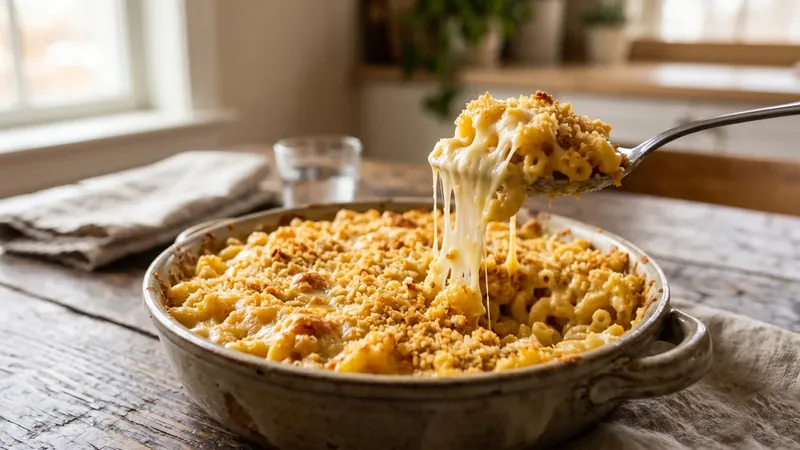
A great mac and cheese should be two textures at once: silky, molten pasta beneath a lid that crackles under the spoon. The twist here delivers both, a panko-and-Parmesan crumb baked to a deep crunch on top, and a spoonful of English mustard whisked into the sauce to cut the richness and make the cheese taste even more itself. It is comfort food with a bit of backbone, and it feeds a hungry table with ease.
Mac and Cheese with a Crunchy Parmesan Crumb and English Mustard
Ingredients
- 300 g macaroni
- 50 g unsalted butter
- 50 g plain flour
- 600 ml whole milk, warmed
- 1 tsp English mustard
- Pinch of grated nutmeg
- 200 g mature Cheddar, grated
- 75 g Gruyère, grated
- Sea salt and freshly ground black pepper
- 50 g panko breadcrumbs
- 30 g Parmesan, finely grated
- 1 tbsp olive oil
Method
- Heat the oven to 200°C (180°C fan). Cook the macaroni in salted boiling water for 2 minutes less than the packet says, then drain.
- Melt the butter in a large pan, stir in the flour and cook the roux for 2 minutes.
- Gradually whisk in the warm milk, a little at a time, until you have a smooth, glossy sauce.
- Simmer gently for 4-5 minutes until thickened, then whisk in the mustard and nutmeg.
- Take off the heat and stir in the Cheddar and Gruyère until melted. Season well.
- Fold the drained macaroni through the cheese sauce and tip into a baking dish.
- Mix the panko, Parmesan and olive oil with a little black pepper, then scatter evenly over the top.
- Bake for 20-25 minutes until bubbling at the edges and deeply golden and crisp on top.
- Rest for 5 minutes before serving.
3 The Story
Pasta baked with cheese is far older than its modern American identity suggests, with recipes for layered macaroni and cheese appearing in European cookery books well before the dish crossed the Atlantic. It became firmly woven into American home cooking over the following centuries, eventually entering the popular imagination as the boxed convenience food that generations grew up on. Yet its roots are unmistakably in the European tradition of binding pasta with a rich, cheesy sauce and finishing it in the oven.
At the heart of the dish is one of the most useful techniques a home cook can learn: the béchamel, or white sauce. Built from a cooked paste of butter and flour, called a roux, then loosened with milk, it is the foundation for countless dishes far beyond this one. Cooking the roux for a couple of minutes before adding liquid takes the raw edge off the flour, and adding the milk gradually while whisking is what keeps the sauce silky rather than lumpy. Once the cheese is stirred in off the heat, you have the creamy base everything else depends on.
The choice of cheese matters. Mature Cheddar provides the sharp, savoury punch most people associate with the dish, while a little Gruyère brings a smooth, nutty meltiness that stops the sauce becoming grainy. The English mustard is the recipe’s quiet secret weapon. Used sparingly, it adds no obvious heat of its own; instead its sharpness lifts the dairy and deepens the perception of cheesiness, a trick long understood by cooks who add a spoonful of mustard to cheese sauces and Welsh rarebit alike.
The crisp topping is where the twist becomes most obvious. Panko, the light and shard-like Japanese breadcrumb, bakes to a far crunchier, longer-lasting crust than ordinary breadcrumbs, and tossing it with grated Parmesan and a little oil helps it brown into a savoury, golden lid. The contrast it provides, brittle crust giving way to molten pasta beneath, is what turns a good bowl of mac and cheese into one worth fighting over the corner pieces for. A few minutes of resting before serving lets the sauce settle so it holds together on the spoon rather than flooding the plate.
One detail worth remembering is to undercook the pasta in its first boil. Because it finishes in the oven, fully cooked macaroni will turn soft and bloated by the time the topping has browned, so draining it a couple of minutes early keeps it pleasantly firm in the finished dish. The same goes for the sauce: make it a shade looser than seems right, as the pasta drinks in liquid as it bakes and a sauce that looked perfect in the pan can turn stodgy in the dish. Get those two things right and you have a mac and cheese that stays creamy from the first spoonful to the last.
Related Content