Lomo Saltado: Wok-Charred Beef, Soy and Lime
Peru's chifa classic — beef seared blazing-hot with soy, vinegar and chips fried right into the stir-fry
Contents
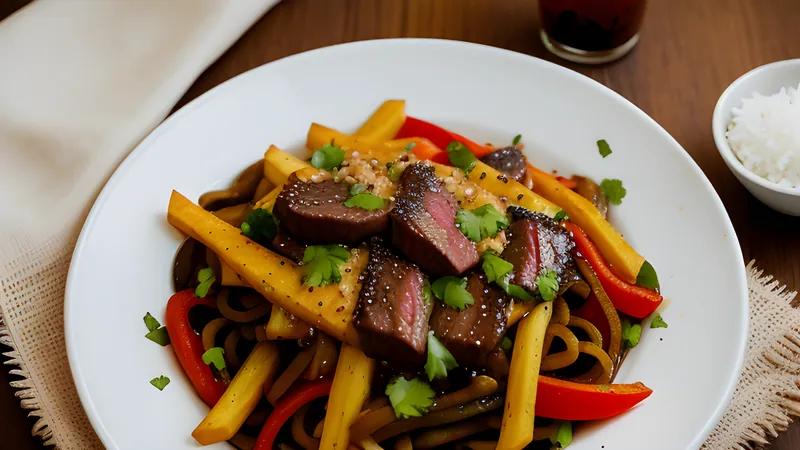
↓ Jump to recipeLomo saltado is the dish that proves Peruvian food and Chinese food have been talking to each other for a century and a half, and the twist that matters here is speed: everything goes into a screaming-hot wok in a strict order, tossed hard and fast, so the beef chars rather than stews and the chips — fried twice, then folded in at the very last second — stay properly crisp instead of turning to mush in the sauce.
Lomo Saltado: Wok-Charred Beef, Soy and Lime
Ingredients
- 600g beef sirloin or rump, trimmed and cut into 1.5cm-thick strips
- 600g floury potatoes (Maris Piper or similar), cut into 1cm chips
- Neutral oil, for deep-frying and searing
- 1 red onion, cut into 1.5cm-thick wedges, layers separated
- 2 tomatoes, firm and ripe, deseeded and cut into wedges
- 2 cloves garlic, finely chopped
- 1 yellow chilli (ají amarillo) or 1 red chilli, deseeded and thinly sliced
- 3 tbsp dark soy sauce
- 1 tbsp red wine vinegar
- 1 tsp ají amarillo paste (optional, for extra depth)
- 1/2 tsp ground cumin
- 1 tsp sugar
- 1/2 tsp ground black pepper
- Fine sea salt, to taste
- 2 tbsp chopped fresh coriander
- Juice of 1 lime
- Cooked white rice, to serve
Method
- Rinse the cut chips in cold water to remove surface starch, then dry thoroughly with a tea towel — wet potatoes will spit violently in hot oil.
- Heat 5cm of neutral oil in a deep pan or wok to 160°C. Fry the chips in batches for 4 minutes until pale and just cooked through but not coloured. Drain on kitchen paper.
- Increase the oil temperature to 190°C and fry the chips a second time, in batches, for 2 to 3 minutes until deep golden and crisp. Drain and season lightly with salt; set aside.
- Pat the beef strips completely dry with kitchen paper and season with salt and pepper. A dry surface is essential for a proper sear.
- Heat 2 tablespoons of oil in a wok or wide, heavy frying pan over the highest possible heat until it just starts to smoke. Add the beef in a single layer, in batches if needed to avoid crowding the pan, and sear undisturbed for 60–90 seconds per side until deeply browned. Remove to a plate.
- Add a little more oil to the same hot pan. Add the onion wedges and stir-fry hard for 90 seconds until charred at the edges but still crisp at the core.
- Add the garlic and sliced chilli and stir-fry for 20 seconds until fragrant. Return the beef and any resting juices to the pan.
- Add the soy sauce, red wine vinegar, ají amarillo paste if using, cumin, sugar and black pepper. Toss vigorously over the highest heat for 30 seconds so the sauce reduces slightly and coats everything in a glossy, dark glaze.
- Add the tomato wedges and the double-fried chips. Toss everything together for no more than 20 seconds — just enough to warm the tomato and coat the chips without turning them soggy.
- Remove from the heat, squeeze over the lime juice, scatter with coriander, and serve immediately alongside white rice.
Where it comes from
Lomo saltado is the flagship dish of chifa, the distinct Peruvian-Chinese cuisine that grew out of Cantonese immigration to Peru beginning in 1849, when the first wave of Chinese labourers arrived to work the coastal guano trade and the railways after the abolition of slavery created a labour shortage. Tens of thousands more followed over the following decades, largely from Guangdong province, and settled heavily in Lima, where they opened small eateries — chifas, a word that most likely derives from the Cantonese sic fan, meaning “eat rice” — that adapted Cantonese stir-fry technique to Peruvian ingredients that were actually available: beef, potatoes, onions, tomatoes, and the native ají amarillo chilli.
The wok itself, along with soy sauce and the whole technique of fast, high-heat stir-frying, arrived with those Cantonese cooks and had no precedent in Peruvian cuisine before. What makes lomo saltado distinctly Peruvian rather than simply Chinese food cooked with local produce is the ingredient logic underneath it: beef strips stand in for the pork or chicken more common in Cantonese stir-fries, ají amarillo brings a fruity, medium heat that has no real Cantonese equivalent, and the chips — inherited from Peru’s own deep and serious potato culture, home to thousands of native potato varieties — are folded directly into the stir-fry rather than served on the side, an idea that would strike most Cantonese cooks as unusual and that has become the single most recognisable feature of the dish. It is now standard enough across Lima that lomo saltado sits on the menu of nearly every restaurant in the city, from street-corner chifas to the most expensive tasting-menu establishments, usually served with a side of rice as well as the chips, doubling down on the carbohydrate in a way that’s very much part of the dish’s charm rather than an oversight.
The method, explained
Lomo saltado lives or dies on heat and timing, and understanding why explains most of the technique below. A wok stir-fry depends on what’s called the Maillard reaction happening fast, at high temperature, on a dry surface — the browning reaction between amino acids and sugars that produces the deep, savoury, slightly charred flavour that makes seared beef taste completely different from boiled or steamed beef. That reaction needs surface temperatures well above 140°C to happen quickly. A crowded pan, wet beef, or oil that isn’t properly hot first will all drop the pan’s temperature the moment food hits it, and the beef will steam in its own released moisture instead of searing — grey and flabby rather than browned and charred. This is why the beef must be patted completely dry before it goes in, why it’s seared in batches rather than all at once if the pan is small, and why the oil needs to be visibly close to smoking before the meat touches it.
The double-fried chips follow the same logic that makes the best French fries and the best karaage: two separate fryings at two separate temperatures. The first fry, at a lower 160°C, cooks the potato through to the centre without colouring the surface — this is purely about getting the interior soft and cooked. The second fry, at a hotter 190°C, is entirely about the exterior: it drives off surface moisture fast and sets a genuinely crisp, deeply golden crust. Frying only once at a high temperature either burns the outside before the inside cooks, or, at a lower temperature the whole way through, leaves you with chips that are cooked but pale, soft and greasy rather than crisp. The chips also need to go into the finished stir-fry at the very last possible moment — folded through for no more than twenty seconds — because the sauce’s moisture will soften that hard-won crust the longer it sits in contact with it.
Finally, the order of additions in the wok matters as much as the heat. Onion goes in before garlic and chilli because it needs longer at high heat to char at the edges while staying crisp at the core; garlic and chilli go in near the end because they burn and turn bitter within seconds at wok temperatures; the sauce goes in after the aromatics so it reduces against the hot pan surface rather than steaming everything from the start; and the tomato and chips go in dead last, for the shortest possible time, purely to be warmed through and coated rather than cooked down.
The recipe
Cut potatoes into 1cm chips, rinse off the surface starch and dry thoroughly. Fry them twice — first at 160°C for four minutes until soft but pale, then, after a rest, at 190°C for two to three minutes until deep gold and properly crisp — draining and salting after each fry. Pat beef strips completely dry, season with salt and pepper, then sear in a screaming-hot wok in batches, undisturbed for a minute or so per side, until deeply browned, and set aside.
In the same hot pan, char red onion wedges hard for ninety seconds, then add garlic and sliced chilli for twenty seconds until fragrant. Return the beef to the pan along with soy sauce, red wine vinegar, a little ají amarillo paste, cumin, sugar and black pepper, and toss vigorously over the highest heat for half a minute so the sauce reduces into a dark, glossy glaze that coats everything. Add tomato wedges and the double-fried chips and toss for no more than twenty seconds — just long enough to warm through without softening the chips’ crust. Finish with a squeeze of lime and a scatter of coriander, and serve immediately with white rice.
Tips, substitutions, make-ahead and storage
Lomo saltado is not a dish that keeps or reheats gracefully — the whole point is the contrast between charred beef, crisp chips and just-wilted onion, and all three lose that within an hour of cooking. If you must prepare ahead, fry the chips through the first stage and hold them at room temperature for up to four hours, then finish with the second fry right before folding into the stir-fry; everything else should be a twenty-minute, start-to-finish cook right before you eat.
Sirloin, rump or even flank steak all work well, provided they’re cut against the grain into strips no thicker than 1.5cm, since thicker cuts won’t sear through in the short cooking time without overcooking the exterior. Ají amarillo paste is available from Latin American grocers and online and adds real depth, but a fresh yellow or red chilli covers the essential heat if you can’t find it. If you don’t own a wok, the widest, heaviest frying pan you have works — the key constraints are surface area and a pan that holds its heat.
Variations
Lomo saltado de pollo swaps the beef for chicken thigh strips, cooked the same way, and is common on chifa menus as a lighter alternative. Some Lima cooks add a splash of pisco to the pan just after the sauce goes in, letting it flame briefly for extra aromatic lift — dramatic, and genuinely worth trying if you’re cooking on a gas hob with the extractor fan on. A vegetarian version built around firm tofu, seared the same way the beef is, and mushrooms in place of the meat carries the same soy-and-char profile surprisingly well.
Get the wok properly hot before anything goes in, work fast once it starts, and don’t let the chips sit in the sauce a second longer than they need to. It’s a natural main to follow a starter of ceviche with leche de tigre, and if you’re chasing the same high-heat wok instincts elsewhere on the site, egg fried rice and Singapore noodles both live by the same rules of a hot pan and a dry pan.
Related Content