Lollapalooza, good, bad, loud or all of the above
good, bad, loud or all of the above

Contents
<p>On 18 July 1991, in a dusty amphitheatre outside Phoenix, Arizona, a travelling circus of alternative rock, industrial noise and rap opened a bill that MTV’s Dave Kendall predicted “could be the tour of the summer”. He was underselling it. The band that headlined — Jane’s Addiction — was about to split up, and the whole event had been dreamed up by its singer, Perry Farrell, as a farewell party for his own group. That farewell became Lollapalooza, a name Farrell lifted from an old slang word meaning something outstanding, and it went on to run every summer until 1997, vanish, and return in 2003 as the Chicago institution it is today. The story of how a break-up gig turned into a blueprint for the modern music festival is stranger and more consequential than the marketing suggests.</p>
<h2 id="where-the-day-comes-from">Where the day comes from</h2><div class="ad-unit ad-in-article" aria-label="Advertisement">
<span class="ad-label">Advertisement</span>
<ins class="adsbygoogle" style="display:block;text-align:center"
data-ad-client="ca-pub-3726833845844946"
data-ad-slot="3291553914"
data-ad-format="auto"
data-full-width-responsive="true"></ins>
<script>(adsbygoogle = window.adsbygoogle || []).push({});</script>
</div>
<p>Lollapalooza was not conceived at a boardroom table. Farrell, together with booking agents Marc Geiger and Don Muller and Jane’s Addiction manager Ted Gardner, sketched it out in 1990. The immediate spark was frustration: Jane’s Addiction had been booked to play Britain’s Reading Festival in 1990, but Farrell lost his voice after a club gig and the band pulled out. Geiger and drummer Stephen Perkins went to Reading anyway, watched a British crowd move happily between wildly different acts, and came home convinced the American touring circuit could carry the same idea.</p>
<p>What made the plan radical was the format. American festival history to that point meant single fixed sites — Woodstock in 1969, the US Festival in 1982, one field, one weekend. Farrell’s group proposed the opposite: a festival that packed up its stages and drove to the audience, stopping in more than twenty cities across North America over roughly six weeks. Nobody had run a rock festival as a national tour before. The commercial gamble was enormous, and the first year’s success surprised even the people who booked it.</p>
<h2 id="history">History</h2>
<p>The 1991 line-up is worth reading as a document of its moment. Jane’s Addiction topped a bill that mixed Siouxsie and the Banshees, the industrial ferocity of Nine Inch Nails, Ice-T — who used his slot to launch his metal band Body Count — the Butthole Surfers, Living Colour and Henry Rollins. Alternative rock, goth, hip-hop and thrash shared a single afternoon. That deliberate collision was the point. Farrell wanted a bill that no radio station of the day would have programmed together — the kind of hard-rock lineage traced in the story of <a href="/story/smoke-on-the-water-the-deep-purple-saga-rocks-resilient-titans/">Deep Purple’s endurance</a> sitting alongside industrial noise and rap — and in doing so he pulled a scattered underground into one visible place.</p>
<p>The timing was uncanny. Nirvana’s <em>Nevermind</em> arrived in September 1991, two months after that first tour rolled through Phoenix, and the “alternative era” it opened found Lollapalooza already waiting as its natural gathering point. Nirvana themselves headlined in 1992. Through the mid-1990s the tour became the place where a band graduated from clubs to arenas: acts such as Pearl Jam, Soundgarden, the Smashing Pumpkins and Rage Against the Machine all passed through its stages during their ascents. The festival also carried a second stage for newer acts and, in true early-90s fashion, an area of political booths, tattoo artists and information tents that treated the audience as a movement rather than a market.</p>
<p>The model faltered by 1997, when booking a coherent headline bill grew harder and grunge’s cultural charge faded. An attempt to revive the touring format in 2003 struggled, and in 2004 the tour was cancelled outright. The rescue came from reinvention: in 2005 promoter Charles Attanasio and the C3 Presents team planted Lollapalooza permanently in Chicago’s Grant Park as a single-city, multi-day event. That decision saved it. The Chicago edition has since spawned official offshoots in Chile, Brazil, Argentina, Berlin, Paris, Stockholm and Mumbai, exporting the name far beyond the American highways it was born on. The 2005 relocation also changed the festival’s economics: a fixed site let the promoters build permanent relationships with the city, sell multi-day passes, and negotiate the kind of infrastructure — power, sanitation, security — that a touring caravan could never carry with it. What had been an itinerant experiment became, in effect, an annual civic event with a fixed address and a place on Chicago’s calendar.</p>
<h2 id="why-it-matters">Why it matters</h2><div class="ad-unit ad-in-article" aria-label="Advertisement">
<span class="ad-label">Advertisement</span>
<ins class="adsbygoogle" style="display:block;text-align:center"
data-ad-client="ca-pub-3726833845844946"
data-ad-slot="3291553914"
data-ad-format="auto"
data-full-width-responsive="true"></ins>
<script>(adsbygoogle = window.adsbygoogle || []).push({});</script>
</div>
<p>Lollapalooza matters because it proved a commercial thesis that reshaped an industry: that a paying audience would happily buy a whole day of unfamiliar music if you curated the mix with conviction. The touring festivals that followed in the United States — Bonnaroo, Coachella’s early years, the whole summer-circuit economy — inherited its assumption that the festival itself, not any single band, could be the headliner.</p>
<p>It also mattered as a distribution channel for ideas that had no other outlet. In an America where MTV still gatekept what “alternative” meant, a tour that put Ice-T and Siouxsie Sioux on the same flyer did more to broaden the definition than any playlist. The festival’s blurring of genre lines looks ordinary now precisely because Lollapalooza made it ordinary. That is the mark of something that genuinely shifted the culture rather than merely reflecting it.</p>
<h2 id="how-it-is-celebrated">How it is celebrated</h2>
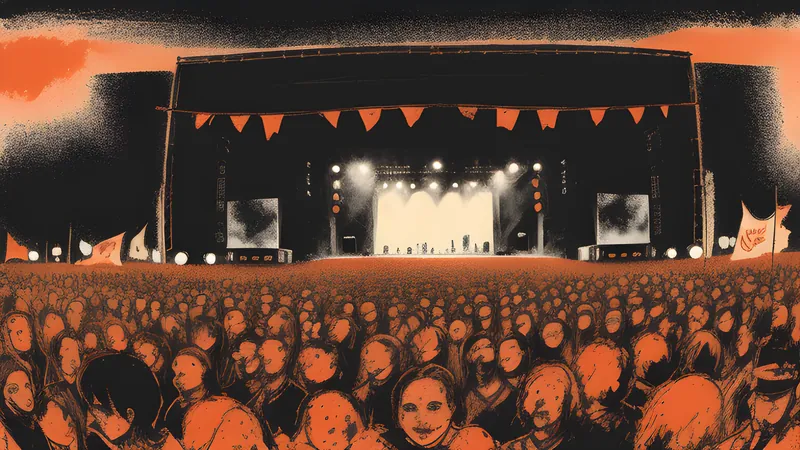
<p>The modern Lollapalooza runs over four days at the end of July or start of August across Grant Park, the lakefront green space in downtown Chicago, drawing crowds in the region of a hundred thousand a day. Eight stages spread across the park keep several performances running at once, so the festival is experienced as a series of choices — which set to sacrifice, which stage to sprint to. Between the music sit food stalls built around Chicago’s own culinary reputation, a dedicated family area called Kidzapalooza that Farrell introduced so parents could bring children, and art installations scattered through the grounds.</p>
<p>The celebration now genuinely spans hemispheres. Lollapalooza Chile and Lollapalooza Argentina run in their own summer in March, meaning the brand effectively circles the calendar; a headliner can play Grant Park in August and a São Paulo stadium the following March under the same banner. Each edition keeps the multi-genre spirit while bending toward local taste, so the Berlin bills lean harder into electronic music than the Chicago ones. Like <a href="/story/eurovision-is-politics-by-other-means/">Eurovision, where the contest doubles as a stage for national rivalry</a>, a festival that crosses borders inevitably picks up the flavour of each place it lands.</p>
<h2 id="symbols-and-the-sound">Symbols and the sound</h2>
<p>The most honest symbol of Lollapalooza is its volume, and the festival has a complicated relationship with it. Sustained exposure to sound at the levels found near festival stages — comfortably above 100 decibels — can cause permanent hearing damage, which is why seasoned festivalgoers now treat earplugs as standard kit rather than an admission of weakness. Musicians know this better than anyone; a generation of touring artists live with tinnitus earned in exactly these fields. The loudness that defines the day is also the thing most likely to follow you home, and it is worth respecting rather than romanticising.</p>
<p>Beyond the noise, the enduring emblem is the crowd itself: a densely packed field of strangers agreeing, for a few hours, to be moved by the same thing. Farrell’s original vision leaned on that communal charge, and it is the reason the event survived a near-death in 2004. The music writer’s cliché that a festival is “about the people” is, in this case, structurally true — the format was designed so that no single act could carry the weight, leaving the audience to do it.</p>
<h2 id="fun-facts">Fun facts</h2>
<ul>
<li>The name “Lollapalooza” is early-twentieth-century American slang for something extraordinary; Farrell reportedly encountered it in a Three Stooges short before attaching it to the tour.</li>
<li>Perry Farrell built the festival as a <em>farewell</em> for Jane’s Addiction — the band that started it broke up months after the inaugural 1991 run, then reunited years later.</li>
<li>The very first Lollapalooza date was not in a major music city but in Phoenix, Arizona, on 18 July 1991, and was covered live on MTV.</li>
<li>Ice-T used his 1991 Lollapalooza slot to debut his heavy-metal side project Body Count, whose song “Cop Killer” would ignite a national controversy the following year.</li>
<li>The festival “died” completely: after a cancelled 2004 tour it existed nowhere until promoters rebuilt it as a fixed Chicago event in 2005.</li>
</ul>
<h2 id="a-closing-reflection">A closing reflection</h2>
<p>There is a lesson buried in Lollapalooza’s history that has nothing to do with music. The tour succeeded because Farrell refused to programme for the audience he already had and instead assembled a bill for the audience he thought might exist — one that wanted friction and range rather than a single sound. Most cultural products flatter existing taste; the rare ones expand it, and take a financial risk to do so. When the original touring model collapsed, the people who saved Lollapalooza did the opposite thing — they narrowed it to one park in one city — and that too worked. What survived across both moves was not a format but a nerve: the willingness to bet that a crowd is more curious, and more durable, than the industry assumes. That bet is still the most interesting thing about the loudest weekend in Chicago.</p>
Advertisement
Related Content
Advertisement
