Locro: Argentina's Hearty Corn-and-Squash Stew
The slow independence-day pot of the Andes, with a fiery charred-onion salsa
Contents
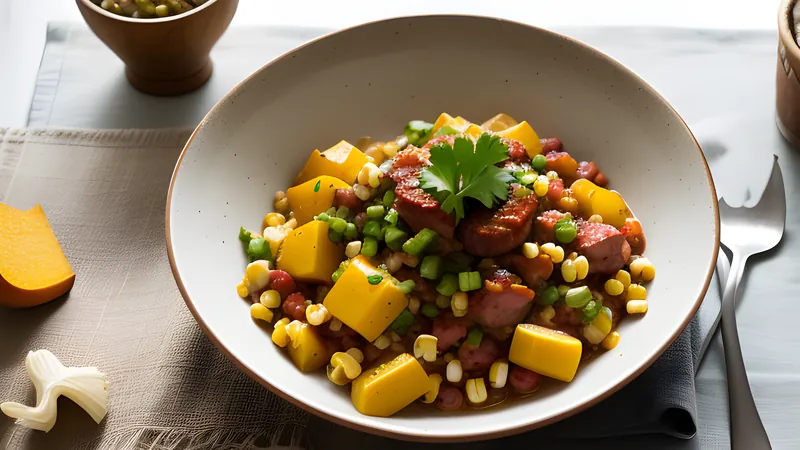
↓ Jump to recipeEvery 25th of May and 9th of July, the two dates on which Argentina remembers throwing off Spanish rule, the country cooks the same thing. Pots the size of dustbins appear on street corners, in peñas and union halls and family kitchens, and they fill with locro: a thick, pale-gold stew of hominy corn, beans, squash and whatever cuts of pork and beef the household can muster. It is patriotic food in the most literal sense, eaten to mark the nation’s birth, and its lineage runs back long before Spain arrived, to the Andean peoples who were simmering maize and squash in these highlands centuries before anyone drew a border.
Locro belongs to a family of stews that stretches up the spine of South America, from north-west Argentina through Bolivia and Peru and into Ecuador, changing its spelling and its contents with the altitude. The Argentine version leans hearty and porky, built for cold weather and long tables. What binds every version is the mote, the dried white hominy corn, which cooks down over hours into something creamy and faintly sweet and holds the whole dish together.
Locro: Argentina's Hearty Corn-and-Squash Stew
Ingredients
- 300g dried white hominy (mote / maize), soaked overnight
- 150g dried white beans, soaked overnight
- 500g pork belly, cut into 3cm chunks
- 200g smoked bacon or pancetta, diced
- 2 chorizo sausages, sliced
- 800g squash or pumpkin, peeled and cubed (butternut works well)
- 1 large onion, diced
- 1 leek, sliced
- 3 garlic cloves, minced
- 2 tsp sweet paprika
- 1 tsp ground cumin
- 2 litres water or light stock, warm
- Salt and black pepper
- For the quiquirimichi salsa:
- 6 spring onions, finely sliced
- 3 tbsp olive oil
- 2 tsp sweet paprika
- 1 tsp hot smoked paprika or chilli flakes
- 1 tsp ground cumin
- A pinch of salt
Method
- Drain the soaked hominy and beans. Put them in a large heavy pot with the pork belly, bacon and 2 litres of warm water. Bring to a gentle boil, skim the foam, then simmer partly covered for 90 minutes.
- Meanwhile, soften the onion, leek and garlic in a little oil in a frying pan for 10 minutes. Stir in the paprika and cumin, cook 1 minute, then scrape all of it into the pot.
- Add the squash and the sliced chorizo. Simmer, uncovered now, for a further 60–90 minutes, stirring often to stop it catching, until the hominy is tender and the squash has half-collapsed into a thick golden base.
- Mash some of the squash against the side to thicken. Season well with salt and pepper. The locro should be thick enough to stand a spoon in.
- For the salsa, warm the olive oil in a small pan, take off the heat, and stir in the paprikas, cumin and a pinch of salt (do not fry the paprika or it burns). Char the spring onions in a dry pan for 2 minutes, then stir them through the spiced oil.
- Serve the locro in deep bowls with a spoonful of the salsa swirled on top.
The corn is the whole point
Hominy is maize that has been treated with an alkali, an ancient process called nixtamalisation that loosens the tough hull, makes the corn’s nutrition available to the body, and gives it that particular puffed, chewy, faintly limey character. This is the same treatment that turns maize into tortilla masa and into the hominy of American grits, and it matters here because ordinary sweetcorn cannot stand in. Sweetcorn dissolves; nixtamalised hominy holds its shape and slowly releases starch to thicken the pot, which is exactly what you want.
Dried hominy needs an overnight soak and a long simmer, upward of two hours, before it fully softens, so this is a stew you start in the morning for the evening. Tinned hominy exists and shortcuts the timing to under an hour, though you lose some of the depth that comes from cooking the dried corn in the pot with the meat. If you can find dried, use it and clear the afternoon.
Building the base, layer by layer
The order things go in is dictated by how long each wants to cook. Hominy and beans and the tougher pork go in first, together, because they all want the full ninety-minute head start and they season the water into a stock as they go. Skim the grey foam that rises in the first ten minutes, because it carries the impurities that would otherwise cloud the pot and dull the taste.
The squash goes in for the second stretch, and it does double duty. Some of it you want to hold its cubes for texture; the rest melts down and, mashed against the side of the pot with a spoon, becomes the golden creamy body that makes locro locro. Butternut is reliable and sweet; a proper firm-fleshed pumpkin is more traditional and less watery if you can get one. Squash that collapses into a stew is one of the quiet pleasures of autumn cooking, and it does the same generous work in a tray of miso-butter roasted squash, where the flesh caramelises instead of melting.
The sofrito of onion, leek, garlic and spice is fried separately and stirred in partway through. Frying the paprika and cumin in oil for a minute blooms them; boiling them straight into water leaves them flat and dusty. This is a small step that pays for itself.
Beans matter here too, and the traditional choice is the same white bean used across the region, though borlotti or even chickpeas turn up in home versions. They cook alongside the hominy from the start, going soft and creamy and adding their own thickening starch. Keep the ratio roughly two parts corn to one part beans so the maize stays the headline.
Quiquirimichi: the thing that makes it sing
Here is where I’d steer you, because a plain bowl of locro can taste like a beige comfort and nothing more. Every good Argentine cook finishes it with a fiery salsa spooned over at the table, variously called quiquirimichi or simply salsa de grasa colorada. Traditionally it’s made with rendered fat and dried red chilli; my lighter version uses olive oil, smoked paprika and charred spring onions, and it turns the whole bowl electric. The smoke, the heat and the sharp green onion cut straight through the richness and give every spoonful a lift.
The one rule for the salsa is temperature. Paprika scorches in a heartbeat and turns bitter, so you warm the oil, pull it off the heat, and then stir in the spice. Char the spring onions separately in a dry pan so they blister and go smoky, then fold everything together. Swirl a spoonful on top of each bowl and let people add more. It is the difference between a stew that fills you and one you remember.
Tips, swaps and making it ahead
- Meat is flexible. Locro is a using-up dish. Beef shin, short rib, a ham hock, tripe if you’re brave, all belong. Keep some fatty cut in there, because the fat is part of the texture.
- Vegetarian locro is genuinely good: skip the meats, use a rich vegetable stock, add extra beans and a spoon of smoked paprika for depth, and lean hard on the salsa for punch.
- It thickens as it sits, and a lot. Reheat with a splash of water or stock, because by day two it sets almost solid.
- Storage and freezing: keeps four days refrigerated and freezes beautifully for two months. Make the salsa fresh each time, since it takes five minutes and the charred onion is best just done.
- Don’t rush the thickening. Locro should hold the shape of a spoon dragged through it. If it’s soupy, mash more squash and simmer uncovered a little longer rather than reaching for cornflour.
If long slow pots of meat and vegetables are your thing, the Mexican caldo de res works the same magic with a clearer broth and big chunks of corn on the cob, another dish where the whole household eats from one pot. And for a lighter way with the same autumn squash, roasted squash, farro and pomegranate sends it in a bright, grainy, herb-flecked direction rather than a slow-cooked one.
Locro takes an afternoon and asks little of you beyond an occasional stir and a bit of patience. What you get back is a pot that has fed a whole country’s celebrations for two hundred years, and a salsa that keeps every mouthful interesting to the last.
Related Content