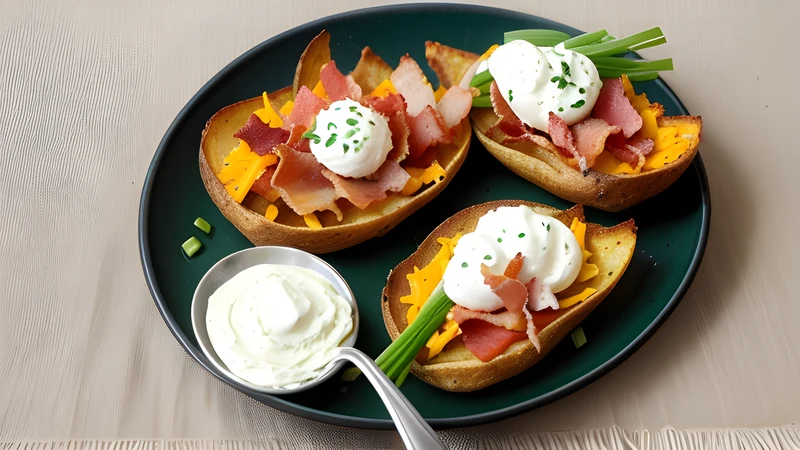
Loaded Potato Skins with Cheddar and Chive
Brown-butter-brushed skins, twice-crisped, filled with sharp cheddar and soured cream
Contents
↓ Jump to recipeThe potato skin as a menu item is a child of the American 1970s, and it began as thrift dressed up as indulgence. Restaurants baking potatoes in volume for steakhouse sides were left with a great deal of scooped-out shell, and someone clever realised the shell was the best bit. Crisp it, fill it with the things everyone already loved on a baked potato, and you had a starter that cost almost nothing and sold for a tidy margin. The chain restaurants of the decade, T.G.I. Friday’s chief among them, put loaded skins on menus across the country and turned a kitchen offcut into a signature.
The clever bit of the original idea still holds. The skin is where the flavour lives, the part that goes chewy-crisp and takes on colour, and treating it as the main event rather than the wrapper is the whole point. Where most home versions fall down is that they go soft. You get a floppy, greasy shell with a puddle of half-melted cheese, and the thing that should crackle just sags. Fixing that is a matter of getting three things right: the initial bake, a proper double-crisping, and the fat you brush them with.
Loaded Potato Skins with Cheddar and Chive
Ingredients
- 4 large baking potatoes (about 300g each)
- 1 tbsp flavourless oil, for rubbing
- 1 tsp flaky sea salt, for the skins
- 60g unsalted butter
- 150g mature cheddar, coarsely grated
- 6 rashers streaky bacon, grilled crisp and chopped
- 150g soured cream
- 1 small bunch chives, finely snipped
- 3 spring onions, finely sliced
- 0.25 tsp fine salt
- 1 pinch cayenne pepper
Method
- Heat the oven to 200C fan. Rub the potatoes with oil and flaky salt and bake directly on the shelf for 60 minutes until tender and crisp-skinned.
- Meanwhile, make the brown butter: melt the butter in a small pan over a medium heat and cook, swirling, until it foams, smells nutty and turns golden-brown. Pour into a bowl.
- When the potatoes are cool enough to handle, halve them lengthways and scoop out the flesh, leaving a 5mm shell. Keep the flesh for another use.
- Brush the skins inside and out with the brown butter and season the insides with fine salt and a pinch of cayenne.
- Return the skins to the oven, cut-side up, for 12 to 15 minutes until the edges are deep golden and crisp.
- Fill each skin with grated cheddar and chopped bacon and bake for a further 6 to 8 minutes until the cheese is molten and bubbling.
- Top each skin with a spoon of soured cream and a heavy scatter of chives and spring onions. Serve straight away.
Start with a real baked potato
Everything downstream depends on the first bake being a good one. That means a floury baking potato — a Maris Piper or a Russet, the kind that goes fluffy — rubbed with oil and flaky salt and baked directly on the oven shelf, not wrapped in foil. Foil steams the potato and gives you a pale, damp skin, which is precisely the enemy here. The bare oven heat drives moisture out and starts the skin drying and crisping from the very first stage. An hour at 200C fan gets a 300g potato tender in the middle with a skin that already has some character before you have done anything else to it.
Let them cool enough to handle before you scoop. A too-hot potato tears when you try to hollow it, and you want a clean shell about 5mm thick — sturdy enough to hold its shape and take a second baking without collapsing. The scooped flesh is not waste. Rice it and fold in butter and milk for a small batch of mash, or save it for fishcakes or a potato salad the next day.
The twist: brown butter on the skins
Most recipes brush the skins with plain melted butter or, more often, the fat from the bacon. I brown the butter first, and it changes the whole character of the thing. Brown butter, beurre noisette, is butter cooked until its milk solids toast to a deep gold and throw off a smell of hazelnuts and caramel. Brushed inside and out over the shells before their second bake, it soaks into the crisping skin and leaves a nutty, savoury depth underneath the cheese that plain butter never delivers. It is the same trick that lifts a batch of browned-butter and pecan blondies from good to memorable, borrowed here for something entirely savoury.
Watch the butter closely, because it turns from golden to burnt in the space of a breath. Melt it over a medium heat, let it foam, and keep swirling; the moment it smells of toasted nuts and the flecks at the bottom are the colour of a digestive biscuit, tip it out of the hot pan into a bowl to stop it cooking. Those toasted flecks are flavour, so scrape them in.
Double-crisping, and why cheese goes on last
The second bake is where the crunch is built. Brushed with brown butter and returned to a hot oven cut-side up, the empty shells spend twelve to fifteen minutes drying and colouring at their edges until they genuinely crackle. Only then does the cheese go in. If you fill the skins and bake them in one go, the moisture from the cheese and toppings keeps the shell soft and you never get the contrast that makes the dish. Crisp first, fill second, and give the cheese just long enough to melt into a bubbling pool — six to eight minutes, no more.
The cold toppings go on after the oven, off the heat. Soured cream, chives and spring onions want to stay cool and sharp against the hot, rich base; bake them and the soured cream splits and the chives turn grey. That contrast of temperatures, cold cream against molten cheese and hot crisp skin, is what keeps each bite interesting to the last one.
Method, step by step
Heat the oven to 200C fan. Rub four large baking potatoes with a little oil and a teaspoon of flaky salt, and bake them directly on the shelf for an hour, until a knife slides into the centre easily and the skins feel taut and dry. While they bake, brown 60g of butter as described and set it aside. Halve the cooked potatoes lengthways once they are cool enough to hold, and scoop out the flesh to leave neat 5mm shells.
Brush the shells inside and out with the brown butter and season the insides with a little fine salt and a pinch of cayenne. Return them to the oven cut-side up for twelve to fifteen minutes, until the edges are deep gold and crisp. Fill each with grated mature cheddar and chopped crisp bacon, and bake for a further six to eight minutes until the cheese is bubbling. Top with a spoon of soured cream, a heavy scatter of chives and spring onions, and eat while they crackle.
Cheddar, chive, and why the pairing works
The classic loaded skin leans on cheddar, bacon, soured cream and chives, and the combination is not an accident of nostalgia. Mature cheddar brings sharpness and salt that stands up to the rich, buttery shell; a mild cheese would vanish under it. Grate it coarsely and grate it yourself, because the coarse shreds melt into proper molten pools rather than the thin, oily film that pre-grated cheese gives you.
Chives and spring onions are doing the same job from the fresh side. Both belong to the allium family, so they echo the savoury depth of the potato and cheese while adding a green, grassy sharpness that cuts the fat. Chives are gentler and more perfumed, spring onions punchier with a raw bite; using both gives you two registers of onion at once. Snip the chives rather than chop them, so their delicate structure stays intact and they do not bruise to a paste, and scatter them generously at the very end while the skins are still hot enough to release their scent.
Soured cream is the cooling counterweight that makes the whole thing balance. Its lactic tang lightens the richness the way a squeeze of lemon lifts anything fatty, and its coolness against the hot cheese is half the pleasure. If you cannot find good soured cream, whole-milk Greek yoghurt loosened with a little lemon juice does the same work.
Storage, make-ahead and variations
These reward a bit of planning. You can bake and scoop the potatoes a day ahead and keep the shells covered in the fridge; brush and crisp them fresh when you want them, adding a couple of minutes to the second bake to drive off the fridge chill. Fully assembled skins do not keep well, because the whole appeal is the crackle and that fades within the hour, so fill and top them to order.
For variations, the fillings are as open as a baked potato ever was. A blue cheese and a scatter of walnuts makes them properly autumnal; a spoon of caramelised onions under the cheddar adds a sweet depth. For a vegetarian tray, drop the bacon and fold a little smoked paprika into the brown butter to keep that savoury smokiness. And rather than shop-bought dips alongside, a bowl of homemade ranch turns a plate of skins into the centre of a table, cool and herby against all that crisp, buttery potato.
Related Content