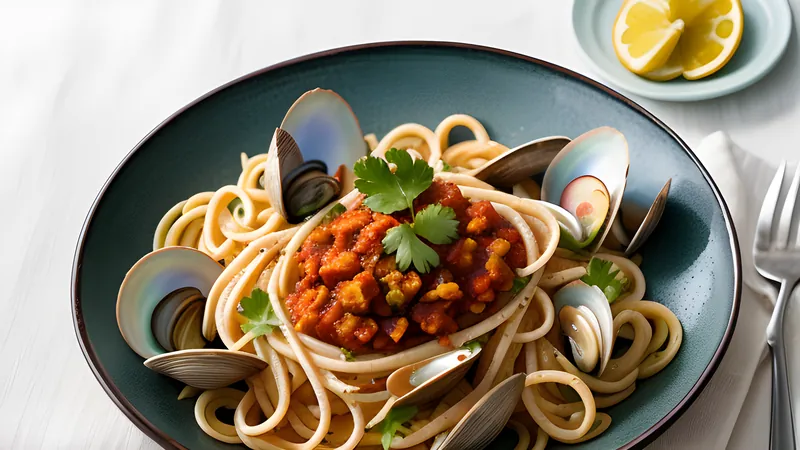
Linguine alle Vongole with White Wine
Naples' clam pasta, bianco, with a whisper of Calabrian 'nduja
Contents
↓ Jump to recipeOrder spaghetti alle vongole anywhere along the Bay of Naples and you enter, without meaning to, one of Italy’s oldest arguments: bianco or rosso, white or red. The red camp adds tomato; the white camp thinks tomato is a distraction from the clams and the sea. Naples, Sorrento and the Amalfi coast are broadly white-sauce country, and I am with them. A good vongole in bianco is one of the purest things you can cook — a handful of ingredients, twenty minutes, and the taste of clean cold seawater in every mouthful. There is nowhere to hide, which is exactly why it is worth learning to do well.
The dish belongs to the Neapolitan tradition of cucina povera, cooking born of thrift, when clams could be dug from the shallows for nothing and pasta was the cheap staple that stretched them into a meal. It became a Christmas Eve fixture too, part of the southern feast of seafood eaten before midnight Mass. For all its humble roots it feels like a luxury now, and it costs a fraction of what a restaurant charges for the same plate.
Linguine alle Vongole with White Wine
Ingredients
- 1kg fresh clams (vongole veraci or palourde), purged
- 400g dried linguine
- 5 tbsp extra-virgin olive oil
- 5 garlic cloves, thinly sliced
- 1/2 tsp dried chilli flakes
- 1 tsp 'nduja (optional, for the twist)
- 150ml dry white wine
- A large handful of flat-leaf parsley, finely chopped
- Zest of 1/2 lemon
- Sea salt and black pepper
Method
- Purge the clams in cold salted water for an hour, changing the water once. Discard any that are broken or stay open when tapped.
- Bring a large pan of well-salted water to the boil and cook the linguine until just shy of al dente, about 8 minutes.
- Meanwhile, warm the olive oil in a wide, deep pan with the sliced garlic and chilli over medium heat until pale gold and fragrant.
- Stir in the 'nduja, if using, and let it melt into the oil for 30 seconds.
- Add the clams and the wine, cover, and steam over high heat for 3-4 minutes until the shells open. Discard any that stay shut.
- Lift out about a third of the clams and pick the meat from the shells; return the meat to the pan.
- Drain the linguine, reserving a little water, and add it to the clam pan with most of the parsley.
- Toss hard for a minute over the heat, adding pasta water until the sauce turns silky and clings. Finish with lemon zest and the last of the parsley.
Buy good clams, and purge them properly
Everything depends on the clams. Look for small ones with tightly closed shells, or shells that snap shut when you tap them — a clam that gapes and stays open is dead, and dead shellfish is not something to gamble on. The best for this dish are vongole veraci, the ridged carpet-shell clam, but palourde or ordinary small clams from a good fishmonger work beautifully. Allow a generous 250g per person, because a fair number are shell.
The one job you must not skip is purging. Clams live in sand and they carry it inside; bite down on a gritty one and the whole plate is ruined. Sit them in cold, well-salted water — as salty as the sea, roughly 30g of salt per litre — for an hour before cooking, changing the water once. They breathe, and spit their grit into the bowl. Discard any with cracked shells or any that will not close. This single hour is the difference between silky and gritty, so plan for it.
The twist: a whisper of ’nduja
The classic sauce is garlic, chilli, oil, wine and parsley, and it needs nothing more to be excellent. My small twist is a single teaspoon of ’nduja, the soft, spreadable, fiercely spiced Calabrian sausage, melted into the oil with the garlic. It all but disappears, leaving no obvious meatiness — only a low, warm, smoky-chilli hum and a russet tint to the oil that makes the clams taste even more of themselves. Southern Italy pairs pork and shellfish more often than northerners expect, and the two get on famously. Keep it to a teaspoon. This is seasoning, and the clams must stay the star. If you would rather stay purist, leave it out and lean a touch harder on the chilli flakes.
Timing is everything
This is a dish of a few fast minutes, so have everything ready before you start: garlic sliced, parsley chopped, wine measured, pasta water on the boil. Cook the linguine to a minute short of al dente, because it will finish cooking in the clam pan and drink up the briny liquor as it does.
Warm the oil gently with the garlic and chilli — pale gold, never brown, or the whole sauce turns bitter, the same lesson that governs Garlic-Butter Prawns with Sourdough. Melt in the ’nduja, then tip in the clams and the wine and clap a lid on. Three or four minutes of hard steaming and they gape open, releasing their liquor into the wine to make an instant, savoury broth. The moment they are open, they are done; another minute and they toughen to rubber. Lift a third of them out and shell the meat, returning it to the pan — this gives you clam in every forkful without a plate that is all empty shells to negotiate.
Bringing it together
Now the crucial part, the same mantecatura that finishes a good Spaghetti Aglio e Olio with Toasted Breadcrumbs. Drain the linguine while still al dente and drop it straight into the clam pan. Toss it hard over the heat with the parsley, adding splashes of the starchy pasta water. The starch and the clam liquor and the oil emulsify into a light, silky sauce that coats every strand and pools glossily in the bottom of the bowl. Keep it moving for a full minute; this is where a watery, separated sauce becomes one that clings. A little lemon zest at the very end lifts it and echoes the sea.
No cheese. Parmesan over clams is one of the few genuine crimes in an Italian kitchen, and it muddies the clean marine flavour you worked to protect. Trust the dish.
Why linguine
Naples would traditionally use spaghetti, and you can too, but linguine has quietly won my loyalty for this sauce. The flat, slightly elliptical strands present more surface to the oily, briny liquor and hold it better than a round spaghetti, which lets a thin sauce run off. Vermicelli, a touch finer, is the other classic choice along the coast. What you want to avoid is anything too thick or too short: rigatoni and penne have no business here, since their hollows fill with sauce and leave the clams stranded. A long, thin, sauce-hugging strand is the whole idea, and it should be cooked with real backbone, drained a good minute before it is soft so the clam broth can finish it.
Buy the best dried pasta you can, ideally one extruded through bronze dies, which leaves the surface faintly rough and chalky. That texture grips the emulsion and is the difference between a sauce that clings and one that slides to the bottom of the bowl. It costs pennies more and you taste it in every forkful.
What can go wrong
Gritty sauce. The clams were not purged, or the sandy water was tipped back in. Purge for an hour, and when you pour the clams into the pan, lift them rather than pouring the last of any soaking water in with them.
Rubbery clams. Overcooked. They are ready the instant the shells open. Take the pan off the heat the moment the last few gape.
A thin, split sauce. Not enough tossing or not enough starch. Keep the pasta a little underdone, use its cooking water, and toss vigorously to emulsify.
Too salty. Clams bring their own seawater, so hold back on salting the sauce until the very end, then taste before you add any.
Variations and serving
Add a handful of halved cherry tomatoes with the clams for a vongole rosso in miniature, or a splash of their steaming liquor over grilled sourdough for a cook’s snack while the pasta boils. Mussels work in exactly the same way if clams are hard to find, or a mix of both. For crunch, scatter over toasted breadcrumbs seasoned with a little garlic and parsley.
Vongole does not keep — it is a cook-and-eat-now dish, and it waits for no one at the table. Have your guests seated before you drain the pasta. Pour the rest of the white wine you opened for the sauce, something crisp and coastal like a Fiano or a Greco di Tufo from the same Campanian hills, and eat it the moment it lands. Twenty minutes of work, a lifetime of getting it slightly better each time. That is the whole appeal, and it never once gets old.
Related Content