Lemon and Sugar Crepes
Thin, lacy and endlessly comforting
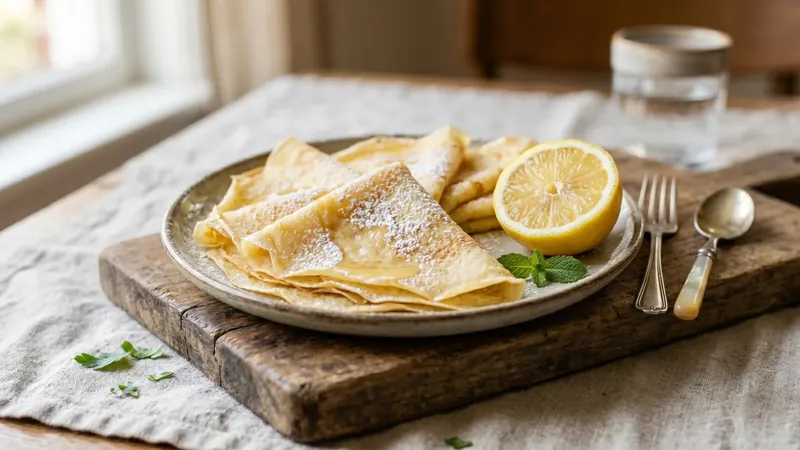
There is little that beats a freshly made crepe, thin and lacy, sprinkled with sugar and a squeeze of lemon so the two melt into a sharp, sweet syrup. The twist is no twist at all but a quiet discipline: resting the batter properly before cooking, which relaxes the flour and yields crepes that are tender and delicate rather than rubbery. Simple, fast and endlessly comforting, this is a pudding, a breakfast or an afternoon treat in equal measure.
Lemon and Sugar Crepes
Ingredients
- 125g plain flour
- 1 tbsp caster sugar
- A pinch of salt
- 2 eggs
- 300ml whole milk
- 30g unsalted butter, melted, plus extra for the pan
- 2 lemons, cut into wedges
- 4 tbsp caster sugar, for sprinkling
Method
- Whisk the flour, sugar and salt together in a bowl.
- Make a well in the centre and crack in the eggs, then whisk in a little of the milk to form a smooth paste.
- Gradually whisk in the remaining milk and the melted butter until the batter is smooth and the consistency of single cream.
- Cover and leave the batter to rest at room temperature for at least 30 minutes.
- Heat a non-stick frying pan over a medium heat and wipe with a little butter.
- Pour in a small ladleful of batter, swirling the pan to coat the base in a thin, even layer.
- Cook for about a minute until the underside is golden and the edges lift, then flip and cook the other side for 30 seconds.
- Slide onto a warm plate and repeat with the remaining batter, stacking the crepes as you go.
- Sprinkle each crepe with caster sugar and a squeeze of lemon.
- Fold into quarters or roll up, and serve at once.
3 The Story
The crepe is one of France’s most cherished everyday foods, a paper-thin pancake whose spiritual home is Brittany, the windswept region in the north-west. There, crepes and their savoury buckwheat cousins, the galettes, are a defining part of the local table, sold from creperies and street stalls and made at home with practised ease. The tradition runs deep enough to have its own celebration: Candlemas, on the second of February, is known in France as the day of crepes, when households across the country cook them by the dozen.
The lemon-and-sugar combination is perhaps the most beloved of all the simple toppings, especially in Britain, where it has become inseparable from Shrove Tuesday and Pancake Day. Its appeal lies in contrast. The sugar sweetens, the lemon sharpens, and when squeezed over a hot crepe the two dissolve together into a thin, bright syrup that soaks into the surface. It is a topping that asks for nothing more than a couple of pantry staples, yet feels like a small luxury.
The twist in this recipe is a matter of patience rather than novelty, and it makes all the difference. Resting the batter, ideally for half an hour or more, allows the flour to absorb the liquid fully and lets the gluten developed during whisking relax. The reward is a smoother batter and a more tender, lacy crepe that is less prone to toughness. Crepes made from batter cooked the instant it is mixed can turn out chewy and elastic; a rested batter spreads more thinly and cooks into something altogether more delicate.
Beyond the rest, success comes down to a few small habits. The batter should be thin, around the consistency of single cream, so it swirls easily across the pan into a fine sheet. A hot, lightly greased non-stick pan and a confident swirl of the wrist give an even round. The first crepe is traditionally the cook’s own, often a slightly ragged practice run before the pan finds its rhythm. From there, a stack builds quickly, each one waiting only for its sprinkle of sugar and squeeze of lemon before being folded, rolled and eaten while still warm.
Related Content