Lavash, Blistered and Blackened in a Hot Oven
A thin, pliable Armenian flatbread with a few charred blisters, made without a tandoor
Contents
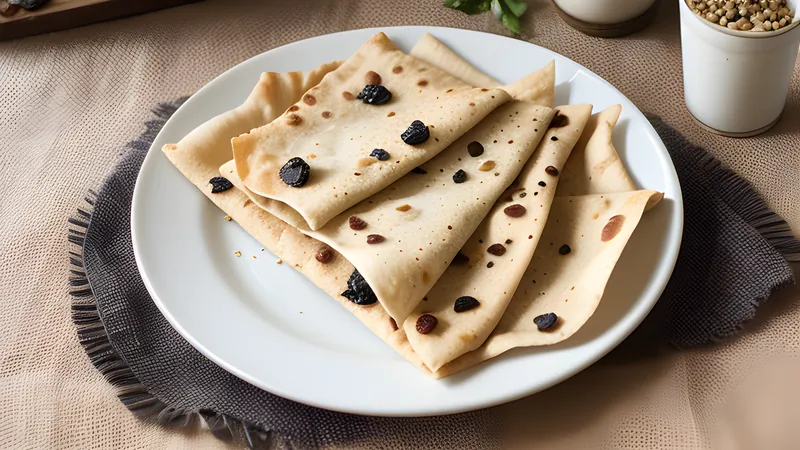
↓ Jump to recipeThe first time lavash actually works, you will hear it before you see it: a soft whump as the sheet inflates in the oven, then a smell of scorched wheat. A minute later you are pulling out something blistered, freckled with black, thin enough to read a newspaper through. Armenians bake it against the searing wall of a clay tonir, and no home oven truly matches that. What a home oven can do, with a screaming-hot steel or baking sheet, is get close enough that you stop buying the shrink-wrapped stuff.
Lavash, Blistered and Blackened in a Hot Oven
Ingredients
- 400g strong white bread flour, plus extra for dusting
- 50g plain flour, toasted in a dry pan until nutty (see method)
- 1 tsp fine salt
- 1/2 tsp fast-action dried yeast
- 260ml water, lukewarm
- 1 tbsp neutral oil, plus a little for the bowl
- Sesame and nigella seeds, to finish (optional)
Method
- Toast the 50g plain flour in a dry frying pan over medium heat, stirring constantly, for 4-5 minutes until it smells like toasted nuts and turns pale biscuit-brown. Tip out and cool.
- Mix both flours with the salt and yeast in a large bowl. Add the water and oil and bring together into a shaggy mass.
- Knead 8-10 minutes until smooth and only slightly tacky. It should be firmer than a sandwich dough. Oil the bowl, turn the dough in it, cover and prove 1-1.5 hours until relaxed and puffed (it need not double).
- Divide into 6 pieces. Roll each into a ball, cover, and rest 15 minutes so the gluten relaxes.
- Put a heavy baking sheet or inverted tray on the top shelf and heat the oven to its maximum, 250C fan or higher, for at least 20 minutes.
- On a well-floured surface roll one ball as thin as you can, turning often, into a rough oval or rectangle about 2mm thick. It should be almost translucent.
- Stretch it gently over the backs of your hands to thin it further, then lay it on a floured peel or upturned tray. Scatter with seeds if using and press them in with a rolling pin.
- Slide onto the hot sheet and bake 2-4 minutes until it puffs and takes on charred blisters. Watch it: the first blackened spots come fast.
- Remove and, if you want it pliable, stack the sheets under a clean tea towel so they soften from their own steam. For crisp lavash, cool them on a rack instead.
The oldest bread on the table
Lavash is old, and its keepers know it. In 2014 UNESCO inscribed the preparation, meaning and appearance of lavash on its list of intangible cultural heritage, citing it as an expression of Armenian culture, and a later, broader listing acknowledged shared traditions across Azerbaijan, Iran, Kazakhstan, Kyrgyzstan and Turkey. That squabble over ownership tells you how deep the bread runs across the South Caucasus and the Iranian plateau. It is the everyday bread, the wrapping for herbs and cheese, the cloth laid over a table at a betrothal, the sheet draped on a bride’s shoulders for luck and children.
The baking is a communal, mostly women’s ritual. Dough is rolled paper-thin, stretched over an oval cushion called a batat, and slapped against the inner wall of the tonir, a clay pit oven sunk into the ground and fired with wood or dung. It bakes in seconds, then is peeled off with a hook. Made this way in large batches, lavash dries out completely and keeps for weeks, even months. When you want soft bread again, you sprinkle the brittle sheets with water and stack them under a cloth; within half an hour they turn supple. That single trick, rehydrating dry lavash, is why it fed mountain villages through long winters.
The bread reaches far beyond Armenia. In Iran it sits alongside the other tanoor breads. In eastern Turkey it wraps the kebab. It shares a family tree with the leaner, seeded flatbreads of the region, close in spirit to barbari, though barbari is thick and canoe-shaped while lavash is thin as a handkerchief. If you like the char-and-seeds idea, it also rhymes with man’oushe, the Levantine breakfast flatbread that carries its flavour on top rather than in the crumb.
Why toasted flour
Here is the small twist, and it is a genuine one rather than a garnish. Fifty grams of the flour goes into a dry pan first and gets toasted until it smells of hazelnuts and turns the colour of a digestive biscuit. Toasting denatures some of the gluten-forming proteins and caramelises the starches, so that fraction of flour brings deep, nutty flavour without making the dough tougher. Blended back into the strong flour, it gives baked lavash a warmer, more roasted taste, closer to what you get from a wood-fired tonir than a clean electric oven ever manages on its own.
Keep the toasted portion to around one part in nine. Push it higher and you weaken the dough’s structure, because toasted flour can no longer build a proper gluten network, and the sheets tear when you stretch them. A tenth of the flour is the sweet spot: enough for flavour, not so much that the dough gives up.
The dough, and the heat
Lavash dough is lean and fairly stiff, more like a pasta dough than a pillowy loaf. The low yeast and modest prove are deliberate. You want relaxed, extensible gluten that rolls thin without snapping back, and you do not want a lot of gas, because big bubbles become big holes when the sheet is this thin. Knead until smooth, then give it an hour or so to slacken. The rest after dividing matters just as much: a tense ball fights the pin, a rested one surrenders.
Rolling is the skill. Flour generously, roll from the centre out, lift and turn the sheet a quarter after every few passes so it does not stick and so it thins evenly. When you have it near 2mm, drape it over the backs of your floured hands and let gravity stretch it further, the way you might coax a strudel. Aim for translucence. A sheet you can almost see through is a sheet that will blister rather than bake into a cracker.
Heat is the other half of the equation, and it is where most home attempts fail. A tonir wall runs far hotter than a domestic oven. To compensate, preheat a heavy baking sheet, a pizza steel or an upturned roasting tray on the top shelf at maximum temperature for a full twenty minutes, so it holds a reservoir of heat that hits the dough the instant it lands. That thermal slap is what makes the bread puff and char in two to four minutes. A cold or barely-warm tray gives you pale, leathery lavash every time.
Soft or crisp, your choice
Straight from the oven, lavash is at a fork in the road. Stack the hot sheets under a clean tea towel and their own trapped steam softens them into pliable wraps within a few minutes, ready to roll around grilled meat, feta and a fistful of tarragon and basil. Leave them on a wire rack instead and they cool into brittle crackers you can snap over a salad or serve with dips. Both are correct. The dry version is also the traditional keeping form: fully dried lavash stores for weeks in a tin, and a light spritz of water under a cloth brings it back to soft on demand.
Tips, fixes and variations
If the sheet tears while stretching, the gluten is too tight or the dough too dry. Rest the ball a few more minutes and let it warm to room temperature; cold dough is stubborn. A whisper more water in the mix next time helps.
If it bakes pale and stiff instead of blistering, your oven or tray was not hot enough, or the sheet was too thick. Preheat longer, roll thinner, and bake on the top shelf nearest the element.
If it puffs into one giant balloon, that is a triumph, not a fault. It will deflate as it cools and leave a dramatic blistered surface. Only worry if the whole thing inflates and then bakes rigid before charring, which again points to a sheet rolled too thick.
Seeds and salt: press sesame and nigella into the surface with the pin so they anchor, and add a scatter of flaky salt if the lavash is heading for a cheese board.
Wholemeal version: swap up to a quarter of the strong flour for wholemeal for a nuttier, sturdier sheet, and add a splash more water to compensate for the bran’s thirst.
Grill or dry pan: no oven hot enough? A dry cast-iron pan on high, or a barbecue with the lid down, will char lavash beautifully; work with smaller sheets so you can manage them.
Storage and make-ahead
Soft lavash keeps a couple of days wrapped tightly, though it stiffens as it stales; revive it with a damp-cloth rest or a few seconds in a hot dry pan. Crisp lavash lasts a fortnight in an airtight tin. The dough itself takes well to a cold retard: mix it, prove for half an hour, then refrigerate overnight and roll straight from cold the next day, which also deepens the flavour. Once you have the rhythm of roll, stretch, slap, watch, you will find lavash is faster than a loaf and endlessly more useful, torn around whatever the fridge offers on a Tuesday night.
Related Content