Lamb Chops with Salsa Verde
Fast-seared chops, a green sauce with real bite
Contents
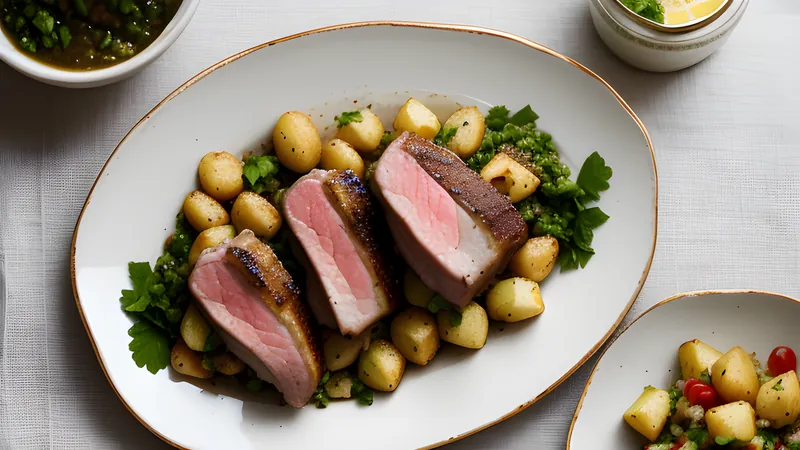
↓ Jump to recipeLamb chops are the dish I cook when I have twelve minutes and something to prove. There is no braise to babysit, no oven to wait on. You get a screaming pan, a chop with a proper crust, and a green sauce sharp enough to cut through all that rendered fat. The whole thing lives or dies on two decisions: how hard you sear, and how bracing you make the salsa verde.
My one small change to the usual routine is where the pan butter goes. Most people bin the browned, foamy butter left after searing. I whisk a spoonful of it, still warm and nutty, straight into the salsa verde. It rounds the raw edges of the vinegar and anchovy and gives the sauce a savoury depth that plain olive oil never manages. The herbs stay loud; the butter just holds them together.
Lamb Chops with Salsa Verde
Ingredients
- 12 lamb loin chops (about 1.2kg), roughly 2.5cm thick
- 2 tbsp olive oil, for searing
- 40g unsalted butter
- 2 sprigs rosemary
- Flaky sea salt and black pepper
- 1 large bunch flat-leaf parsley (about 40g leaves)
- Small bunch mint (about 15g leaves)
- 6 anchovy fillets in oil
- 2 tbsp capers, drained
- 1 small garlic clove
- 1 tbsp red wine vinegar
- 6 tbsp extra-virgin olive oil
- 1 lemon, for charring and juice
Method
- Take the 12 chops out of the fridge 30 minutes ahead. Pat them completely dry and season with flaky salt and pepper.
- Make the salsa verde: finely chop the parsley and mint, and chop the capers, anchovies and garlic to a paste. Combine with 1 tbsp red wine vinegar, 6 tbsp extra-virgin olive oil and a little grated lemon zest. Set aside.
- Heat a large heavy frying pan over high heat for 2 minutes until very hot, then add 2 tbsp olive oil.
- Lay in the chops fat-edge down first, holding them upright for 1 minute to render and crisp the fat. Work in two batches so the pan stays hot.
- Lay the chops flat and sear 2 minutes on the first side without moving them, then turn and sear 2 minutes on the second side for medium-rare (internal temperature 54 to 56 degrees C).
- Add 40g butter and 2 rosemary sprigs for the final minute, tilt the pan and spoon the foaming butter over the chops.
- Rest the chops on a warm plate for 5 minutes. Whisk 1 tbsp of the warm pan butter into the salsa verde.
- Char the lemon halves cut-side down in the empty pan for 1 minute. Serve the chops with salsa verde spooned over and the charred lemon for squeezing.
Why loin chops, and why so hot
Loin chops are the little T-bones of the lamb — a nugget of tender eye on one side of the bone, a strip of fattier meat on the other. They cook fast and unevenly, which is exactly what you want here: the fatty edge crisps while the eye stays pink. Chump chops work too and are meatier, though they need a minute or two longer. Whatever you buy, get them cut a good 2.5cm thick. Thin chops overcook before they colour, and a grey lamb chop is a sad thing.
Ask the butcher for chops from the middle of the loin, evenly thick, and with the fat left on. That fat cap is where half the flavour hides, and it renders into the pan to baste the meat. A little marbling through the eye is a good sign too — lamb reared slowly, on grass, tends to carry it. Supermarket chops vary wildly in thickness within one pack, so buy from a counter if you can and pick them yourself.
Heat is the whole game. Lamb fat renders and browns properly at high temperature, and browning is where the flavour comes from — the Maillard reaction, the same chemistry that makes toast taste of more than bread. A pan that is merely warm will steam the meat and leach out grey juices. You want the fat to sizzle the instant it lands and the kitchen to smell faintly of a barbecue. Open a window, and don’t crowd the pan.
Take the chops out of the fridge 30 minutes before cooking. Cold meat hitting a hot pan seizes on the outside and stays raw in the middle. Pat them bone-dry with kitchen paper — surface moisture is the enemy of a crust — and season generously with flaky salt just before they go in.
The salsa verde
Salsa verde is Italy’s answer to the question of what to serve with anything grilled. At heart it is chopped herbs, capers, anchovy, garlic, oil and vinegar, pounded or finely chopped into a loose, punchy sauce. It belongs with lamb, and it also transforms poached chicken, boiled potatoes, grilled fish and a fried egg. Make double; it keeps for three days.
I make mine by hand with a knife rather than a blender. A processor turns the herbs to a dark, bruised purée that tastes of the machine. Chopping keeps the colour bright and the texture rustic, with little flecks of caper and parsley you can see. It takes five minutes and a big knife.
Strip the parsley and mint leaves from their stalks and chop them together, fine but not to a paste. Chop the capers, anchovies and garlic to a rough paste — the anchovy dissolves and stops tasting fishy, leaving only salt and savour. Scrape it all into a bowl, add the vinegar and the extra-virgin oil, and stir. Grate in a little lemon zest. Then whisk in that spoonful of warm pan butter at the end. Taste. It should make you wince slightly and want another spoonful at the same time. Add salt only if the anchovy and capers haven’t done the job.
For the lemon: halve it, and press the cut sides onto the hot pan for a minute after the chops come out. Charring caramelises the sugars and mellows the sourness. Squeeze the warm, smoky juice over the chops at the table. It is the small detail people ask about.
Method
- Take the chops out of the fridge 30 minutes ahead. Pat them completely dry and season with flaky salt and pepper.
- Make the salsa verde: finely chop the parsley and mint. Chop the capers, anchovies and garlic to a paste. Combine with 1 tbsp red wine vinegar, 6 tbsp extra-virgin olive oil and a little grated lemon zest. Set aside.
- Heat a large heavy frying pan over a high heat for 2 minutes until very hot. Add 2 tbsp olive oil.
- Lay in the chops fat-edge down first, holding them upright against each other for 1 minute to render and crisp the fat. Work in two batches so the pan stays hot.
- Lay the chops flat and sear for 2 minutes on the first side without moving them, until deeply browned. Turn and sear 2 minutes on the second side for medium-rare (internal temperature 54–56°C).
- Add 40g butter and 2 rosemary sprigs to the pan for the final minute. Tilt the pan and spoon the foaming butter over the chops.
- Lift the chops onto a warm plate to rest for 5 minutes. Whisk 1 tbsp of the warm pan butter into the salsa verde.
- Char the lemon halves cut-side down in the empty pan for 1 minute. Serve the chops with salsa verde spooned over and the charred lemon for squeezing.
Getting the doneness right
Lamb is best pink. Medium-rare, at 54–56°C in the thickest part of the eye, gives you tender meat with rendered fat. An instant-read thermometer removes all the guesswork and costs less than one dinner out — poke it into the eye of the chop, avoiding the bone, which reads hotter than the meat around it. If you’re going by feel, medium-rare lamb springs back with a gentle bounce and gives clear juices tinged pink.
The rest is not optional. Straight off the heat, the muscle fibres are contracted and the juices driven to the centre. Five minutes on a warm plate lets them relax and redistribute, so the meat carves moist instead of weeping onto the board. Rest the chops somewhere warm, loosely covered, and pour any resting juices into the salsa verde too.
What to serve alongside
Something to soak up the sauce and something green. Crushed new potatoes with a knob of butter are the classic move, or a bowl of soft white beans dressed while warm. For vegetables, I lean towards charred greens — the same char that suits the lamb. A pile of griddled courgettes, or the sweet allium hit of souvlaki with tzatziki and charred pitta turned into a mezze spread if you’re feeding a crowd.
Salsa verde is a promiscuous sauce, and once you’ve made a batch you’ll want it on everything. It’s magnificent over a whole fish — see grilled whole sea bass with salsa verde for the fish treatment — and if you love the herb-and-lemon register with lamb, kleftiko, the Greek slow-baked lamb in paper, works the same flavours over a long, slow cook instead of a fast sear.
Tips, swaps and storing
- No anchovies? They melt away and leave savour rather than fish. If you genuinely won’t have them, add an extra pinch of salt and a teaspoon of Dijon, though you’ll miss the depth.
- Herb swaps: basil and tarragon both slot in happily alongside the parsley. Keep parsley as the base — it holds the colour and stops the sauce turning medicinal.
- Griddle or barbecue: the chops love an open flame. Same timings, but let the fat flare-ups die down before you turn, or the outside chars before the inside cooks.
- Make-ahead: the salsa verde is best within a few hours but holds three days in the fridge under a film of oil. Bring it back to room temperature before serving — cold sauce dulls the herbs.
- Leftovers: cold lamb chops and a smear of salsa verde make a very good sandwich in soft white bread the next day.
Twelve minutes, a hot pan, a sharp green sauce. It’s the dinner I’d cook to win someone over, and the one I cook most often just for myself.
Why this earns a place in the rotation
Most fast dinners ask you to trade quality for speed. This one refuses to. The searing is the same technique a steakhouse uses; the salsa verde is a proper Italian sauce with centuries behind it; and the whole plate comes together faster than a delivery would arrive. Learn it once, keep anchovies and capers in the cupboard, and you have a restaurant dinner on any weeknight you please.
Related Content