Labneh from Scratch: Strained Yoghurt, Olive Oil, Za'atar
Thick, tangy and almost effortless
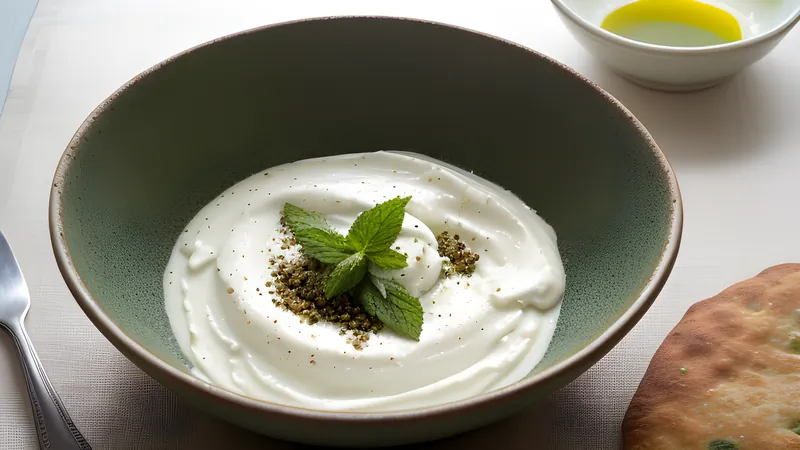
Labneh is one of those small kitchen miracles that feels like cheating. You take a tub of yoghurt, add salt, hang it in a cloth in the fridge overnight, and wake up to something thick, tangy and spreadable that tastes far more luxurious than the work involved. Spread it in a bowl, swirl the surface, pour on good olive oil and a generous scatter of za’atar, and you have a centrepiece for a mezze table or the best thing to put on toast all week. My one small twist is a little lemon zest stirred in before straining, which sharpens the freshness beautifully.
Labneh from Scratch: Strained Yoghurt, Olive Oil, Za'atar
Ingredients
- 500g full-fat natural yoghurt (Greek-style is ideal)
- 0.75 tsp fine salt
- Finely grated zest of 0.5 lemon (the twist)
- 2 tbsp extra-virgin olive oil, to serve
- 1 tbsp za'atar, to serve
- A few mint leaves, to serve (optional)
- Warm flatbread, to serve
Method
- Stir the salt and lemon zest thoroughly through the yoghurt in a bowl.
- Line a sieve with a double layer of clean muslin or a thin tea towel and set it over a deep bowl.
- Tip the seasoned yoghurt into the lined sieve, gather the cloth and twist gently to enclose it.
- Refrigerate for 12 to 24 hours, until thick and spreadable, occasionally pouring off the whey that collects.
- Scrape the labneh into a bowl, spread it with the back of a spoon and create a few swirls.
- Drizzle generously with olive oil, scatter with za'atar and mint, and serve with warm flatbread.
2 The Story
Labneh is the cornerstone of Levantine and wider Middle Eastern dairy cooking, eaten across Lebanon, Syria, Jordan, Palestine and beyond. Its origins lie in a practical problem: in hot climates, fresh milk spoils fast, so people learned to preserve it. Souring milk into yoghurt was the first step; straining that yoghurt to drive off the watery whey was the next, and the result kept longer and travelled better. What began as preservation became one of the region’s most beloved foods.
Traditionally the yoghurt is hung in a cloth bag, sometimes for a day or more, until it firms up to the desired thickness. Strained further still and rolled into balls, it can be stored submerged in olive oil in jars, where it keeps for weeks and intensifies in flavour. A bowl of labneh, pooled with bright green olive oil and dusted with za’atar, is a fixture of breakfast and mezze tables, scooped up with warm bread and eaten at any hour. It sits comfortably between a dip, a spread and a soft cheese, and that versatility is exactly why it has endured.
Za’atar, the herb-and-sesame blend it is so often paired with, is its perfect partner: earthy, tangy with sumac, savoury with toasted sesame, and a touch resinous from wild thyme.
3 Method
- Stir the salt and lemon zest thoroughly through the yoghurt in a bowl. The salt seasons it and also helps draw out moisture.
- Set a sieve over a deep bowl and line it with a double layer of clean muslin, or a thin, clean tea towel.
- Tip the seasoned yoghurt into the lined sieve. Gather the cloth up around it and twist gently to enclose it, helping it hold its shape.
- Refrigerate for 12 to 24 hours. Pour off the whey that collects in the bowl now and then so the yoghurt keeps draining. The longer you leave it, the thicker and firmer it becomes.
- Scrape the labneh out into a serving bowl. Spread it with the back of a spoon, making a few generous swirls to catch the oil.
- Drizzle heavily with olive oil, scatter over the za’atar and a few torn mint leaves, and serve with warm flatbread.
4 Tips and Variations
Use full-fat yoghurt for the richest, creamiest result; low-fat versions strain thin and a little chalky. Greek-style yoghurt is already partly strained, so it firms up fastest. After about 12 hours you will have a soft, spreadable labneh; push on to 24 and it becomes thick enough to roll into balls.
Do not throw the whey away. It is mildly tangy and useful, lovely in bread doughs in place of some of the water, or stirred into smoothies and soups. It freezes well too.
Beyond za’atar, labneh takes happily to other finishes: a spoonful of chilli oil, a scatter of toasted pine nuts, a dusting of sumac, or chopped soft herbs. Caramelised onions, dukkah or a drizzle of pomegranate molasses are all worth trying. For a sweet version, fold in a little honey and serve with stone fruit, or spread it on toast with jam.
Stored in a sealed container it keeps for around a week in the fridge, slowly thickening further as it sits, so make a batch and let it earn its keep across the week. It is endlessly useful: a dip for crudités, a bed for roasted vegetables, a swipe under grilled meat, or simply something to eat with bread when you are hungry and cannot be bothered to cook.
Related Content