Kung Pao Chicken with Charred Dried Chillies
Glossy, peanutty stir-fry with real wok heat
Contents
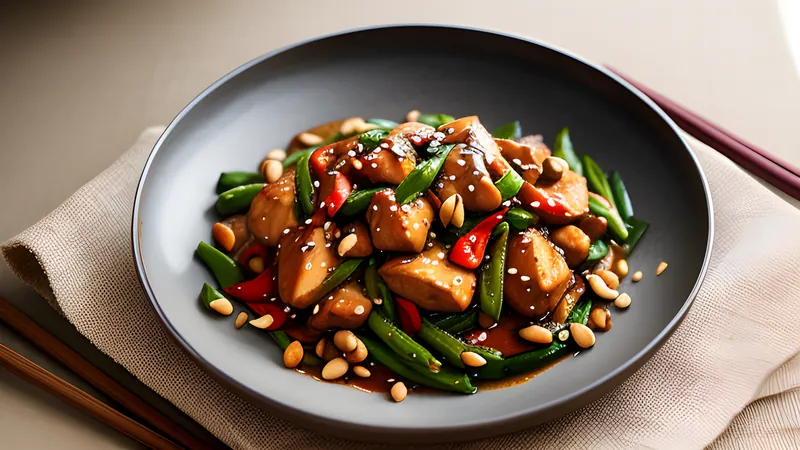
↓ Jump to recipeMost kung pao chicken sold outside China is a timid, sweet stir-fry with a few token dried chillies floating decoratively on top, never meant to be eaten. Real gong bao ji ding is built around those chillies, toasted hard in hot oil until they turn a deep mahogany and smell almost like coffee, bitter-sweet and smoky rather than raw and grassy. My twist leans into that char deliberately, a controlled burn that terrifies a lot of home cooks, paired with a sharper hit of black vinegar in the glossy sauce than most recipes call for. Get both right and you get the dish Sichuan actually eats, not the one exported to takeaway menus.
Kung Pao Chicken with Charred Dried Chillies
Ingredients
- 500g boneless, skinless chicken thighs, cut into 2cm cubes
- 1 egg white
- 1 tbsp cornflour
- 1 tbsp Shaoxing rice wine
- 0.5 tsp salt
- 12 to 15 whole dried Sichuan chillies (erjingtiao if you can find them)
- 1 tbsp whole Sichuan peppercorns
- 4 tbsp neutral oil, divided
- 3 garlic cloves, thinly sliced
- 3 slices fresh ginger, finely chopped
- 4 spring onions, white and pale green cut into 2cm batons, dark green sliced for garnish
- 80g roasted unsalted peanuts
- 2 tbsp light soy sauce
- 1 tbsp dark soy sauce
- 1.5 tbsp Chinkiang black vinegar
- 1.5 tbsp caster sugar
- 1 tbsp doubanjiang (fermented chilli bean paste)
- 1 tsp cornflour mixed with 2 tbsp cold water
Method
- Toss the chicken with the egg white, 1 tablespoon cornflour, Shaoxing wine and salt, and leave to marinate for 15 minutes.
- Whisk together the light soy, dark soy, black vinegar, sugar and cornflour slurry in a small bowl and set aside as the sauce.
- Snip the dried chillies into 2 to 3cm pieces, discarding most of the seeds, and set aside with the whole Sichuan peppercorns.
- Heat a wok until lightly smoking, add 1 tablespoon oil, then the chicken in a single layer; sear undisturbed for 90 seconds, flip and cook a further minute until just cooked through, then remove and set aside.
- Wipe the wok, add the remaining 3 tablespoons oil and heat until shimmering but not smoking, then add the dried chillies and Sichuan peppercorns and stir constantly for 45 to 60 seconds until the chillies darken to deep mahogany and smell smoky, not acrid.
- Add the garlic, ginger and doubanjiang, stir-fry for 30 seconds until fragrant and the oil turns red.
- Return the chicken to the wok along with the spring onion batons, toss for 1 minute.
- Pour in the sauce, toss vigorously for 30 to 45 seconds until it thickens and coats everything glossily.
- Stir in the peanuts off the heat, so they stay crisp, then scatter with sliced spring onion greens and serve immediately with rice.
The story
Kung pao chicken (gong bao ji ding) is named for Ding Baozhen, a Qing-dynasty governor of Sichuan in the 1870s who held the honorary title Gongbao, roughly “palace guardian.” Legend credits his household chef with inventing the dish, diced chicken stir-fried hard and fast with peanuts, dried chillies and a sweet-sour-savoury sauce, though as with most origin stories the details are murkier than the anecdote suggests. What’s certain is that the dish became one of the signature preparations of Sichuanese home and restaurant cooking by the early 20th century, and that it travelled further and faster than almost any other regional Chinese dish once Chinese restaurants opened across the West in the mid-1900s.
The name itself had a rocky patch. During the Cultural Revolution, honorific titles tied to Qing-dynasty officials fell under political suspicion as relics of a “feudal” past, and gong bao ji ding’s name reportedly made some restaurants nervous enough to rename it something blander and politically safer for a period, before it reverted once the scrutiny passed. The dish itself never really left menus; only the name went briefly out of fashion, which says something about how central it already was to Sichuanese cooking by the mid-20th century.
That travel is exactly what diluted it. Western versions softened the heat, dropped the numbing Sichuan peppercorn most diners had never encountered, and swapped the sharp black vinegar for a generic sweet glaze, producing something closer to a sweet-and-sour chicken with peanuts than the original. The real dish sits at a different balance point entirely: savoury and tangy first, with sweetness playing a supporting role rather than leading, and the peppercorn’s tingle running underneath the chilli heat the whole way through, the same mala pairing that defines mapo tofu and much of Sichuanese cooking. Dried erjingtiao chillies, grown around Sichuan, are prized for exactly this dish because they have a fruity, moderate heat and a thin skin that chars evenly without turning bitter too fast, unlike thicker, hotter varieties that scorch unevenly.
Peanuts round the dish out with fat and crunch, and diced chicken thigh, rather than breast, keeps it juicy through the fierce heat the recipe demands. Breast dries out in a hot wok in seconds; thigh forgives a slightly longer sear and stays tender.
The method, explained
There are two heat events in this dish that determine whether it succeeds, and both happen fast.
The first is the sear on the chicken. A properly hot wok with a thin layer of oil sears the marinated chicken’s surface almost instantly, the egg white and cornflour coating forming a thin, silky crust (a technique called velveting) that protects the meat from overcooking while it seals in juice. Crowd the wok or use a pan that isn’t hot enough and the chicken steams instead of sears, releasing water and turning grey and rubbery rather than golden.
The second, and the twist here, is the chilli char. Adding dried chillies and Sichuan peppercorns to shimmering, not smoking, oil and stirring them constantly for well under a minute lets them toast rather than burn. What you’re chasing is a colour change from bright red to a deep, almost blackened mahogany, at which point the chillies smell smoky and faintly like roasted coffee rather than sharply acrid. Go a shade too far and bitterness takes over the whole dish; stop a shade too early and you get raw, grassy heat with none of the depth. This is a 10 to 15 second window, which is why constant stirring and full attention matter more here than at any other point in the recipe. Removing most of the seeds before toasting also helps, since seeds scorch fastest and contribute the harshest bitterness.
It’s worth being specific about which doubanjiang goes in the pot, since the name covers a wide range of products. Look for Pixian doubanjiang, made in Pixian county near Chengdu and traditionally fermented in ceramic urns for at least a year, sometimes considerably longer; it has a deep, savoury funk and a rounder, gentler-salted heat than the thinner chilli bean pastes sold generically as “doubanjiang” in some supermarkets. Colour is a reasonable clue at the shop: proper aged Pixian doubanjiang is a dark reddish-brown, while cheaper, younger pastes tend towards a brighter, almost lacquer red. It keeps for months in the fridge once opened, so a good jar earns its keep, turning up again and again right across Sichuanese cooking.
The chicken itself benefits from one more small piece of technique worth understanding: velveting. Coating the meat in egg white and cornflour before it ever meets hot oil creates a thin, protective barrier around each piece, so the direct heat of the wok cooks the coating first and the meat gently steams within it, staying moist even at the fierce temperatures this dish demands. Restaurant kitchens usually take velveting a step further, blanching the coated meat briefly in warm oil or water before the final stir-fry, which is worth trying at home once the basic method feels comfortable, though a hot dry wok gets you most of the way there for a fraction of the mess.
The recipe
Serves 4. Prep 20 minutes (including marinating), cook 10 minutes.
Marinate 500g cubed chicken thigh in 1 egg white, 1 tablespoon cornflour, 1 tablespoon Shaoxing wine and ½ teaspoon salt for 15 minutes. Whisk the sauce: 2 tablespoons light soy, 1 tablespoon dark soy, 1½ tablespoons black vinegar, 1½ tablespoons sugar and a cornflour slurry (1 teaspoon cornflour in 2 tablespoons water). Snip 12 to 15 dried chillies into short lengths, discarding most seeds.
Sear the chicken in a very hot wok with 1 tablespoon oil, undisturbed for 90 seconds, then flip for a further minute, and remove. Add the remaining 3 tablespoons oil, heat until shimmering, then toast the chillies and 1 tablespoon Sichuan peppercorns for 45 to 60 seconds until deep mahogany and smoky-smelling. Add 3 sliced garlic cloves, chopped ginger and 1 tablespoon doubanjiang, stir-fry 30 seconds until the oil reddens. Return the chicken with the white spring onion batons, toss a minute, pour in the sauce and toss vigorously for 30 to 45 seconds until glossy and thick. Off the heat, fold through 80g roasted peanuts so they keep their crunch, scatter with spring onion greens, and serve at once with rice.
Tips, substitutions, make-ahead and storage
If erjingtiao chillies aren’t available, any dried whole chilli of moderate heat (Kashmiri or New Mexico) works reasonably, though the flavour leans slightly different. Don’t skip removing the seeds; they’re the main source of harsh, bitter char. The chicken can be marinated up to 4 hours ahead in the fridge, but the dish itself is a 10-minute cook meant to be eaten straight from the wok, since the peanuts soften and the glossy sauce dulls within about 20 minutes off the heat. Leftovers keep 2 days refrigerated and reheat fine in a hot wok or pan, though add fresh peanuts on reheating for the crunch.
Variations
Swap chicken for firm tofu, cubed and pan-fried until golden before the toss, for a vegetarian version, using vegetable stock powder if your doubanjiang needs balancing. Prawns work well too, cooked the same fast-sear way as the chicken, though they need barely 30 seconds a side before they turn opaque and firm, so pull them earlier than you would the chicken. Diced cucumber, added with the peanuts right at the end, is a lesser-known but genuinely good regional variation, contributing a cool crunch against all that heat and char without diluting the sauce. If you can’t handle much heat, halve the dried chillies but keep the peppercorns and doubanjiang, since the mala tingle matters more to the dish’s identity than the raw burn, and the toasted chilli aroma still comes through even in smaller quantity. Cashews turn up in plenty of Western versions in place of peanuts, and while they’re not traditional, they’re not offensive either, just a softer, sweeter crunch than the peanuts genuinely used in Sichuan; stick with peanuts for the real thing, but don’t feel obliged to buy a bag specially if cashews are what’s in the cupboard. A Chongqing-leaning version pushes both the doubanjiang and the whole dried chillies further for a hotter, muddier-looking but more intensely flavoured dish than the comparatively tidier Chengdu style this recipe follows.
Serve alongside dan dan noodles or mapo tofu for a proper Sichuanese table, and don’t eat the whole chillies, they’re there for aroma and colour, not for chewing.
Related Content