Kısır: Turkish Bulgur Salad with Pomegranate Molasses
The Anatolian bulgur salad, deepened with a roasted pepper paste
Contents
↓ Jump to recipeKısır is the bulgur salad that turns up at every Turkish gathering, a bowl of fine, ruddy-red grains packed with herbs, sharpened with lemon and pomegranate molasses, and warmed through with pepper and tomato paste. It is meze, picnic food and afternoon-tea food all at once, scooped up in crisp lettuce leaves and made in quantities that assume a crowd. My twist is to cook a little roasted red pepper paste with the tomato paste before it goes in, which builds a smoky, savoury base note under all that fresh brightness.
Kısır: Turkish Bulgur Salad with Pomegranate Molasses
Ingredients
- 250g fine bulgur wheat
- 300ml just-boiled water
- 1 tbsp Turkish red pepper paste (biber salçası)
- 1 tbsp tomato paste
- 4 tbsp extra-virgin olive oil
- 2 tbsp pomegranate molasses, plus extra to finish
- Juice of 1 lemon
- 4 spring onions, finely sliced
- 1 large tomato, deseeded and finely diced
- 1/2 cucumber, deseeded and finely diced
- 1 large bunch flat-leaf parsley, finely chopped
- A small bunch of mint, finely chopped
- 1 tsp dried mint
- 1 tsp Turkish red pepper flakes (pul biber)
- 1 tsp ground cumin
- Salt to taste
- Seeds of 1/2 pomegranate and a few Cos lettuce leaves, to serve
Method
- Put the fine bulgur in a large bowl, pour over the just-boiled water, stir once, cover with a plate and leave for 15 to 20 minutes until the water is absorbed and the grains are tender.
- Meanwhile, warm 1 tablespoon of the olive oil in a small pan and cook the red pepper paste and tomato paste gently for 2 to 3 minutes until darkened and glossy, then cool slightly.
- Fluff the soaked bulgur with a fork, breaking up any clumps, and stir the cooked pastes through while still warm so they colour the grains evenly.
- Add the remaining olive oil, the pomegranate molasses, lemon juice, cumin, pul biber and dried mint, and mix well; season with salt.
- Fold through the spring onions, tomato, cucumber and the fresh parsley and mint, working them in thoroughly.
- Taste and adjust: more lemon for sharpness, more pomegranate molasses for sweetness and depth, more salt as needed. Rest for 10 minutes for the flavours to meld.
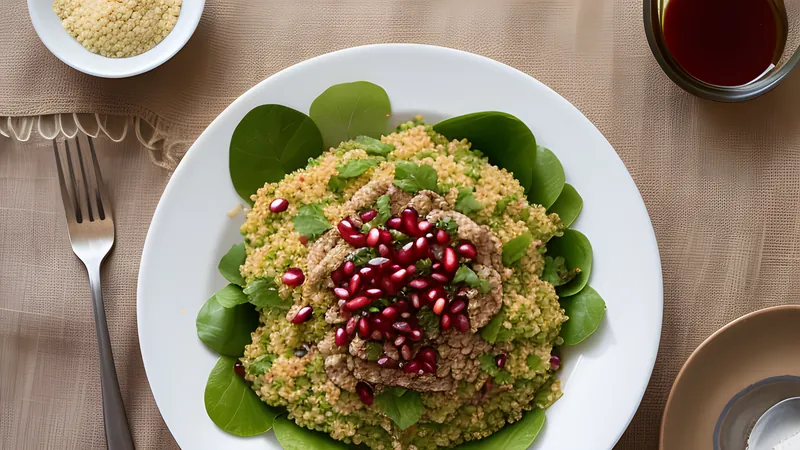
- Pile into a bowl, scatter with pomegranate seeds and a final drizzle of molasses, and serve with Cos lettuce leaves for scooping.
The Story
Kısır belongs to the great family of Levantine and Anatolian bulgur salads, close kin to Lebanese tabbouleh and Syrian and Turkish variations that stretch across the region. Where tabbouleh is parsley-heavy with bulgur as a minor player, kısır flips the proportion, making the grain the substance and the herbs the seasoning, and binds it all with the deep red pepper and tomato pastes that are the signature of south-eastern Turkish cooking. Its heartland is Anatolia, and it is associated especially with the tradition of the kısır günü, women’s afternoon gatherings where a huge bowl is made to share over tea and conversation.
Bulgur itself is one of the oldest processed foods in the world, wheat that has been parboiled, dried and cracked, a technique practised across the region for thousands of years. The parboiling gelatinises the starch and drives moisture into the grain, so bulgur keeps almost indefinitely and needs only soaking rather than long cooking, which made it a staple of the Anatolian storecupboard long before refrigeration. Fine bulgur, the grade used for kısır, is milled small enough that just-boiled water and a covered rest are all it takes to render it tender.
The two ingredients that make kısır taste unmistakably Turkish are pomegranate molasses and biber salçası, the red pepper paste. Pomegranate molasses, nar ekşisi, is simply pomegranate juice boiled down to a thick, dark, tart syrup, and it brings a sour-sweet complexity that ordinary lemon cannot. Biber salçası is a paste of sun-ripened red peppers, salted and traditionally dried in the sun on rooftops across the south-east, and it lends colour, a mild fruity heat and a savoury depth that is the backbone of countless Turkish dishes.
Soaking the bulgur
The texture of kısır rests entirely on getting the bulgur right, and the aim is grains that are tender and separate, moist but never soggy. Fine bulgur is thirsty and quick, so use just-boiled water in a measured amount, stir once, cover to trap the steam, and leave it alone for fifteen to twenty minutes; the covered rest is what steams the grains evenly through. Resist the urge to add extra water, since too much leaves the salad heavy and porridge-like, and you cannot easily take it back out.
Fluff the soaked bulgur thoroughly with a fork before anything else goes in, breaking up any clumps so the dressing and pastes can coat every grain. Stirring the cooked pepper and tomato pastes through while the bulgur is still warm helps the colour and flavour penetrate, so the finished salad glows an even terracotta rather than showing streaks of paste.
The roasted-pepper base
Frying the pastes is my small departure from the quick, everything-in-one-bowl method, and it pays off. A couple of minutes in warm oil cooks the raw edge out of the tomato and pepper pastes, deepens their colour and coaxes out a rounder, gently caramelised, almost smoky flavour, the same reason a good ragù starts by frying its tomato paste. Cooked this way, the pastes taste developed and savoury rather than sharp and tinny, and that base carries the whole salad.
If you can find a jarred roasted red pepper paste, or the smoky acı biber salçası (the hot version), it is worth using here for an even deeper flavour. Keep the heat gentle so the paste darkens without catching, since burnt pepper paste turns bitter and there is no rescuing it.
What can go wrong
The commonest fault is a claggy, wet salad, which comes from too much soaking water or from watery tomato and cucumber. Measure the water for the bulgur, and deseed the tomato and cucumber before dicing so they add flavour and crunch without weeping liquid into the bowl. A close second is a salad that tastes flat, which almost always means it is under-seasoned or under-acidified; kısır needs a bold hand with salt, lemon and pomegranate molasses to come alive, so keep tasting and adjusting until it sings.
Skimping on the herbs is the other pitfall. A proper kısır is generously green with parsley and mint, and a mean handful leaves it tasting only of grain and paste. Chop the herbs finely so they distribute through every forkful, and fold them in near the end so they stay fresh and vivid rather than wilting into the warm bulgur.
Storage, make-ahead and variations
Kısır keeps well, and many say it improves after a few hours as the flavours settle into the grain, which makes it ideal for preparing ahead. Store it covered in the fridge for up to three days; bring it back to room temperature and refresh with a squeeze of lemon and a little more chopped herb before serving, since the fresh notes fade with time. It is not suitable for freezing.
For variations, a diced green pepper adds crunch, a spoonful of tahini makes it richer and nuttier, and toasted walnuts scattered over give texture. Some cooks add a little garlic or a diced spring green chilli for heat. If you like this style of herb-and-grain salad, my tabbouleh, parsley-forward, the Levantine way shows the parsley-first end of the same family, and for another dish that leans on pomegranate against a nutty grain, try the roasted squash, farro and pomegranate.
Related Content