Korean Fried Chicken with Gochujang-Honey Glaze
Double-fried, shatteringly crisp and sticky-sweet
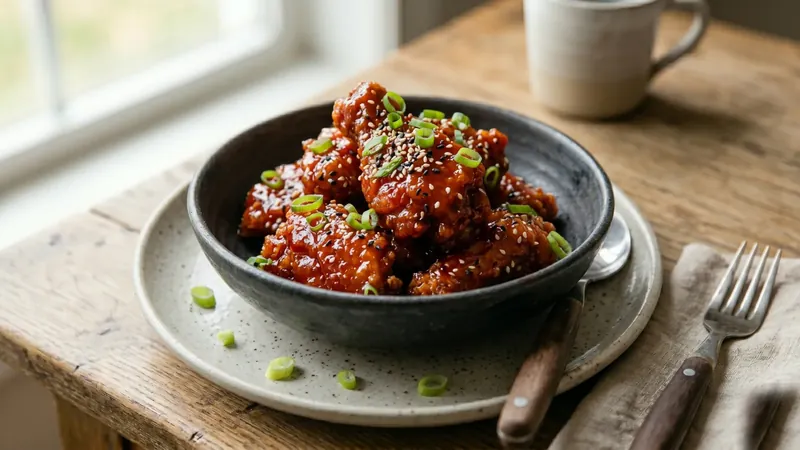
Korean fried chicken is built on one obsession: crunch that holds. The trick here is double-frying, a low first fry to cook the meat through and a hot second fry to set a glassy, ungreasy shell. The twist is the glaze, a glossy gochujang-honey sauce that is sweet, savoury and gently fiery, clinging to each piece without softening that hard-won crackle. Serve with cold beer and plenty of napkins.
Korean Fried Chicken with Gochujang-Honey Glaze
Ingredients
- 900g chicken wings and drumettes, separated
- 1 tsp fine salt
- ½ tsp ground white pepper
- 1 tbsp grated fresh ginger
- 120g plain flour
- 60g cornflour
- ½ tsp baking powder
- 180ml cold sparkling water
- 1.5 litres neutral oil, for frying
- 2 tbsp gochujang
- 3 tbsp clear honey
- 2 tbsp soy sauce
- 2 tbsp rice vinegar
- 3 garlic cloves, finely grated
- 1 tbsp toasted sesame oil
- 2 spring onions, finely sliced
- 1 tbsp toasted sesame seeds
Method
- Pat the chicken dry and toss with the salt, white pepper and grated ginger. Leave for 15 minutes.
- Whisk the flour, cornflour and baking powder together, then stir in the cold sparkling water to make a loose, pourable batter.
- Heat the oil in a deep, heavy pan to 160°C.
- Dip each piece in the batter, letting the excess drip off, then fry in batches for 6-7 minutes until pale gold. Drain on a rack and rest for 5 minutes.
- Raise the oil to 190°C and fry the pieces a second time for 3-4 minutes until deep golden and crisp. Drain again.
- For the glaze, simmer the gochujang, honey, soy sauce, rice vinegar and garlic in a wide pan for 2 minutes until glossy, then stir in the sesame oil.
- Add the hot chicken to the glaze and toss until every piece is coated.
- Scatter with spring onions and sesame seeds and serve at once.
3 The Story
Korean fried chicken, often shortened to KFC by people who enjoy the joke, is a relatively modern dish that has spread far beyond the peninsula. Fried chicken arrived in Korea through several routes during the twentieth century, but it was the latter decades that turned it into a national obsession, with dedicated chicken shops, or chikin jip, appearing on seemingly every street and the pairing of fried chicken with beer earning its own affectionate nickname, chimaek, a blend of the words for chicken and the Korean word for beer.
What sets the Korean style apart from American-influenced versions is texture. The batter is thin and often built on cornflour or potato starch rather than heavy seasoned flour, and the cooking is done in two stages. The first, gentler fry cooks the meat and drives off surface moisture; the second, hotter fry crisps the coating into something closer to glass than to crust. That resting step in between matters, because it lets steam escape so the second fry can do its work. The reward is chicken that stays crunchy even once it is sauced, which is the whole point.
Gochujang is the hero of the glaze. This deep red fermented paste, made from chilli powder, glutinous rice, fermented soybeans and salt, has been a cornerstone of Korean cooking for centuries and brings a rounded, savoury heat rather than a sharp burn. Loosened with honey, soy and a splash of rice vinegar, it becomes a lacquer that balances sweetness, salt and acidity against the richness of the fried chicken. A final hit of toasted sesame oil rounds everything off with a nutty perfume.
The twist of double-frying paired with a gochujang-honey glaze is not a single chef’s invention so much as a tidy distillation of how the dish is loved in Korea today: crisp, sticky and a little spicy. There is also an unsauced school of Korean fried chicken, often called huraideu, prized purely for its bare, crackling crust, and the saucy, spicy yangnyeom style that this recipe leans towards. Garlic, sesame and spring onion are the familiar supporting cast, and they earn their place, the raw garlic giving the glaze a savoury bite and the sesame a toasted finish.
A few small habits make all the difference at home. Keep the oil temperature steady between fries, give the chicken room rather than crowding the pan, and rest the pieces on a wire rack rather than paper so the bases do not steam and soften. Serve the chicken the moment it is tossed, while the shell still shatters under the sauce, ideally with a crisp pickled radish on the side to cut the richness.
Related Content