Kerala Prawn Roast with Curry Leaf
Dry-fried prawns in a dark, spiced masala
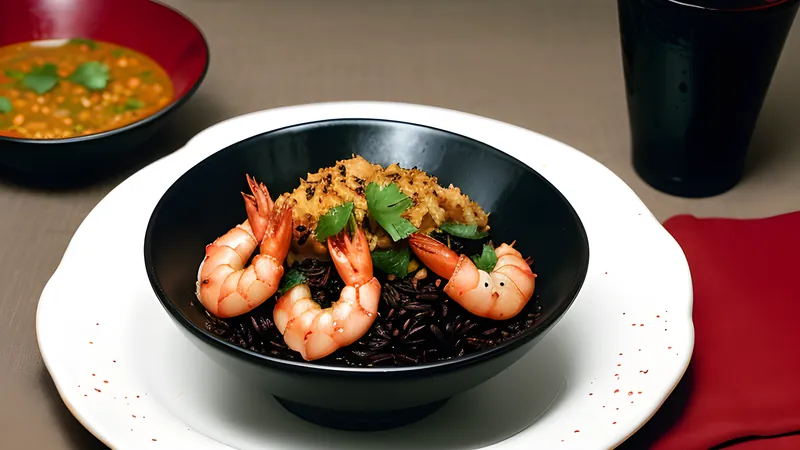
Contents
↓ Jump to recipeIf you have only ever met prawn curry as a loose, soupy thing swimming in coconut milk, a Kerala prawn roast will rearrange your expectations. This is a dry dish. The prawns come out coated in a dark, clinging masala, glossy with coconut oil, sharp with black pepper and haunted by the smell of curry leaves hitting hot fat. There is no sauce to speak of and no need for one; every mouthful is intense and concentrated, built to be scooped up with rice or torn flatbread.
The one flourish I add sits right at the end. A traditional roast is finished when the masala dries and clings, and that is already very good. I go one step further with a tadka, a quick tempering of a few extra curry leaves crisped in a spoonful of hot coconut oil, poured sizzling over the finished prawns along with a scatter of toasted coconut. It reintroduces a hit of fresh, fragrant curry-leaf aroma that the long cooking would otherwise have mellowed, and the toasted coconut adds a sweet, nutty crunch that plays against the peppery heat.
Kerala Prawn Roast with Curry Leaf
Ingredients
- 600g raw prawns, peeled and deveined
- 1/2 tsp ground turmeric
- 1 tsp Kashmiri chilli powder
- 3 tbsp coconut oil
- 2 large onions, finely sliced
- 1 thumb ginger, grated
- 6 garlic cloves, grated
- 2 green chillies, slit
- 2 sprigs fresh curry leaves, plus extra to finish
- 2 tomatoes, finely chopped
- 1.5 tsp coarsely ground black pepper
- 1 tsp garam masala
- 1 tsp fennel seeds, crushed
- 1 tsp fine sea salt, or to taste
- 1 tbsp coconut, freshly grated or desiccated, toasted, to finish
Method
- Toss the prawns with the turmeric, half the chilli powder and a pinch of salt. Set aside for 10 minutes.
- Heat 2 tbsp coconut oil and fry the onions over medium heat for 12-15 minutes until deep golden brown.
- Add the ginger, garlic, green chilli and one sprig of curry leaves and cook for 2 minutes until fragrant.
- Stir in the tomatoes, remaining chilli powder, black pepper, garam masala, fennel and salt. Cook down for 8-10 minutes to a thick, dark, oil-glossed masala.
- Add the prawns and toss over medium-high heat for 4-5 minutes until just cooked and coated, letting the masala catch and dry-roast a little.
- In a small pan, heat the last 1 tbsp coconut oil and crisp the extra curry leaves for 20 seconds, then pour over the prawns with the toasted coconut.
A dish of the Malabar coast
Kerala runs along India’s southwestern coast, a long green strip between the Western Ghats and the Arabian Sea, and its cooking is defined by three things that grow and swim there in abundance: coconut, spices, and seafood. This is the old Malabar spice country that drew Roman, Arab, Chinese and eventually European traders for its black pepper, which Kerala still produces in quantity and which the locals use with a confidence that surprises people who think of pepper as a background seasoning. Here it is a lead spice.
Chemmeen roast, prawn roast, belongs to a whole family of Keralan “roast” dishes, where roast means slow-cooked and reduced rather than oven-baked. Chicken, beef and prawns all get the treatment: aromatics fried patiently, a masala built and dried, the main ingredient tossed through until it wears the spice like a coat. Coconut oil is the cooking fat, and it is not interchangeable here. Its particular sweet, faintly nutty aroma is woven through the flavour of the region’s food, and using a neutral oil instead gives you a competent dish that simply does not taste of Kerala.
The building blocks
Two things carry this recipe, and both reward patience. The first is the onions. They need to be cooked long and slow until they are genuinely deep golden brown, not merely softened, because that browning is the sweetness and body of the whole masala. Rushing them on high heat gives you scorched edges and a raw, harsh base. Give them a proper twelve to fifteen minutes and stir often.
The second is the curry leaves, which are non-negotiable and not the same as curry powder or bay leaves. Fresh curry leaves have a citrusy, slightly nutty aroma that defines South Indian coastal cooking, and they release it when they hit hot oil. Buy them fresh from an Asian grocer, where they are cheap, and freeze what you do not use; they keep their fragrance from frozen far better than dried leaves keep anything at all.
The method
Start by tossing the peeled prawns with turmeric, half the chilli powder and a little salt, and leave them for ten minutes. This light marinade seasons the prawns through and gives them colour. Meanwhile, heat two tablespoons of coconut oil and fry the sliced onions slowly until they reach a deep, even brown. This is the foundation, so do not hurry it.
Add the grated ginger and garlic, the slit green chillies and a sprig of curry leaves, and cook for a couple of minutes until the raw smell goes and the kitchen fills with fragrance. Now the tomatoes and the dry spices: the rest of the chilli powder, the coarse black pepper, garam masala, crushed fennel and salt. Cook this down for eight to ten minutes, stirring, until the tomatoes collapse and the mixture turns thick and dark and you can see the oil coming back out around the edges. That oil separating is your signal that the masala is properly cooked and ready.
Turn the heat up, add the prawns, and toss them through for four to five minutes until they are just cooked and thickly coated. Let the masala catch very slightly on the base of the pan and scrape it back through; that gentle dry-roasting is where the dish earns its name. Prawns cook fast, so pull the pan the moment they turn opaque and curl, before they tighten and toughen.
Finally, the tempering. Heat the last tablespoon of coconut oil in a small pan until it shimmers, throw in the extra curry leaves and let them crackle and crisp for about twenty seconds, then pour the whole fragrant lot over the prawns. Scatter with toasted coconut and bring it to the table immediately, while the curry leaves are still perfuming the air.
Getting it right
The two common failures are both about timing. Undercooked, harsh-tasting masala comes from rushing the onion and tomato stages; the dish genuinely needs that slow build, and there is no shortcut. Rubbery prawns come from cooking them too long, which is easy to do when you are worried they are underdone. Trust the five-minute window and the visual cue of the curl.
If the finished roast tastes flat, it usually needs more black pepper and salt rather than more chilli; the pepper is the soul of the dish and Keralan cooks are generous with it. If it is too dry and catching too hard, a splash of hot water loosens the masala without turning it into a curry.
Serving, swaps and storage
Kerala prawn roast is traditionally eaten with rice, especially the region’s nutty red matta rice, or with soft flatbreads like malabar parotta or appam to mop up the clinging spice. A cooling side of yoghurt or a simple cucumber salad balances the heat. It also makes a superb part of a larger South Indian spread.
The masala base is versatile. Swap the prawns for firm white fish, squid, or even chicken thigh cut small, adjusting the cooking time upward for the latter. If you want to explore the coconut-and-spice register of the same coastline, the soupier, tangier Goan fish curry with kokum and coconut sits just to the north, while the mild, creamy prawn malai curry with coconut milk shows the opposite, gentler end of the Indian prawn repertoire.
As for keeping it, the roast is arguably better the next day, once the masala has had a night to settle into the prawns. It reheats gently in a pan with a splash of water in a few minutes, though avoid the microwave, which toughens the prawns. Make the masala base a day ahead and refrigerate it, then all you need do at dinnertime is reheat, toss in the prawns for five minutes, and add a fresh tempering to wake the whole thing back up.
On coconut oil and black pepper
It is worth saying a little more about the two ingredients that most define this dish, because getting them right is most of the battle. Unrefined, cold-pressed coconut oil, sometimes sold as virgin coconut oil, carries the sweet aroma that runs through Keralan cooking; the refined, deodorised sort will work but gives away much of what makes the roast taste of its home. It is solid at cool room temperature and melts to a clear liquid the moment it warms, so do not be alarmed by a jar that looks set.
The black pepper deserves the same respect. Grind it coarsely just before you cook, so the volatile oils are fresh, and taste as you go; the finished dish should have a warm, resinous heat that sits behind the chilli rather than a dusty background note. Kerala grows some of the best pepper in the world, and this is a dish built to show it off. Treat the pepper as a star spice, give the onions their time, and finish with that crackling curry-leaf tempering, and you will have a prawn roast that tastes like the coast it comes from.
Related Content