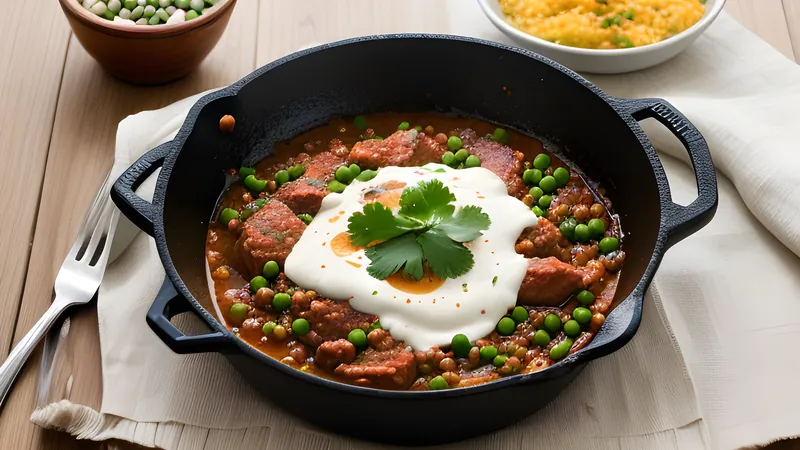
Keema Matar with Peas and Garam Masala
Spiced minced meat and sweet peas, finished with brown butter and crushed fenugreek
Contents
↓ Jump to recipeKeema is the dish I make when I want something that tastes like it took all afternoon but actually took forty-five minutes. It is spiced minced meat, and matar is peas, and together they make one of the great weeknight dinners of the subcontinent: quick because mince cooks fast, deep because you build the same masala base you would for a long braise. Every household has its own version, and every version is right, which is a comforting thing to remember when you are standing over the pan wondering whether to add another chilli.
Keema Matar with Peas and Garam Masala
Ingredients
- 500 g minced lamb or beef (about 15% fat)
- 200 g frozen peas
- 2 medium onions, finely chopped
- 4 garlic cloves, grated
- 1 thumb (30 g) ginger, grated
- 2 green chillies, finely chopped
- 3 medium tomatoes, grated or finely chopped
- 2 tbsp tomato purée
- 1 tsp ground turmeric
- 2 tsp ground cumin
- 2 tsp ground coriander
- 1 tsp Kashmiri chilli powder
- 1.5 tsp garam masala
- 1 tbsp kasuri methi (dried fenugreek leaves)
- 3 tbsp ghee or neutral oil, plus 20 g butter to finish
- 1 tsp salt, or to taste
- 1 small bunch coriander, chopped
- 150 ml water
Method
- Heat the ghee in a wide pan and fry the onions over medium heat for 10 to 12 minutes until deep golden.
- Add the garlic, ginger and green chilli and cook for 2 minutes until fragrant.
- Stir in the turmeric, cumin, coriander and Kashmiri chilli and toast for 30 seconds.
- Add the grated tomato and tomato purée and cook down for 6 to 8 minutes until the oil separates.
- Raise the heat, add the mince and fry hard, breaking up clumps, for 8 to 10 minutes until browned.
- Add 150 ml water and 1 tsp salt, cover and simmer for 15 minutes.
- Stir in the peas and garam masala and cook uncovered for a further 8 minutes until thick.
- Brown the 20 g butter in a small pan until nutty, crumble in the kasuri methi, and stir it through with the fresh coriander before serving.
The dish and its background
Keema, from the Urdu and Hindi qīma, simply means minced or ground meat, and the word travelled with the trade and conquest routes that carried so much of the region’s food. You find keema across India, Pakistan, Bangladesh and up into Afghanistan and the Middle East, cooked with peas, with potatoes, stuffed into flaky parathas, tucked inside samosas, or piled onto pav in the great street kitchens of Mumbai. The pairing with peas is a north Indian and Pakistani classic, the sweetness of the peas playing against the warm, savoury spice of the meat.
Historically, mincing meat was practical: it stretched an expensive ingredient, cooked quickly over precious fuel, and turned tougher, cheaper cuts into something tender. That practicality is still the appeal. Lamb gives the richest, most traditional result, with beef a close and excellent second, but the method is identical whichever you choose. What matters is a mince with a bit of fat in it, around fifteen per cent, because lean mince cooks up dry and pebbly, and the fat carries all that spice around your mouth.
My one small twist
The finish is where I depart from the standard recipe. Instead of stirring in cold butter or plain ghee at the end, I brown a knob of butter in a small pan until it smells of toasted nuts, then crumble in a spoon of kasuri methi, the dried fenugreek leaves, letting them sizzle in the hot butter for a few seconds before pouring the whole fragrant lot over the keema. Brown butter adds a caramel, nutty depth, and blooming the fenugreek in fat, rather than just crumbling it in dry, releases its extraordinary maple-and-celery aroma. Together they give the dish a restaurant-style richness that people always ask about and never quite place.
A word on spices and mince
Freshly ground spices make a real difference here, and if you have whole cumin and coriander seeds it is worth toasting and grinding them yourself, because ground spices lose their volatile oils within a few months of sitting in the cupboard. Kashmiri chilli powder is worth seeking out for its deep red colour and mild, fruity heat, so you get a warm glow rather than a searing burn; ordinary chilli powder is hotter, so use less. As for the mince, ask the butcher for a coarse grind if you can, since a coarse grind holds its texture and gives the finished keema more bite, whereas a fine supermarket grind can turn pasty. A blend of lamb and beef, if you cannot decide, gives you the richness of lamb with the cleaner savour of beef.
Building the masala
The whole dish rests on two stages you must not rush. First, the onions. Chop them fine and fry them patiently in ghee for a good ten to twelve minutes until they are deep golden and sweet. Pale, half-cooked onions leave the finished keema tasting raw and sharp; properly browned onions are the sweetness and body of the sauce. This is not a step to hurry with high heat, which just burns the edges while the centres stay crunchy.
Second, the bhuno, the frying-down of the tomato and spices. Once your onions are golden, in go the grated ginger, garlic and chilli, then the ground spices for a brief toast, then the grated tomato and purée. Now cook it hard, stirring, until you see the fat begin to separate and pool at the edges, six to eight minutes. That separation is the visual cue that the masala is cooked, the raw tomato tang has gone, and the base is ready to receive the meat. Skip it and the sauce tastes thin and acidic no matter how long you cook afterwards.
Only then does the mince go in, over a high heat, broken up and fried until it loses its raw colour and starts to catch a little on the pan. Add a splash of water, cover, and let it simmer for fifteen minutes so the flavours meld and the meat turns tender. The peas and garam masala go in near the end, the peas needing only a few minutes so they stay sweet and green, the garam masala added late so its aromatic top notes survive to the plate.
Where it can go wrong
Dry, crumbly keema usually means one of two things: the mince was too lean, or it was cooked too hard for too long without enough liquid. Keep a little water in the pan during the covered simmer and the meat stays succulent. If it looks dry, add a splash more; if it looks soupy at the end, take the lid off and let it reduce until the fat glosses the surface and the mixture holds its shape on a spoon.
The other frequent misstep is adding all the garam masala early. Garam masala is a finishing spice, a blend of warm aromatics whose fragrance is volatile, so if you toast it at the start it cooks away to nothing. Add it in the last ten minutes. And go easy on salt until the end, because as the keema reduces the seasoning concentrates, and it is far easier to add than to fix.
Serving, storage and variations
Keema matar wants something to scoop it with. Warm chapatis or naan are the classic partners, though a bowl of plain basmati is just as good and turns it into a fuller meal. A spoon of thick yoghurt on the side and a few slices of raw red onion with a squeeze of lime is all the accompaniment it really needs, though a quick cucumber raita never hurt anyone. It sits very happily on a table alongside richer, creamier curries like paneer butter masala or dal makhani, the leanness of the keema balancing their butteriness.
It keeps for four days in the fridge and freezes for three months, and the flavour deepens overnight as the spices settle, so it is a genuinely good make-ahead. Leftover keema is a gift: fold it through cooked rice for a quick keema pulao, stuff it into a folded paratha, or spoon it over hot buttered toast with a fried egg for the best breakfast of your week. It also makes a fine filling for samosas or a shepherd-style pie topped with spiced mash.
For variations, add a cubed potato with the water for keema aloo, which stretches the dish and soaks up spice beautifully. A handful of chopped mint alongside the coriander lifts the whole thing towards freshness, and a spoon of thick yoghurt stirred in at the end makes it richer and milder for anyone wary of chilli. If you love this spice base, it is the same foundation that flavours a proper chicken dum biryani, so learning it here pays off across your whole repertoire. Keema is where a lot of very good cooks quietly began.
Related Content