Kaya Toast with Soft-Boiled Eggs
Singapore's coffee-shop breakfast, with a slow-caramelised coconut jam
Contents
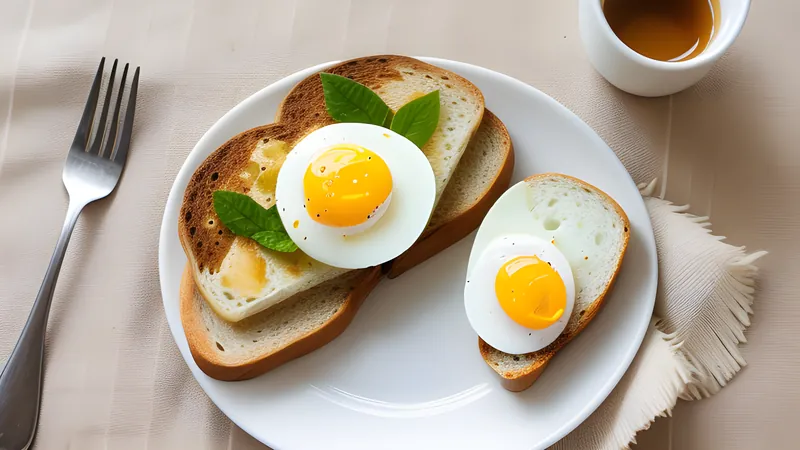
↓ Jump to recipeKaya toast is Singapore and Malaysia in a single mouthful: thin, crisp toast, a cold slab of butter, and a thick swipe of kaya, the fragrant coconut-egg jam that gives the dish its name. Alongside it come two soft-boiled eggs, seasoned with dark soy and white pepper and eaten as a warm dip, and a cup of strong local coffee. The whole thing is a fifty-year-old coffee-shop ritual, and the part worth making from scratch is the kaya. My version leans into a proper caramel base for a deeper, almost butterscotch note under the coconut and pandan.
Kaya Toast with Soft-Boiled Eggs
Ingredients
- 4 large eggs, plus 2 egg yolks, for the kaya
- 180g caster sugar, plus 2 tbsp for the caramel
- 250ml full-fat coconut milk
- 6 pandan leaves, knotted (or 1 tsp pandan extract)
- A pinch of salt
- 4 thick slices white bread (or 8 thin slices)
- 50g cold salted butter, thinly sliced
- 4 eggs, for soft-boiling
- Dark soy sauce and white pepper, to serve
Method
- Make a light caramel: melt the 2 tbsp sugar in a small dry pan over medium heat until it turns amber, then carefully stir it through the 180g sugar off the heat (it will clump; that is fine).
- Whisk the 4 eggs and 2 yolks with the sugar mixture until smooth, then whisk in the coconut milk and a pinch of salt.
- Pour into a heavy pan or a bowl set over barely simmering water, add the knotted pandan leaves, and cook over low heat, stirring constantly, for 35 to 45 minutes until thick enough to coat the back of a spoon heavily.
- If the mixture looks at all grainy, blitz it smooth with a stick blender. Fish out the pandan, cool, and chill; it thickens further as it cools.
- Toast the bread until crisp and golden on both sides. For each serving, spread one slice thickly with cold kaya and lay slices of cold butter on another, then sandwich and cut into fingers.
- For the eggs, lower them into boiling water, turn off the heat, cover and leave for 6 minutes for barely-set whites and runny yolks, then crack into a bowl.
- Season the eggs with a few dashes of dark soy sauce and white pepper. Dip the toast fingers into the egg and eat straight away.
The Story
The kaya breakfast grew out of the kopitiam, the traditional coffee shop of Singapore and Malaysia, and its history runs through the Hainanese community who ran so many of them. Hainanese men had come to the region in the nineteenth and early twentieth centuries, many working as cooks and domestic staff for British and Peranakan households, where they learned to make Western-style breads, cakes and jams. When they set up their own coffee shops, they adapted what they knew, and kaya, a local coconut-and-egg answer to European fruit preserves and lemon curd, became the house spread.
The word kaya means “rich” in Malay, a fair description of a jam built on eggs, sugar and coconut milk. There are two broad schools. The Hainanese and Singaporean style is a smooth brown kaya, coloured and flavoured by caramelised sugar. The Nyonya, or Peranakan, style is a green kaya, taking its colour and grassy perfume from a heavy dose of pandan and often no caramel at all. Both are thickened slowly over gentle heat until they set to a soft, spoonable curd, and both belong on hot toast under a cold slick of butter.
Pandan is the aromatic thread running through both. The long, blade-like leaves of Pandanus amaryllifolius carry a compound also found in basmati rice and jasmine rice, which is what gives pandan its distinctive scent, at once grassy, nutty and faintly like fresh hay. In South-East Asia it is used the way vanilla is used in the West, knotted and dropped into coconut desserts, custards and rice to perfume them from within. Fresh or frozen leaves give the truest flavour; a good pandan extract is a decent stand-in when the leaves are hard to find.
Cooking the kaya
Kaya is a custard, and it demands a custard’s patience. The whole game is thickening the eggs with the coconut milk and sugar over heat low enough that the eggs never scramble, which means constant stirring and a refusal to rush. A bowl set over barely simmering water is the safest route, giving you gentle, even heat and a wide margin for error; a heavy pan straight on a low flame is faster but needs more vigilance. Either way, keep the spoon moving and cook until the mixture visibly coats the back of it and holds a line when you draw a finger through.
The caramel is my point of difference, and it is what gives this kaya its amber depth. Melting a little sugar to a proper amber before it goes into the mix introduces bitter, toffee-like caramel notes that sit under the sweetness and stop the jam tasting flatly sugary. Stir the hot caramel into the remaining sugar off the heat and do not worry when it seizes into clumps, because the eggs and warmth dissolve it all as the kaya cooks.
The eggs and the assembly
Soft-boiled eggs the kopitiam way are looser than a British breakfast egg, whites only just set and yolks fully runny, cracked out of the shell into a saucer and seasoned with dark soy and white pepper. The six-minute off-heat method here is reliable for large fridge-cold eggs; boil the water, lower the eggs in gently, kill the heat and cover the pan, and the residual heat cooks them to that just-set point without toughening. Have the toast ready so everything meets hot.
Assembly rewards a little care. The toast should be thin and properly crisp so it stands up to the wet kaya, the kaya should be cold and thickly spread, and the butter should be cold and sliced rather than soft, so it holds its shape against the warm toast and gives that cool, creamy contrast in the bite. Cut into fingers for dipping into the soy-seasoned egg.
What can go wrong
Scrambled, grainy kaya is the classic disaster, and it comes from heat that is too high or stirring that stops. Keep the heat gentle and the spoon constant, and if you do see the first specks of curdling, pull it off the heat at once and blitz it smooth with a stick blender, which rescues a surprising amount. The jam should end up silky; any residual graininess disappears under the blender.
Under-thickened kaya is the other issue, usually from impatience. It thickens noticeably as it cools, so stop while it still flows a little, but if a chilled batch is too runny to spread, return it to gentle heat and cook it a few minutes more. On the eggs, the only real error is overcooking, which turns the yolk chalky; err on the side of less time, since a slightly loose white is exactly right here.
Storage, make-ahead and variations
Kaya keeps for up to two weeks in a sterilised jar in the fridge, and it is worth making a full batch since it is as good on plain toast, crumpets or a spoon as it is in the full breakfast. It does not freeze well, as the egg custard can split on thawing. Bring it to cool room temperature before spreading if you want it softer.
For the Nyonya green style, leave out the caramel and increase the pandan (or add a little extract) for a grassier, brighter jam. A knob of butter whisked in at the end of cooking makes it richer and glossier. Kaya is lovely folded through steel-cut porridge or spread on warm milk rolls. For another egg-and-toast breakfast built on a savoury-sweet balance, my akuri, the Parsi spiced scrambled eggs piles soft eggs onto buttered toast, and for more of the coconut-and-pandan flavour world, the Malaysian nasi lemak with sambal and crispy anchovies shows what pandan-scented coconut does in a savoury register.
Related Content