Crispy Pork Katsu Sando
Japan's perfect sandwich, milk bread and all
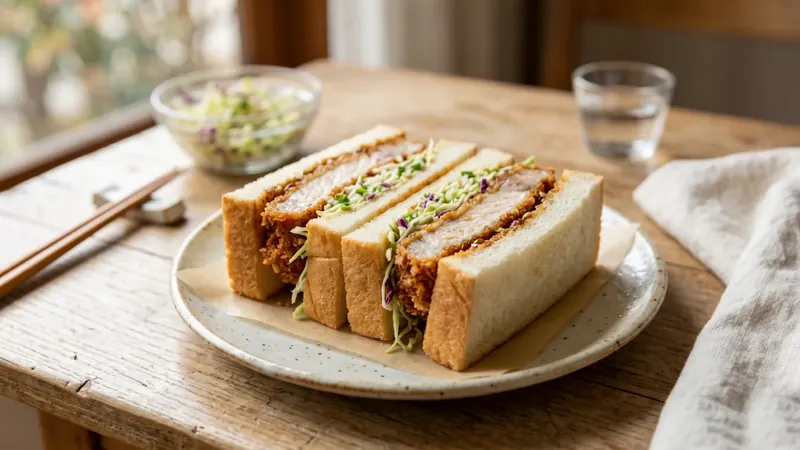
The katsu sando is proof that a sandwich can be a destination dish. A crisp panko-crumbed pork cutlet, brushed with fruity-sweet tonkatsu sauce, is pressed between pillowy slices of Japanese milk bread. The twist is a quick tonkatsu slaw tucked alongside the cutlet, adding cool crunch and freshness so each bite balances rich and light. Crusts trimmed, cut neatly in two, it is as satisfying to look at as it is to eat.
Crispy Pork Katsu Sando
Ingredients
- 2 boneless pork loin steaks, about 150g each
- Salt and black pepper
- 3 tbsp plain flour
- 1 egg, beaten
- 80g panko breadcrumbs
- Neutral oil, for shallow frying
- 4 thick slices of milk bread (shokupan)
- Softened butter, for spreading
- 1 tsp English mustard
- 3 tbsp tonkatsu sauce
- 150g white cabbage, very finely shredded
- 1 tbsp Japanese mayonnaise, plus extra for spreading
- 1 tsp rice vinegar
Method
- Sit the pork steaks between two sheets of cling film and bash with a rolling pin to an even 1cm thickness. Snip any sinew at the edges and season well.
- Set up three plates: one with flour, one with beaten egg, one with panko. Coat each steak in flour, then egg, then press firmly into the panko.
- Heat 1cm of oil in a frying pan to about 175°C. Fry the pork for 3-4 minutes each side until deep golden and cooked through, then rest on a rack.
- For the slaw, toss the shredded cabbage with the Japanese mayonnaise and rice vinegar and season lightly.
- Spread two slices of bread with butter and English mustard.
- Spread the other two slices with a little extra Japanese mayonnaise.
- Brush the rested cutlets with tonkatsu sauce on both sides, then sit one on each mustard-spread slice.
- Pile the slaw on top, close with the remaining bread, and press gently.
- Trim away the crusts with a sharp knife, then cut each sandwich in half and serve.
3 The Story
The katsu sando belongs to a category the Japanese call yoshoku, Western-style dishes adapted and reinvented within Japanese cooking. Its centrepiece, tonkatsu, is a breaded and deep-fried pork cutlet that became popular in Japan in the late nineteenth and early twentieth centuries as Western foods were absorbed and made local. Encased in light, airy panko breadcrumbs rather than fine European crumbs, tonkatsu has a uniquely shattering crust, and slipping it into a sandwich was a natural and inspired next step.
Bread is half the story. Shokupan, Japanese milk bread, is a soft, faintly sweet white loaf with a tender, cloud-like crumb, often enriched with milk and a cooked flour paste that keeps it pillowy. Its gentle structure is exactly right for a sando: substantial enough to hold a thick cutlet, soft enough to yield in a single bite. The crusts are removed not out of fussiness but because the clean, square cross-section is part of the sandwich’s identity, the neatly bisected halves showing off the layers within.
Tonkatsu sauce is the flavour that defines it. Thick, dark and glossy, it is a fruit-and-vegetable-based brown sauce, tangy and sweet with a savoury depth, and it sits in the same family as British brown sauces while tasting distinctly its own. Brushed over the hot cutlet, it soaks just slightly into the crumb and seasons every mouthful.
The slaw is the gentle twist. Shredded cabbage is the traditional partner to tonkatsu on the plate, served raw and finely cut as a crisp, cooling counterpoint to the fried pork. Folding it through a little Japanese mayonnaise, which is richer and tangier than its Western cousin thanks to its rice vinegar and egg yolks, turns that classic side into a slaw that lives inside the sandwich itself. The result keeps the spirit of the original while adding freshness and crunch, so the katsu sando feels both familiar and a touch more complete.
A few details reward attention. Pounding the pork to an even thickness means it cooks through before the crumb scorches, and snipping the band of sinew around the loin stops the cutlet curling in the pan. Letting the fried katsu rest briefly before assembly keeps its crust crisp against the soft bread. Cut with a sharp, clean knife, the finished halves show their neat strata of bread, pork and slaw, which is half the appeal of a sando in the first place.
Related Content