Kachumbari: East Africa's Tomato-and-Onion Cooler
A five-minute quick pickle takes the fight out of raw onion
Contents
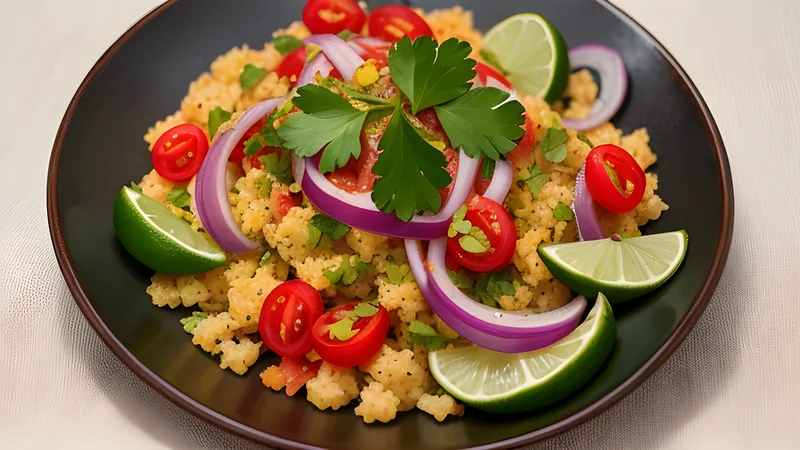
↓ Jump to recipeKachumbari is the salad that sits on nearly every table across Kenya and Tanzania, a simple relief of raw tomato, onion, chilli and lime that cuts through rich stews, grilled meat and pilau. The one change here is to the onion: rather than tossing it in raw, it gets a five-minute quick-pickle in lime juice and a little sugar first, which tames its sharpest edge without losing the crunch and bite that make kachumbari what it is.
Kachumbari: East Africa's Tomato-and-Onion Cooler
Ingredients
- 1 large red onion, very thinly sliced
- 2 tbsp lime juice, divided
- 1 tsp caster sugar
- 1/2 tsp fine salt, plus extra to taste
- 1 tsp cumin seeds
- 5 ripe tomatoes, deseeded and diced
- 1 cucumber, deseeded and diced
- 1 to 2 red or green bird's eye chillies, finely chopped
- A large handful of coriander leaves, roughly chopped
- 2 tbsp extra-virgin olive oil
- Black pepper
Method
- Put the sliced onion in a small bowl with 1 tablespoon of the lime juice, the sugar and 1/4 teaspoon of the salt, scrunch briefly with your hands, and leave to quick-pickle for 15 minutes, stirring once or twice.
- Meanwhile, toast the cumin seeds in a dry pan over a medium heat for 1 to 2 minutes, shaking often, until fragrant and a shade darker, then crush lightly in a mortar or with the flat of a knife.
- Combine the diced tomatoes, cucumber, chilli and coriander in a large bowl.
- Drain the pickled onion, reserving its liquid, and add the onion to the bowl.
- Whisk the reserved onion liquid with the remaining tablespoon of lime juice, the crushed cumin, olive oil and remaining 1/4 teaspoon of salt.
- Pour the dressing over the vegetables, season with black pepper, and toss well.
- Leave to sit for 5 minutes before serving so the flavours settle, and serve cool rather than chilled.
The Story
Kachumbari, sometimes spelled kachumbali, has roots that reach back to South Asian traders and labourers who settled along the East African coast and around railway towns from the late nineteenth century onward, bringing with them the tradition of the kachumber, a similarly built raw salad eaten across India and Pakistan as a cooling side to spiced food. Over generations the dish naturalised into Swahili and inland Kenyan cooking, adapting to the tomatoes, onions and chillies grown locally and becoming a fixture at any meal built around grilled meat, most famously nyama choma, Kenya’s grilled-meat institution, where a bowl of kachumbari on the side is close to compulsory.
Its job is textural and palate-cleansing as much as flavourful. Grilled meat and thick stews are rich and often heavily spiced, and kachumbari’s job is to interrupt that richness with something cold, sharp and crunchy between bites, the same role a pickle or a squeeze of lime plays across countless cuisines that pair fatty, slow-cooked protein with a raw, acidic counterpoint. That is also why the salad is diced small rather than left in big chunks or wedges: smaller pieces mean more surface area for the lime juice to reach, and a spoonful delivers a more even hit of onion, tomato and chilli together rather than one dominant note per bite.
Red onion is central to the dish, but it is also the ingredient most likely to overpower everyone else on the plate if left entirely raw. Freshly cut onion contains sulphur compounds that give it its characteristic bite and its tendency to make eyes water; these compounds are volatile and gradually break down when the onion meets an acid, which is exactly what a short soak in lime juice achieves. A handful of minutes in citrus mellows that harsh edge into something closer to a bright, sweet-sharp crunch, while still leaving the onion firm rather than fully softened the way a longer, vinegar-based pickle would.
What can go wrong
The most common mistake is skipping the deseeding step on the tomatoes and cucumber, which leaves the finished salad swimming in a thin, watery liquid within half an hour. Both vegetables carry their seeds in a loose, wet gel that dilutes any dressing around it; scooping the seeds out with a teaspoon before dicing keeps the salad’s texture crisp and its dressing concentrated rather than diluted.
Over-pickling the onion is the other trap. Fifteen minutes in lime juice is enough to soften its sharpness while keeping real crunch; leave it for an hour or more and it turns limp and faintly cooked-tasting, losing the raw bite that makes kachumbari refreshing rather than merely mild. If you are making the salad ahead, pickle the onion separately and add it close to serving rather than at the start.
Finally, do not skip toasting the cumin. Raw cumin seeds taste dusty and one-dimensional, while a couple of minutes in a dry pan unlocks the essential oils that give the spice its warm, slightly citrusy depth; the difference between raw and toasted cumin in a dish this simple is large enough to notice immediately.
Chilli heat is also worth managing carefully rather than guessing. Bird’s eye chillies vary enormously in strength depending on the batch, the season and even the individual pod, so taste a tiny sliver before committing a whole chilli to the bowl, and remove the seeds and white pith if you want the flavour without as much fire. Since the salad is meant to be eaten alongside other food rather than as the main event, it is better to under-spice slightly and let diners add more chilli or hot sauce at the table than to make a batch too fierce for anyone to enjoy.
Storage, make-ahead and variations
Kachumbari is best eaten within a couple of hours of dressing, before the tomatoes and cucumber start to release their liquid into the bowl. For a head start, quick-pickle the onion, dice the vegetables and toast the cumin all separately up to a day ahead, storing each covered and chilled, then combine and dress no more than an hour before serving.
Variations are common across the region: some cooks add finely diced green pepper or avocado, others swap coriander for a pinch of dried chilli flakes if fresh chilli is out of season, and a squeeze of extra lime just before serving never goes amiss if the salad has sat for a while. It is endlessly adaptable to whatever is ripest that week, which is much of the reason it has stayed a fixture on East African tables for well over a century. Beyond nyama choma, it turns up alongside pilau, ugali, chapati and grilled tilapia from Lake Victoria, and it works just as well spooned over a plate of plain rice or scooped up with warm flatbread if you have neither a grill nor a stew to hand.
For another tomato-forward salad that leans on a similarly bright, acidic dressing, my fattoush with sumac and crisped pitta takes the same tomato-and-onion base in a Levantine direction. And for another simple, punchy Mediterranean side built on ripe tomatoes, my Greek salad with watermelon and oregano-honey dressing is worth putting on the same table.
Around the table, and a few variations
Kachumbari earns its keep as a cooler, which is why it turns up next to the smokiest, richest things on an East African table — beside nyama choma, the charred grilled meat of a Kenyan or Tanzanian weekend, or spooned over ugali and beans. Its job is contrast: acid, crunch and raw allium cutting through fat and char. That is also why the onion treatment matters more than it looks. Raw onion straight from the board carries a sulphurous burn that dominates the bowl; a ten-minute soak in cold water, or a brief scrunch with the salt and lime, tames it to a sweet, sharp bite without losing the crunch.
Variations run along national lines and personal taste. In Tanzania you will often see it looser and juicier, almost a fresh relish; in Rwanda and Burundi it can lean on more chilli. Avocado, cubed and folded in at the last second, turns it from a side into something close to a light meal, though it will not keep once the avocado is in. A handful of chopped coriander is standard, but flat-leaf parsley or even mint works if that is what is in the fridge. Whatever you do, dress and eat it within the hour: the salt and lime that make it sing also draw water from the tomatoes, and a kachumbari left to sit becomes a sad, pink puddle. Make it last, serve it cold, and keep the bowl small enough that it disappears before it has a chance to weep.
One last practical note on the chilli: the heat traditionally comes from a fresh green or bird’s-eye chilli, finely chopped, but how much you add is entirely a table decision. Serve it milder than you think you want and put the extra chopped chilli in a small dish alongside, so each person can dial their own bowl up. That way the kachumbari does its cooling job for everyone at the table, from the child to the person reaching for the hottest thing in the house.
Related Content