Jjajangmyeon: Korean Black-Bean Noodles
Glossy black bean sauce over hand-pulled wheat noodles
Contents
↓ Jump to recipeJjajangmyeon is Korea’s most quietly beloved bowl of noodles, and one of the few dishes with its own national day. On the fourteenth of April, single people mark Black Day by eating a bowl of these dark, glossy noodles, a wry counterpart to Valentine’s and White Day. It is comfort food in the deepest sense: the takeaway you order when you move house, the treat that ends a childhood outing, the thing a whole country reaches for without needing a reason.
The sauce is the star, a thick, savoury, faintly sweet gravy built on chunjang, Korea’s roasted black soybean paste. Poured over thick wheat noodles and finished with cool ribbons of raw cucumber, it is rich and dark and deeply satisfying, and it costs almost nothing to make a big pot of. Once you understand the one crucial step, it is genuinely easy.
Jjajangmyeon: Korean Black-Bean Noodles
Ingredients
- 400g fresh thick wheat noodles (or 300g dried udon-style noodles)
- 250g pork belly or shoulder, cut into 1.5cm dice
- 1 large onion, cut into 1.5cm dice
- 1 courgette, cut into 1.5cm dice
- 1 medium potato, peeled and cut into 1.5cm dice
- 150g white cabbage, cut into 2cm squares
- 4 tbsp chunjang (Korean black bean paste)
- 5 tbsp neutral oil
- 1 tbsp minced ginger
- 1 tbsp caster sugar
- 1 tbsp oyster sauce
- 500ml chicken stock or water
- 2 tbsp cornflour mixed with 4 tbsp cold water
- 1 tsp toasted sesame oil
- 1/4 cucumber, julienned, to serve
Method
- Fry the chunjang: heat 3 tbsp oil in a small pan over medium heat, add the black bean paste and fry gently for 3 to 4 minutes, stirring, until it loosens and smells toasty. Set aside.
- Heat 2 tbsp oil in a wok over high heat and brown the diced pork for 4 minutes until the fat renders.
- Add the ginger, then the potato, onion, cabbage and courgette, and stir-fry for 5 minutes until the onion turns translucent.
- Stir in the fried chunjang, sugar and oyster sauce, coating everything, then pour in the stock.
- Simmer for 10 to 12 minutes until the potato is tender and the sauce has reduced a little.
- Stir the cornflour slurry and add in stages until the sauce turns glossy and thickly coats the vegetables. Finish with sesame oil.
- Cook the noodles in boiling water until just tender, drain and divide between bowls.
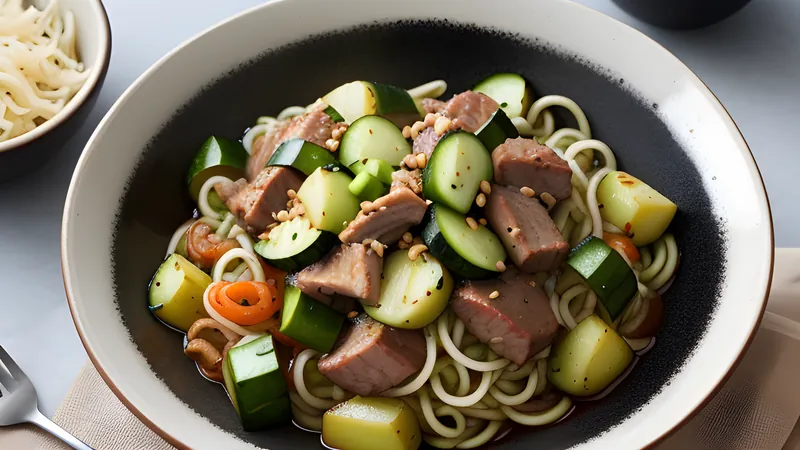
- Ladle the black bean sauce over the noodles and top with julienned cucumber. Serve at once.
A Chinese dish that became Korean
Jjajangmyeon traces to the port city of Incheon, where Chinese labourers from Shandong settled in the late nineteenth century. They brought zhajiangmian, Beijing-style noodles with a salty fermented-bean sauce, and Korean-Chinese cooks adapted it for local tastes: sweeter, darker, thickened into a smooth gravy and loaded with vegetables. By the mid-twentieth century it had become the signature dish of Korea’s junghwa restaurants, the Korean-Chinese eateries that still serve it alongside jjamppong and sweet-and-sour pork.
The transformation is worth pausing on because the paste itself was reinvented. Chunjang is caramel-darkened and roasted specifically for this dish, milder and sweeter than the Chinese original, and its deep black colour is the whole visual identity of the bowl. Buy it in a tub from a Korean grocer; there is no honest substitute, though a Chinese tianmianjiang blended with a little sweet bean sauce gets you into the right postcode.
If you are building a Korean-Chinese table, this pairs naturally with braises like Galbijjim: Korean Braised Short Ribs, and it makes a warming winter counterpart to its cold-weather opposite, Naengmyeon: Cold Buckwheat Noodles in Chilled Broth.
My clever twist: fry the paste hard
Straight from the tub, chunjang is bitter, raw and a little harsh, and this is where most home versions of jjajangmyeon fall down. The one step that separates a flat, slightly acrid bowl from a glossy, mellow one is frying the paste in oil before it goes anywhere near the meat. Three or four minutes of gentle frying in a generous slick of oil loosens the paste, drives off the raw edge, and coaxes out a toasty, almost chocolatey depth. The colour lightens slightly and the smell turns nutty. This is non-negotiable; skip it and the whole bowl tastes underdeveloped.
Keep the heat moderate and stir the whole time, because chunjang scorches easily and burnt bean paste is genuinely bitter. You are looking for it to become fluid and glossy and smell toasted, and no further. Some cooks fry it separately, as I do here, precisely so it never risks catching against a hotter pan of meat.
The vegetables and the body
Diced onion is the backbone of the sauce, and the sweetness that balances the savoury paste comes almost entirely from cooking it down until soft and translucent. Potato gives the gravy body and starch; courgette and cabbage add freshness and bulk. Cut everything to a rough, even dice, around a centimetre and a half, so the vegetables and pork sit in harmony on the noodle and no single piece dominates the spoon.
Pork belly is traditional and its rendered fat carries the flavour beautifully, but shoulder works if you want it leaner. Brown it properly first, letting the fat render and the edges catch, before the vegetables go in. That browning is free flavour and it stops the pork from stewing into grey, flavourless cubes.
The sauce is then thickened with a cornflour slurry to the glossy, coating consistency that defines jjajangmyeon. Add it in stages, off a hard simmer, until the sauce clings to the vegetables and pours in a smooth sheet. Too thin and it slides off the noodles; too thick and it sets into paste as it cools.
Tips, swaps and make-ahead
- Noodles matter. Thick, chewy fresh wheat noodles are ideal, the springier the better. Fresh udon is the easiest supermarket stand-in; dried udon-style noodles work at a pinch. Rinse cooked noodles briefly to keep them from clumping, then divide while hot.
- Vegetarian version: drop the pork, double the courgette and cabbage, add diced mushroom for savour, and use a mushroom sauce in place of the oyster sauce. The fried paste carries the bowl.
- Make it ahead: the sauce keeps three days in the fridge and freezes well, which is the beauty of a big batch. Cook the noodles fresh each time and reheat the sauce gently, loosening with a splash of water as the cornflour firms up on chilling.
- Jjajangbap: spoon any leftover sauce over steamed rice instead of noodles for a completely different, equally good meal.
The raw cucumber on top is not a garnish to skip. Its cool crunch and grassy freshness cut cleanly through the rich, dark sauce, and the contrast is part of what makes the bowl so moreish. Julienne it just before serving so it stays crisp.
Serving
Serve in wide, deep bowls, sauce mounded over the noodles, cucumber piled on top. The proper way to eat it is to mix everything together at the table with your chopsticks until every strand is coated black and glossy, an act that is half the pleasure. Danmuji, the bright yellow pickled radish, is the classic side, and a small dish of raw onion wedges with a little chunjang for dipping is common in Korean-Chinese restaurants. It wants nothing more elaborate. This is a bowl to eat with your sleeves rolled up, and a splash of sauce on your chin is practically a badge of honour.
What can go wrong
- A bitter, sharp sauce. You did not fry the chunjang long enough, or you scorched it. Fry gently until toasty and fluid, watching the heat, and taste before it goes into the pan.
- A watery gravy that slides off. Your slurry was too weak or added to liquid that was not simmering hard. Bring the pot to a proper simmer and add the cornflour in stages until it coats a spoon.
- Bland, grey pork. You crowded the pan and stewed it. Brown the diced pork in a hot wok until the fat renders and the edges catch before anything else joins it.
- Clumped, cold noodles. Cook them last, drain, and dress them the moment they are ready. Sitting noodles glue together fast.
Why it endures
Part of jjajangmyeon’s hold on Korea is nostalgia. For decades it was the special-occasion meal an ordinary family could actually afford, the reward at the end of a graduation or a moving day, delivered by a scooter rider balancing a tower of steel bowls. That memory is baked into the dish, and it explains why a plate of dark noodles can make grown Koreans go misty. Cooking it at home is not quite the same as the delivery version, chewier and fresher in fact, but it lets you make a generous pot and understand exactly why the country never tires of it. Make it once and you will see how a bowl this simple earned a national day of its own.
Related Content