Jerk Chicken with Pimento and Scotch Bonnet
A home oven-and-grill approximation of the pimento-smoked jerk pan, built on allspice and scotch bonnet
Contents
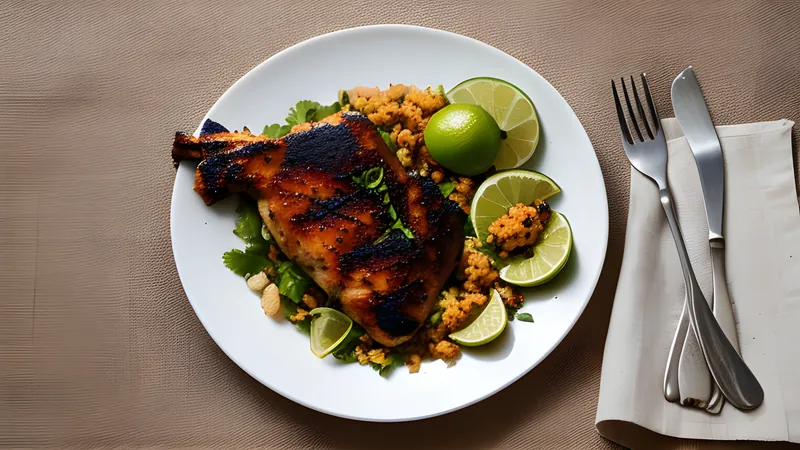
↓ Jump to recipeReal jerk chicken is cooked over pimento wood in a purpose-built pan or drum, the smoke from the wood itself as essential to the final flavour as anything in the marinade — allspice, after all, comes from the dried berries of that same pimento tree, so the wood and the spice are two expressions of one plant. Few home kitchens have a pimento log to hand, so this version does the honest thing: it leans hard on freshly ground allspice for the flavour the wood would otherwise carry, adds a genuine smoking stage using whatever hardwood chips are available, and finishes with a hot, direct char to mimic the blistered, sticky skin that defines a proper jerk pan. It won’t fool a Jamaican pitmaster, but it gets remarkably close for an oven and a grill.
Jerk Chicken with Pimento and Scotch Bonnet
Ingredients
- 1.8kg bone-in, skin-on chicken pieces (thighs, drumsticks, or a spatchcocked whole bird)
- 6 spring onions, roughly chopped
- 1-3 scotch bonnet chillies, stems removed (seeds in for full heat, out for milder)
- 6 garlic cloves
- 1 small onion, roughly chopped
- 5cm fresh ginger, peeled and roughly chopped
- 4 tbsp whole allspice (pimento) berries, freshly ground, or 3 tbsp ground allspice
- 2 tbsp fresh thyme leaves (or 1 tbsp dried)
- 2 tsp ground cinnamon
- 1/2 tsp ground nutmeg
- 3 tbsp brown sugar
- 3 tbsp soy sauce
- 3 tbsp cider vinegar
- 3 tbsp lime juice
- 3 tbsp vegetable oil
- 2 tsp fine salt
- 2-3 dried bay leaves, crumbled
- 2-3 wood chunks or a handful of chips (pimento wood if available, otherwise oak or hickory)
Method
- Score each piece of chicken 3-4 times through the skin and into the flesh, to help the marinade penetrate.
- Put the spring onions, scotch bonnet, garlic, onion, ginger, ground allspice, thyme, cinnamon, nutmeg, brown sugar, soy sauce, vinegar, lime juice, oil, salt and bay leaves into a food processor or blender and blitz to a thick, slightly textured paste.
- Reserve 3-4 tablespoons of the marinade in a separate covered container in the fridge for basting later. Rub the rest thoroughly over and into the scored chicken, working it under the skin where you can. Cover and marinate in the fridge for at least 4 hours, ideally 24.
- If using a barbecue: soak the wood chunks in water for 30 minutes, then bank the coals to one side and scatter the soaked wood over them once they're glowing, for indirect heat and smoke. Cook the chicken skin-side up over the cool side, covered, for 35-40 minutes.
- If using a home oven: heat the oven to 160C fan (180C conventional, gas mark 4). Place a small foil tray of soaked, drained wood chips on the floor of the oven or in a cast iron pan set directly on the lowest shelf, and let it begin to smoke gently before adding the chicken on a rack above, skin-side up. Roast for 35-40 minutes until the internal temperature reaches 74C at the thickest part.
- In either method, baste the chicken with the reserved marinade twice during cooking, at roughly the halfway point and again 10 minutes before it's due to finish.
- For a final char, move the chicken directly over hot coals, or under a very hot grill (broiler), for 3-5 minutes per side, watching closely, until the skin blisters, blackens in patches and turns properly sticky and lacquered.
- Rest for 5 minutes before serving with rice and peas, fried plantain, or festival (Jamaican fried dumplings).
Where this comes from
Jerk cooking traces back to the Maroons, communities of enslaved Africans who escaped into Jamaica’s mountainous interior from the seventeenth century onward and developed a way of cooking meat — originally wild boar — over slow, smoky fires using local spices, partly as a means of preserving it without refrigeration and partly out of necessity, cooking discreetly in the hills where smoke wouldn’t easily give away their position to colonial forces. The pimento tree, native to Jamaica and the source of allspice, grew wild across the island, and both its wood and its berries became central to the technique: the meat was seasoned heavily, cooked slowly over pimento wood coals, and the smoke itself carried much of the allspice character into the meat as it cooked.
Scotch bonnet is the other non-negotiable element, a chilli close in heat to habanero but with a distinct fruity, almost tropical sweetness underneath the burn, and it’s this specific combination — allspice’s warm, clove-and-cinnamon note, scotch bonnet’s fruit-forward heat, and thyme’s herbal lift — that makes a marinade recognisably jerk rather than simply “spicy Caribbean chicken.” The dish moved from Maroon cooking into wider Jamaican culture over the following centuries and became genuinely commercial from the mid-twentieth century, when roadside jerk pans, halved oil drums fitted with a grate and a lid, started appearing across the island, particularly around Boston Bay in Portland parish, still considered the spiritual home of jerk today. Stalls there, and further inland at places like Faith’s Pen, still cook exclusively over pimento wood, and the pans are often built low and covered with corrugated zinc sheeting to trap the smoke around the meat for hours rather than minutes, a world away from the quick 40-minute version any home cook can manage on a Tuesday evening.
Jerk also splits into two broad styles worth knowing, wet and dry. This recipe, like most versions cooked outside Jamaica, is a wet jerk: a blended, spoonable marinade rubbed into the meat before it ever meets heat. Dry jerk, more common at old-school roadside pans, is a rub of the same core spices — allspice, scotch bonnet flakes, thyme, salt — worked into the meat with little or no liquid, so the crust that forms is drier and more concentrated rather than sticky and lacquered. Both are legitimate; the wet style simply suits a marinating fridge and a domestic oven better than a rub built to sit over live coals for hours.
Why smoke and char both matter
The two techniques in this recipe are doing different jobs, and skipping either one leaves the dish recognisably short of the real thing. The low, indirect smoking stage — whether on a banked barbecue or in an oven with a tray of smoking chips — is there to replicate the slow infusion of pimento smoke that a genuine jerk pan provides over an hour or more. Smoke compounds are fat- and water-soluble and penetrate meat gradually over time, which is why this stage needs the low, patient heat rather than anything fierce; rush it and you get surface smokiness without any real penetration.
The final hot char is a separate, later step, and it’s really about the Maillard reaction and a bit of genuine flame contact: high, direct heat for a short, closely watched burst, just long enough to blister and blacken the sugar-and-soy-rich marinade clinging to the skin into that sticky, lacquered crust jerk chicken is known for. Do this too early, before the meat is cooked through, and the sugar in the marinade burns to bitterness long before the chicken is safe to eat; do it at the end, once the meat is already at temperature, and you get colour and char without overcooking the flesh underneath.
Scoring the chicken before it ever meets the marinade is worth taking seriously too — those cuts aren’t decorative, they’re what lets the thick, fibrous marinade paste actually reach past the skin and into the meat itself rather than sitting on the surface, and a full 24-hour marinate makes a genuinely noticeable difference over the 4-hour minimum, since allspice and chilli both need real time to work into muscle fibre.
Handle the scotch bonnet with real care. Its heat comes from capsaicin concentrated most heavily in the pith and seeds, and that oil clings stubbornly to skin; wear gloves if you have them, and if you don’t, wash your hands thoroughly with soap rather than just water afterwards, and avoid touching your face or eyes for a good while, since the sting can linger for hours on bare skin. If you’re blending the marinade in a food processor, keep your face away from the bowl when you first take the lid off, since the aerosolised chilli can catch in the back of the throat the same way a fierce mustard or fresh horseradish does. None of this is a reason to reach for a milder chilli instead; scotch bonnet’s specific fruitiness, closer to ripe mango or apricot skin than to a generic hot pepper, is genuinely hard to replace, so manage the heat with quantity and seed removal rather than swapping it out entirely.
The recipe
Serves 4-6.
Ingredients
- 1.8kg bone-in, skin-on chicken pieces
- 6 spring onions
- 1-3 scotch bonnet chillies
- 6 garlic cloves
- 1 small onion
- 5cm ginger
- 4 tbsp freshly ground allspice (or 3 tbsp pre-ground)
- 2 tbsp fresh thyme leaves
- 2 tsp ground cinnamon
- 1/2 tsp ground nutmeg
- 3 tbsp brown sugar
- 3 tbsp soy sauce
- 3 tbsp cider vinegar
- 3 tbsp lime juice
- 3 tbsp vegetable oil
- 2 tsp salt
- 2-3 dried bay leaves
- Wood chunks or chips, for smoking
Method
- Score the chicken pieces well.
- Blitz the aromatics, spices, sugar, soy, vinegar, lime, oil, salt and bay leaves to a thick paste.
- Reserve some marinade for basting; rub the rest into the chicken. Marinate 4-24 hours.
- Smoke gently over indirect heat (barbecue with banked coals and soaked wood, or a low oven with a smoking tray of chips) for 35-40 minutes until cooked through (74C internal).
- Baste twice during cooking.
- Finish with 3-5 minutes per side of direct, hot char until blistered and sticky.
- Rest 5 minutes before serving.
Tips, substitutions and storage
If you can source pimento wood chips or chunks online, they make a genuine difference and are worth the search; failing that, oak, hickory or applewood all give a reasonable smoky base. Scotch bonnet’s heat varies enormously between chillies, so start with one for a marinade the whole table can handle, and taste the raw paste cautiously before committing to more — habanero is the closest substitute if scotch bonnet isn’t available, though it lacks quite the same fruitiness. Marinated raw chicken keeps in the fridge for up to two days before cooking, or freezes well already in its marinade for up to three months; thaw fully in the fridge before cooking. Cooked leftovers keep three days refrigerated and reheat best in a covered pan with a splash of water rather than a microwave, which dries the skin out.
Jerk’s heat and warmth make it a natural pairing with cooling, sweet sides — a jug of agua de jamaica alongside, despite the Mexican rather than Jamaican origin, shares hibiscus’s tart, floral register with the sorrel drink jerk is traditionally served alongside. For a full Caribbean spread, it sits well next to jamaican curry goat.
Variations
Jerk pork shoulder, cooked the same way but for considerably longer (2.5-3 hours at a low, smoky heat until fall-apart tender), is just as traditional as the chicken version and arguably closer to the dish’s original form. A vegetarian version works surprisingly well on firm tofu or big wedges of squash, marinated the same way and finished under the same hot char, though the marinating time can be shorter since there’s no muscle fibre to penetrate. However you cook it, the two things worth protecting are real allspice, freshly ground if you can manage it, and genuine patience at both ends: a long marinade, and a short, hot finish that never gets ahead of itself.
Related Content