Japchae with Charred Vegetables and Sesame
Glass noodles tossed with vegetables blistered hard before they hit the wok
Contents
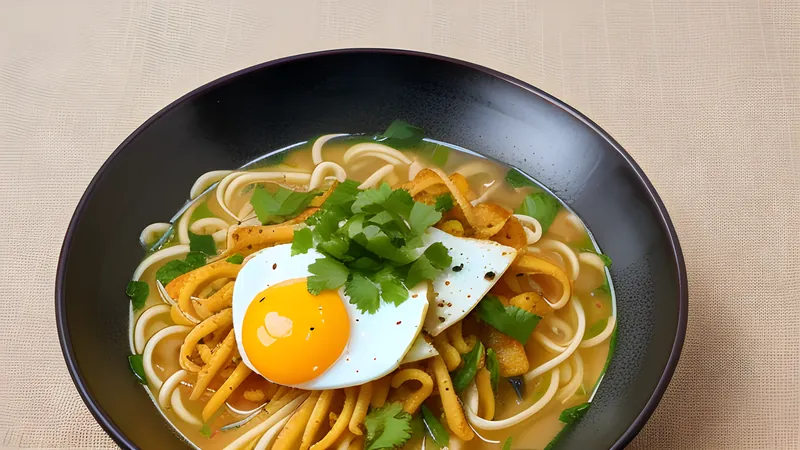
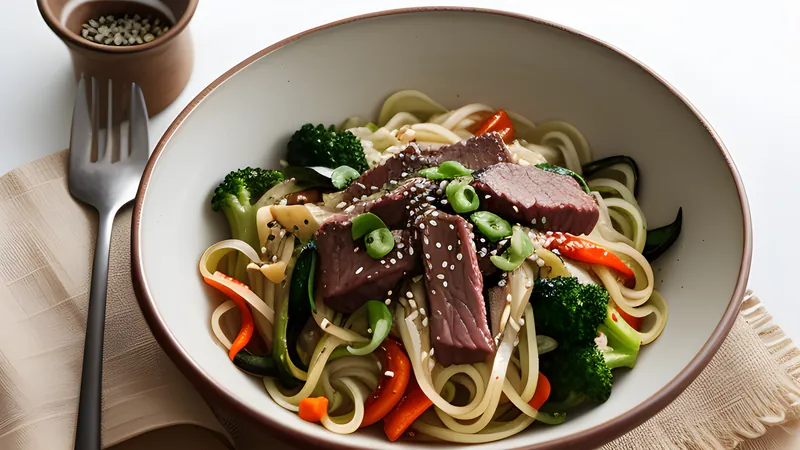
↓ Jump to recipeJapchae is usually a dish of gentleness — vegetables sautéed just until tender, everything folded together into something soft and glossy. This version breaks from that on purpose: the pepper, onion and mushroom go into a bone-dry, smoking-hot pan first and get properly blackened before anything else happens, so what would normally be a uniformly silky noodle dish gets pockets of genuine char running through it. The noodles stay true to form — chewy, sweet-savoury, slicked in sesame — but now they are carrying vegetables with some bite and some smoke behind them, rather than vegetables that have simply gone soft.
Japchae with Charred Vegetables and Sesame
Ingredients
- 200g dangmyeon (Korean sweet potato glass noodles)
- 200g beef sirloin, thinly sliced into strips
- 3 tbsp soy sauce, divided
- 1 tbsp brown sugar, divided
- 2 garlic cloves, finely grated, divided
- 1 red pepper, cut into thin strips
- 1 red onion, cut into thick wedges
- 150g shiitake mushrooms, thickly sliced
- 150g spinach, washed
- 1 carrot, julienned
- 3 spring onions, cut into 4cm lengths
- 3 tbsp neutral oil, divided, plus more as needed
- 2 tbsp toasted sesame oil
- 1 tbsp toasted sesame seeds, plus more to serve
- 0.5 tsp ground black pepper
Method
- Cover the glass noodles in cold water and soak for 30 minutes until pliable, then drain.
- Marinate the beef in 1 tablespoon soy sauce, 1 teaspoon brown sugar and half the grated garlic for 15 minutes.
- Heat a dry wok or heavy frying pan over high heat until smoking. Add the red pepper and onion with no oil and char, turning occasionally, for 4 to 5 minutes until blackened in patches. Remove and set aside.
- In the same dry hot pan, char the shiitake for 3 to 4 minutes until deeply browned and blistered at the edges. Remove and set aside.
- Add 1 tablespoon of oil to the pan and stir-fry the carrot over high heat for 2 minutes until just softened but not charred. Remove and set aside.
- Blanch the spinach in boiling water for 30 seconds, refresh in cold water, squeeze dry, and season with a pinch of salt and a few drops of sesame oil.
- Wipe out the pan, add a further tablespoon of oil, and stir-fry the marinated beef over high heat for 2 to 3 minutes until browned. Remove and set aside.
- Bring a large pot of water to the boil and cook the drained noodles for 5 to 6 minutes until translucent and tender but still with a slight chew. Drain and rinse briefly under cold water.
- Toss the hot noodles immediately with the remaining oil, 2 tablespoons soy sauce, remaining brown sugar and remaining garlic, cutting the noodles with kitchen scissors a few times to shorten them.
- Return the pan to high heat, add the noodles, and toss for 1 minute to heat through and coat evenly, adding a splash of the noodle water if they look dry.
- Add the charred pepper, onion, mushroom, carrot, spinach, beef and spring onion to the pan and toss everything together for 1 minute over high heat.
- Off the heat, stir through the sesame oil, sesame seeds and black pepper. Taste and adjust with a little more soy sauce if needed. Serve warm or at room temperature.
A dish built for a banquet table
Japchae’s documented history reaches back to the early seventeenth century, to the court of King Gwanghaegun, where the dish is said to have been created by an official named Yi Chung, who presented a stir-fried vegetable dish that so pleased the king it earned him a promotion. Notably, that original version contained no noodles at all — it was purely vegetables, glazed and stir-fried, and the name simply meant “mixed vegetables” (jap for mixed, chae for vegetables). Glass noodles, made from sweet potato starch, were only added to the dish sometime in the early twentieth century, once dangmyeon production became widespread enough to be an everyday ingredient rather than a luxury, and the noodle-forward version we know today gradually eclipsed the vegetable-only original.
Japchae has stayed a celebration food ever since, a fixture at Korean weddings, birthdays and the Chuseok harvest festival, in part because of exactly what this recipe leans into: it holds up well at room temperature and looks generous on a shared table, with every colour of vegetable visible rather than blended into a sauce. Dangmyeon noodles are the one non-negotiable ingredient — they are made from sweet potato starch rather than wheat or rice, which gives them a distinctive springy chew and a translucent grey sheen once cooked, along with the ability to sit for hours without turning gluey the way wheat noodles do.
Outside the banquet table, japchae is everyday food too, sold cold or room-temperature by weight in the banchan cases of Korean supermarkets and served as a common anju, the food eaten alongside soju and beer, where its sweetness and chew make it good grazing food over a long evening. Regional habits vary: in the north, before division, versions leaned more heavily on sesame oil and less on sugar; some southern households add a thin omelette cut into ribbons on top, a garnish borrowed from bibimbap’s namul logic of colour and contrast. There’s also a long-running, mostly good-natured argument among Korean home cooks about serving temperature — some insist it should always be warm, fresh off the wok, others that a few hours in the fridge lets the noodles firm up and the flavours settle, which is closer to how it usually turns up at a wedding buffet. This recipe works either way, which is part of why it travels so well to a shared table.
Dangmyeon are worth sourcing properly rather than grabbing whatever clear noodle is nearest on the shelf. Korean grocers and larger Asian supermarkets stock them dried in tangled skeins, usually labelled as “sweet potato starch noodles” or “dangmyeon” in Hangul (당면); check the ingredients list specifically for sweet potato starch, since some cheaper bags cut it with cornstarch or other starches, which cook up thinner, less chewy, and more prone to turning mushy under the dressing. A thicker noodle, close to a fat elastic band in cross-section before cooking, is generally the better sign of a proper sweet-potato-only product.
Why char the vegetables first
Traditional japchae sautés its vegetables individually, but gently — enough to soften them and cook off rawness, not enough to properly brown them. Charring the pepper, onion and shiitake in a completely dry, very hot pan changes the chemistry of what those vegetables bring to the finished dish. Dry heat that high drives moisture out of the vegetable’s surface fast enough that the sugars concentrate and caramelise at the point of contact rather than simply steaming in their own released liquid, which is what happens in an oiled pan at a lower heat. The result is vegetables with genuinely bitter-sweet, smoky edges alongside their natural sweetness, rather than vegetables that just taste cooked.
This matters more in japchae than in most stir-fries because the final dish is dressed relatively lightly — soy sauce, a little sugar, sesame oil — and much of that dressing’s job is really to season noodles that are themselves fairly neutral in flavour. Without char on the vegetables, that noodle-forward sweetness can end up making the whole dish taste a bit one-note. Char gives the palate something to alternate against: sweet noodle, smoky pepper, sweet noodle, blistered mushroom. It is worth doing the vegetables in a completely dry pan for the char step specifically — oil at this stage lowers the effective contact temperature and encourages steaming over charring, which is the opposite of what you want. Save the oil for the carrot, which chars unpleasantly bitter if you try to blacken it and is much better left just tender and sweet.
Knowing when to pull each vegetable off makes the difference between char and cremation. The pepper and onion are ready when you see genuine black patches, not just grey-brown, on maybe a third of the surface, with the rest still holding some of its raw colour underneath — that contrast is what reads as char rather than uniform scorching once it’s tossed through the noodles. Shiitake are done when the gills have collapsed and darkened and the caps have visibly shrunk and blistered at the edges; press one with a spatula and it should feel slightly leathery rather than springy. If anything smells acrid rather than smoky-sweet, it’s gone too far — better to sacrifice one batch of pepper and start again than to fold burnt bitterness through the whole dish.
Getting the noodles right
Dangmyeon noodles need a proper cold soak before boiling — skip it and the outside cooks before the centre softens, leaving a noodle that is chewy in a bad way rather than a good one. Once boiled, they need dressing immediately, while hot, because the noodle’s surface starch is at its most receptive to soaking up soy sauce and sugar in those first few minutes; wait until they have cooled and the dressing sits on the surface rather than being absorbed. Cutting the noodles with scissors a few times after draining is a small but genuinely useful step — dangmyeon come in very long strands that are otherwise a genuine hazard to eat tidily with chopsticks.
Tips, substitutions and storage
Beef is traditional but not compulsory: thinly sliced pork shoulder works well marinated the same way, and for a vegetarian version, thick strips of firm tofu, patted very dry and pan-fried until crisp-edged before being tossed through at the end, hold their own against the charred vegetables. If dangmyeon are not available, cellophane noodles made from mung bean starch are the closest substitute, though they cook faster (check at 3 to 4 minutes) and have a slightly less chewy bite. Japchae keeps well in the fridge for up to 3 days and is genuinely good cold, which makes it a strong packed-lunch option; if reheating, a quick blast in a hot dry pan for 2 minutes revives the noodles better than a microwave does, which tends to make dangmyeon go rubbery in patches.
If you’re making this ahead for a gathering, char and cook every component the day before and keep them in separate containers, then only boil the noodles and do the final toss on the day — the vegetables actually hold their texture better this way than the assembled dish does, since the noodles are the one element that keeps absorbing dressing and softening slightly the longer everything sits together. It’s also worth doubling the char step specifically if you’re feeding a crowd; a dry pan can only hold so much in a single layer before it starts steaming instead of charring, so do the pepper and onion in two batches rather than crowding the pan once.
Variations
For a spicier version, whisk half a teaspoon of gochugaru into the noodle dressing before tossing. A vegetable-only take, closer to the dish’s seventeenth-century origins, drops the beef entirely and adds a second charred vegetable — courgette or aubergine, both of which char beautifully in the same dry pan — to keep the dish feeling substantial. Leftover char-friendly vegetables like broccoli stems or thick-cut cabbage wedges also take well to the same treatment if you want to use up what’s in the fridge.
Japchae’s charred-and-glossy contrast makes it a natural pairing with other Korean dishes built the same way — try it alongside bibimbap with crisp rice crust and gochujang butter for a full spread, or serve it as the cooling counterpoint to something fierier like tteokbokki with gochujang and brown butter. Once the vegetables have that smoke on them, it is hard to make japchae the soft way again.
Related Content