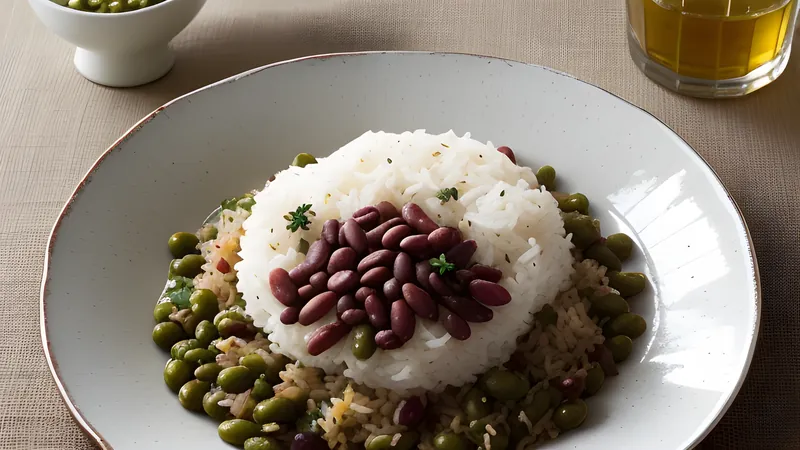
Jamaican Rice and Peas with Scotch Bonnet and Thyme
Coconut rice and kidney beans, perfumed rather than burned by a whole, unpierced scotch bonnet
Contents
↓ Jump to recipeRice and peas is Jamaica’s default starch, the dish that turns up under Sunday’s stewed chicken or curry goat as reliably as roast potatoes turn up next to a British Sunday joint. Get it right and it’s fragrant, faintly rich from coconut, and studded with tender kidney beans that have taken on real character from the pot rather than just sitting there as protein padding. Get it wrong — usually by chopping the scotch bonnet into the pot instead of leaving it whole — and you’ve made something too fierce to eat rather than something built to sit quietly under a plate of stewed meat.
The version below leans on dried kidney beans cooked from scratch, which gives you a proper bean cooking liquid to build the rest of the dish on, though a tinned shortcut is written in throughout for a weeknight version that loses very little.
Jamaican Rice and Peas with Scotch Bonnet and Thyme
Ingredients
- 250g dried red kidney beans, soaked overnight in plenty of cold water (or 2 x 400g tins, drained, liquid reserved)
- 400ml full-fat coconut milk
- 2 spring onions (scallions), left whole and bruised with the back of a knife
- 4 garlic cloves, crushed
- 1 small onion, roughly chopped
- 4 sprigs fresh thyme (or 1 tsp dried)
- 1 whole scotch bonnet chilli, left completely whole and unpierced
- 1 tsp whole allspice (pimento) berries, or 1/2 tsp ground allspice
- 350g long-grain rice, rinsed until the water runs clear
- 1 1/2 tsp fine salt
- Black pepper, to taste
- 1 tbsp butter or coconut oil
Method
- If using dried beans: drain the soaked beans and put them in a large pot with fresh water to cover by 5cm. Bring to a rolling boil and boil hard, uncovered, for 10 minutes, then reduce to a simmer, cover, and cook for 45-60 minutes until tender. Drain, reserving 700ml of the cooking liquid.
- If using tinned beans: drain them, reserving the tin liquid, and top up with water to make 700ml.
- Return the beans to the pot with the 700ml reserved liquid and the coconut milk. Add the spring onions, garlic, chopped onion, thyme, whole scotch bonnet and allspice. Bring to a gentle simmer and cook uncovered for 10 minutes to let the aromatics infuse.
- Stir in the rinsed rice and salt. The liquid should sit about 1.5cm above the surface of the rice and beans; top up with a little water if it doesn't.
- Bring back to a boil, then reduce the heat to the lowest possible setting, cover tightly with a lid, and cook undisturbed for 18-20 minutes.
- Turn off the heat and leave covered, without lifting the lid, for a further 10 minutes to finish steaming.
- Carefully lift out the whole scotch bonnet without piercing it, along with the spring onions and thyme stalks. Fluff the rice with a fork, stir through the butter, taste, adjust the seasoning, and serve.
Why it’s called “peas” when there isn’t a pea in sight
The name confuses almost everyone who didn’t grow up with it. There are no peas in rice and peas — the beans are kidney beans, full stop — but Caribbean English uses “peas” as the general term for dried legumes the way British English uses “beans,” so kidney beans are locally known as red peas, black-eyed beans are black-eyed peas, and pigeon peas (also called gungo peas) are the actual peas that give the dish its most traditional, most prized version. Around Christmas, when gungo peas come into season in Jamaica, cooks switch the kidney beans out for them, and the dish becomes gungo peas and rice, considered by many Jamaican cooks to be the superior, more special-occasion version thanks to the pea’s slightly sweeter, more delicate flavour compared to kidney beans’ heartier, earthier one.
This recipe uses kidney beans because they’re available everywhere year-round, but if you ever come across dried or tinned pigeon peas, they’re worth cooking exactly the same way — the timings barely change, and you’ll get a genuine taste of the version most associated with Jamaican Christmas tables specifically.
The rice itself has its own migration story worth knowing. Rice cultivation didn’t arrive in the Caribbean with European colonisers, who mostly had no experience growing it — it came via enslaved West Africans, many taken specifically from the rice-growing region of the Upper Guinea coast, whose agricultural knowledge of paddy cultivation and processing was exploited on plantations across the Americas long before it became a dinner-table staple in its own right. Coconut, meanwhile, arrived in the Caribbean by a different route entirely, most likely carried across the Pacific and Atlantic by Portuguese and Spanish traders from South and Southeast Asia over several centuries, before establishing itself so thoroughly along Jamaica’s coastline that it now reads as an entirely native ingredient. Rice and peas, in other words, is a dish built from three separate migrations — African rice-growing knowledge, Asian coconut, and a Caribbean bean — that only came together into one pot relatively recently in food-history terms.
The whole scotch bonnet: aroma without detonation
The single technique that separates a good rice and peas from a scorching one is leaving the scotch bonnet completely whole and unpierced as it simmers in the pot. A scotch bonnet is one of the hottest chillies in regular culinary use, close to habanero on the Scoville scale, and if it splits open into the liquid it will dump enough capsaicin into the dish to make the whole pot genuinely painful to eat, well past the point of pleasant heat. Left whole, the skin holds almost all of that capsaicin inside, while the chilli’s volatile aromatic oils — a fruity, faintly tropical fragrance that’s distinct from its heat — still migrate out into the coconut milk and rice as it cooks, perfuming the dish rather than igniting it.
Handle the chilli gently while it cooks: don’t stir aggressively near it, and lift it out with a spoon rather than tongs that might pinch and tear the skin. If you do want more heat than the whole-chilli method delivers, the honest way to add it is a separate pinch of finely chopped scotch bonnet or a dash of hot sauce stirred through your own portion at the table, rather than compromising the pot for everyone else eating from it.
Coconut milk quality makes a genuine difference here too. Tinned coconut milk varies wildly in fat content between brands — some are barely thicker than dairy milk once shaken, others separate into a thick cream layer over thin liquid — and a thin, watery tin will leave the finished rice tasting more like plain water with a faint coconut suggestion than the rich, faintly sweet result this dish is known for. Shake the tin hard before opening, and if you have a choice, buy the version with the highest fat percentage on the label, generally upward of 17–20g fat per 100ml; save the cheaper, thinner tins for a delicate curry or soup where a lighter hand suits the dish better.
Method
If starting with dried beans, drain the ones that soaked overnight and put them in a large pot with fresh water to cover by about 5cm. Bring this to a proper rolling boil and keep it boiling hard, uncovered, for a full 10 minutes before doing anything else — this isn’t optional cooking theatre. Dried kidney beans contain a natural toxin called phytohaemagglutinin, concentrated enough in raw or under-cooked beans to cause serious stomach upset, and a sustained hard boil is what neutralises it; simmering alone doesn’t get hot enough for long enough to do the job. Once the ten minutes are up, drop the heat to a simmer, cover, and cook for 45–60 minutes until the beans are tender all the way through, then drain, keeping 700ml of the cooking liquid, which now carries real bean flavour rather than tasting like plain water. If you’re using tinned beans instead, skip the boiling stage entirely, drain them, and simply top their liquid up to 700ml with water.
Return the beans to the pot with the reserved liquid and the coconut milk, then add the bruised spring onions, garlic, chopped onion, thyme and the whole scotch bonnet along with the allspice. Bring it to a gentle simmer and let it cook uncovered for 10 minutes, giving the aromatics time to properly infuse the liquid before the rice goes anywhere near it.
Stir in the rinsed rice and the salt — rinsing matters here, since it washes off surface starch that would otherwise make the finished rice gluey rather than separate and fluffy. The liquid should sit about 1.5cm above the surface of the rice and beans; top up with a splash of water if it looks short. Bring it back to a boil, then turn the heat right down to the lowest setting your hob offers, cover the pot tightly, and leave it completely alone for 18–20 minutes. Lifting the lid to check lets steam escape that the rice needs to finish cooking evenly, so resist it. Turn off the heat afterwards and let the pot sit, still covered, for a further 10 minutes — this resting stage finishes steaming any rice near the top that the direct heat didn’t fully reach.
Finally, lift out the whole scotch bonnet carefully, along with the spring onions and thyme stalks, fluff the rice through with a fork to separate the grains, and stir in the butter. Taste, season further if needed, and serve.
What it’s built to sit under
This is a supporting dish by design, built to be eaten alongside something with its own strong personality. The classic pairing is stewed brown chicken or Jamaican curry goat with toasted curry powder, where the rice soaks up the gravy, and it’s just as traditional next to jerk chicken with pimento and scotch bonnet, where the coconut rice’s gentle sweetness gives your palate somewhere to rest between bites of the char-blistered, heavily spiced meat. Together, a plate of stewed meat, rice and peas and fried plantain is sometimes called the island’s unofficial “coat of arms” plate, the combination so standard on Jamaican Sunday tables that naming the components individually feels almost unnecessary.
Make-ahead and storage
Rice and peas keeps well in the fridge for up to 4 days in an airtight container, and it reheats far better than most rice dishes thanks to the coconut milk, which keeps the grains from drying out the way plain water-cooked rice tends to. Reheat in a covered pan with a splash of water or extra coconut milk over low heat, stirring occasionally, or in the microwave with a damp sheet of kitchen paper over the bowl.
It also freezes well for up to 2 months. As with any cooked rice, cool it quickly after cooking — within an hour, spread out on a wide tray rather than left to cool slowly in a deep pot — before refrigerating or freezing, since rice held for long periods at room temperature is a genuine food-safety risk from Bacillus cereus spores that survive cooking and can multiply as it cools.
Variations
Swap in dried pigeon peas (gungo peas) for the kidney beans for the traditional Christmas version, cooked exactly the same way, though they typically need slightly less soaking time — check a soaked pea for tenderness rather than trusting the clock alone. Brown rice works if you want a nuttier, more textured result, though you’ll need to extend the covered cooking time to around 35–40 minutes and add a little extra liquid, since it absorbs more slowly than white long-grain. For a version closer to some eastern-parish styles, add a tablespoon of tomato paste with the coconut milk for a faint rosy colour and extra depth, or swap half the coconut milk for coconut cream if you want something richer and more indulgent for a special occasion rather than a Tuesday side.
Related Content