Jackfruit "Carnitas" Tacos with Chipotle
Shredded jackfruit crisped under the grill, smoky with chipotle
Contents
↓ Jump to recipeJackfruit gets a rough deal from people who tried it once, straight from the tin, and found a bowl of stringy, watery blandness. That is not the fruit’s fault. Young green jackfruit has almost no flavour of its own and a fibrous texture that pulls apart exactly like slow-cooked pork, which makes it a brilliant carrier for a big, punchy braise. Treat it as a blank canvas that needs seasoning, braising and then the one step everyone skips — crisping — and it turns into a taco filling that genuinely earns its place at the table.
I first made these to feed a mixed table of meat-eaters and vegans without cooking two dinners, and they vanished so fast that I never went back to explaining. My twist is to honour the real carnitas method to the letter: braise the jackfruit until it is meltingly soft and the liquid has gone, then spread it on a tray and blast it under a hot grill until the edges catch and crisp. That contrast of tender and charred is the whole soul of carnitas, and it is what lifts this from a soft, sad heap into something with real bite.
Jackfruit "Carnitas" Tacos with Chipotle
Ingredients
- 2 x 400g tins young green jackfruit in water or brine
- 2 tbsp neutral oil
- 1 onion, finely chopped
- 4 garlic cloves, crushed
- 2 tsp ground cumin
- 1 tsp dried oregano (Mexican if you have it)
- 1 tsp smoked paprika
- 2-3 chipotles in adobo, chopped, plus 1 tbsp of the sauce
- Juice of 1 orange
- Juice of 1 lime, plus wedges to serve
- 1 bay leaf
- 150ml vegetable stock
- 1 tsp light brown sugar
- 12 small corn tortillas
- To serve: sliced red onion, chopped coriander, diced avocado, pickled jalapeños
- Fine sea salt
Method
- Drain and rinse the jackfruit, trim out the hard cores, squeeze the flesh dry and shred it into strands.
- Cook the onion in the oil over medium heat for 6-8 minutes, then add the garlic, cumin, oregano and smoked paprika and fry for 1 minute.
- Add the shredded jackfruit, chopped chipotles and adobo, orange juice, lime juice, bay leaf, stock and sugar; bring to a simmer and cook partly covered for 25 minutes.
- Uncover and cook for a further 10 minutes until the pan is almost dry, then season with salt and lime juice.
- Spread the jackfruit on a lined tray and grill on the highest setting for 8-12 minutes, stirring once, until the edges char and crisp.
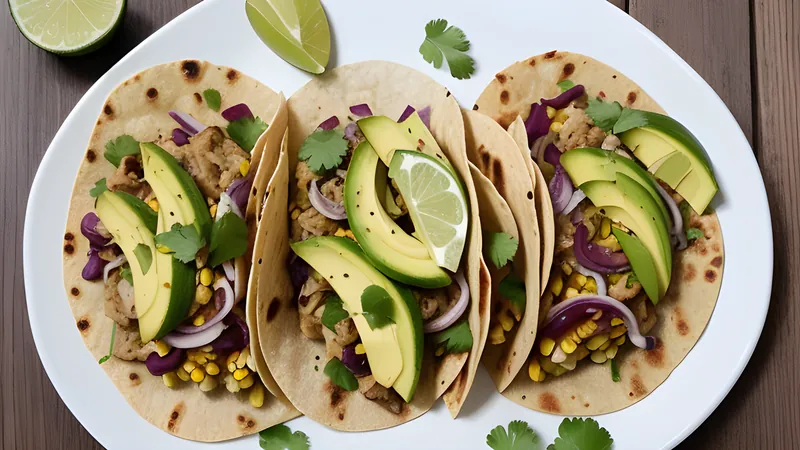
- Warm the corn tortillas, then fill with the crisp jackfruit, sliced red onion, coriander, avocado, pickled jalapeños and a squeeze of lime.
What carnitas actually is, and why jackfruit works
Carnitas — “little meats” — is the pride of Michoacán, in western Mexico, where whole pork shoulders are simmered slowly in their own fat, traditionally in vast copper cauldrons called cazos, until the meat is fork-tender and the outside fries to lacy, golden crisp. Orange, garlic and bay perfume the pot, and the finished meat is chopped and piled into warm corn tortillas with nothing more than onion, coriander and a squeeze of lime. It is festival food, the centre of a Sunday gathering, and its magic lies entirely in that double texture of soft interior and crackling edge.
Jackfruit stands in convincingly because of how it is built. The immature fruit is all fibre and no sweetness, so when you shred it, the strands separate into a ragged pull that mimics slow-cooked meat closely enough to fool the eye and, once seasoned, the palate too. It has grown across South and Southeast Asia for centuries, the largest tree-borne fruit in the world, and cooks in Kerala and Bangladesh have long used the green fruit as a savoury vegetable. The Western habit of casting it as a meat substitute is recent, and it works precisely because those cooks were right all along: green jackfruit is a vegetable that behaves like meat.
If you like this kind of big, slow-braised, shred-and-pile cooking, it sits beside the real thing in my carnitas, slow-braised and crisped, and shares its Latin soul with ropa vieja, Cuban braised shredded beef and the deeply savoury barbacoa de res with consommé.
Preparing the jackfruit
The tinned fruit needs a little work before it is ready, and this prep is what separates a good result from a mushy one. Drain and rinse the jackfruit well, especially if it came in brine, which is salty and can leave a tinned tang. Each chunk has three parts: the soft, stringy fleshy petals, a firmer central core, and small seed pods. You want them all, but the core needs help.
Cut out the hard triangular core from each piece and either slice it thinly or trim it, then squeeze the fleshy pieces gently to press out excess water; waterlogged jackfruit will steam rather than fry later. Now pull the softer flesh apart with your fingers or two forks into shreds, so it can drink up the braising liquid. The seed pods can be left whole for texture. Doing this properly takes ten minutes and pays off in every bite.
Braising and crisping
Warm the oil in a wide, heavy pan over a medium heat and cook the onion with a pinch of salt for six to eight minutes until soft and golden. Add the garlic, cumin, oregano and smoked paprika and fry for a minute until the spices smell toasty; blooming them in the oil now gives a rounder flavour than adding them to the liquid later.
Stir in the shredded jackfruit and turn it through the spiced onions so every strand is coated. Add the chopped chipotles and their adobo, the orange juice, the bay leaf, the stock and the brown sugar. The orange is not optional — its sweetness and gentle acidity is the flavour that says carnitas, balancing the smoke of the chipotle and echoing the citrus in the traditional braise. Bring to a simmer, then partly cover and cook gently for twenty-five minutes, stirring now and then and breaking up any stubborn chunks with the back of a spoon.
Take the lid off for the last ten minutes and let the liquid cook away almost entirely, until the pan is nearly dry and the jackfruit is glossy and soft. Taste and season with salt and the lime juice. A dry pan is essential for the next step; residual liquid will stop the fruit crisping and steam it instead.
Now the crucial finish. Heat your grill to its highest setting. Spread the braised jackfruit in an even layer on a lined baking tray and grill it close to the element for eight to twelve minutes, stirring once halfway, until the edges darken, catch and turn crisp in places. Watch it like a hawk in the final minutes, because the line between beautifully charred and burnt is a short one. This is the step that gives you carnitas texture, and skipping it is why so many jackfruit tacos disappoint.
Warming tortillas, and the tacos themselves
Corn tortillas want warming until they are soft and pliable and smell faintly toasted. Char them one at a time directly over a gas flame for a few seconds a side, or heat them in a dry frying pan; a cold tortilla cracks and tastes of raw masa. Keep them wrapped in a clean cloth as you go so they stay warm and supple. Double them up if they are thin, which is how they are stacked across Mexico for a filling this juicy.
Build each taco with a good pile of the crisp jackfruit, then keep the toppings sharp and simple in the Michoacán style: raw sliced red onion, plenty of chopped coriander, a little diced avocado for coolness and some pickled jalapeños for heat. A hard squeeze of lime over the top ties it all together and cuts the richness. Resist the urge to bury it in cheese and sour cream; the point of a good taco is balance, and the filling should lead.
A word on chipotles in adobo
The smoky heart of these tacos comes from a tin of chipotles in adobo, and it is worth knowing what you are buying. Chipotles are ripe jalapeños that have been smoke-dried, which is where the deep, woody smokiness comes from, then stewed in a tangy tomato-and-vinegar sauce called adobo. That double character, smoke plus acid, is what makes them so useful; they season and sour and perfume all at once. A single tin goes a long way, so spoon the leftovers into a small jar, cover them with their sauce and keep them in the fridge for weeks, or freeze them in ice-cube portions ready for the next batch. They vary wildly in heat between brands, so add two to start, taste the braise before you commit to a third, and remember that the sauce itself carries plenty of warmth. If you are cooking for children or the heat-shy, a single chipotle plus a spoon of the adobo gives all the smoke with only a gentle background burn.
Make-ahead, storage and swaps
The braised jackfruit keeps in the fridge for four days and freezes for three months, and the flavour deepens overnight, so this is a fine thing to cook ahead. Braise it in advance, then crisp it fresh under the grill just before serving so the texture is at its best; reheated soft jackfruit loses the crackle that makes it worth eating.
To vary it, swap the chipotle for a couple of teaspoons of chipotle paste, or push it towards a barbacoa flavour with a pinch of ground cloves and a splash of cider vinegar. The same filling is excellent in a burrito, over rice with black beans, or piled onto nachos. If you cannot find tinned young jackfruit, king oyster mushrooms shredded lengthways make a good stand-in with the same braise. However you serve it, that partnership of tender, smoky, orange-scented flesh and crisp, caught edges is what will bring people back for a third taco when they swore they were full after one.
Related Content