Inside the Leaning Tower: The Engineering Miscalculations That Made Pisa’s Icon Iconic
How a medieval mistake became a global tourist draw
Contents
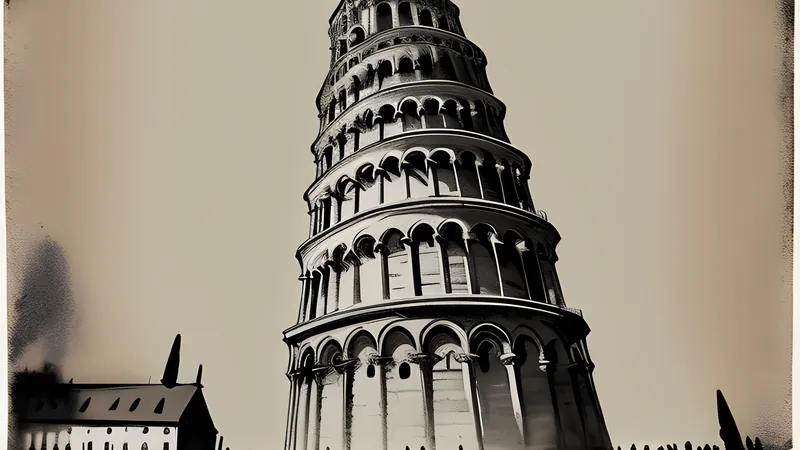
<p>In 1173, masons in Pisa laid the first white marble course of a freestanding bell tower for the city’s cathedral, and within five years, before they had finished the third floor, the structure had already begun to lean. Nobody set out to build a crooked tower. The tilt that now brings millions of visitors to a small Tuscan piazza every year is the accumulated record of a single foundational error, made worse by every decision that followed it, and then, eight centuries later, deliberately preserved by engineers who could have straightened the thing entirely and chose not to.</p>
<h2 id="the-soil-that-started-it-all">The soil that started it all</h2><div class="ad-unit ad-in-article" aria-label="Advertisement">
<span class="ad-label">Advertisement</span>
<ins class="adsbygoogle" style="display:block;text-align:center"
data-ad-client="ca-pub-3726833845844946"
data-ad-slot="3291553914"
data-ad-format="auto"
data-full-width-responsive="true"></ins>
<script>(adsbygoogle = window.adsbygoogle || []).push({});</script>
</div>
<p>The tower stands on the Piazza dei Miracoli, on ground that had once been an estuary. Beneath the paving lies roughly three metres of sandy topsoil, then a thick layer of soft, water-saturated marine clay, and only much deeper down anything a builder would call bedrock. The medieval masons dug a foundation just three metres deep, a ring of masonry set into that shallow upper soil, and expected it to carry a stone campanile that would eventually rise to around 57 metres and weigh some 14,500 tonnes.</p>
<p>The clay could not take the load evenly. As the weight climbed floor by floor, the ground on the south side compressed faster than the north, and the whole tower began to rotate about its base. This was not a dramatic collapse but a slow, relentless settling, the kind that only becomes visible once a plumb line no longer runs true. By the time the third storey was complete, the deviation was obvious enough that the builders had to respond to it directly.</p>
<h2 id="a-flawed-beginning-and-the-interruptions-that-saved-it">A flawed beginning, and the interruptions that saved it</h2>
<p>Construction on the tower stretched across nearly two centuries, and the gaps in that timeline turned out to matter more than the building. Work halted around 1178 as the lean appeared, and Pisa’s near-constant wars with Genoa, Lucca and Florence stalled progress for decades at a time. The tower sat unfinished for the better part of a hundred years.</p>
<p>Those pauses were, in hindsight, what kept it standing. Left alone, the underlying clay slowly consolidated and gained strength under the partial weight already resting on it. Had the medieval builders pressed straight on to the full height without stopping, the soft ground would almost certainly have failed and the tower would have toppled during construction, joining the long list of ambitious medieval structures that never survived their own scaffolding. The wars that frustrated the people of Pisa accidentally rescued their most famous monument.</p>
<p>When Giovanni di Simone resumed work around 1272, the builders tried to correct the tilt the only way they knew how: by building the upper floors taller on the sinking southern side, so each new storey was slightly banana-shaped in an attempt to bring the top back toward vertical. The result is the gentle curve you can still trace along the tower’s flank today. The bell chamber was finally added around 1372, roughly 199 years after the first stone. The finished structure leans not as a straight line but as a subtle arc, a permanent fossil of the medieval effort to argue with gravity.</p>
<h2 id="history-written-in-degrees">History written in degrees</h2><div class="ad-unit ad-in-article" aria-label="Advertisement">
<span class="ad-label">Advertisement</span>
<ins class="adsbygoogle" style="display:block;text-align:center"
data-ad-client="ca-pub-3726833845844946"
data-ad-slot="3291553914"
data-ad-format="auto"
data-full-width-responsive="true"></ins>
<script>(adsbygoogle = window.adsbygoogle || []).push({});</script>
</div>
<p>The tower’s tilt is one of the most closely measured deformations in architecture, and its history can be told almost entirely in fractions of a degree. From its completion around 1372 onward it continued to lean a little further each decade, the movement so gradual that generations of Pisans grew up assuming it was simply a curiosity rather than a countdown. By 1990 the deviation had reached about 5.5 degrees from vertical, the top of the tower overhanging its base by more than four metres, and structural engineers concluded the campanile was genuinely close to the point where it would fail.</p>
<p>The Italian government closed the tower to visitors in January 1990, the first time in its history it had been shut, and convened an international committee to work out how to stop the lean without destroying the very feature that made the building worth saving. The problem was excruciatingly delicate. A structure that has stood at an angle for 800 years has settled into a fragile equilibrium, and any intervention risks nudging it the wrong way. An early attempt in 1993 to steady it with lead counterweights stacked on the north side worked, but it was hardly the elegant permanent fix anyone wanted.</p>
<p>The solution the committee eventually adopted was a technique called soil extraction, or underexcavation. Between 1999 and 2001, engineers drilled a series of slender inclined tubes beneath the raised north side of the foundation and carefully removed small quantities of soil, allowing that side to settle gently and the whole tower to rotate very slightly back toward upright. Around 41 extraction holes were used in the main phase, and over roughly 30 months the tilt was reduced by about half a degree, bringing it down to just under four degrees. It sounds tiny, and it was meant to. The engineers were not trying to straighten the tower. They were buying it several more centuries of stability while leaving it recognisably, deliberately, wrong.</p>
<h2 id="why-the-mistake-became-the-point">Why the mistake became the point</h2>
<p>There is a genuine argument buried in the tower’s story about what we value in a building. By any rational engineering standard, the lean is a defect, and a costly one; the stabilisation project alone ran for over a decade and consumed enormous expertise and money. A perfectly vertical medieval bell tower in Pisa would be a fine piece of Romanesque architecture and almost nobody outside Tuscany would have heard of it.</p>
<p>The flaw is the entire reason the world knows the building at all. This is what makes the tower quietly subversive: it demonstrates that cultural value does not track technical perfection, and sometimes runs directly against it. The same accidental transformation of a mistake into an emblem shows up again and again in visual culture, whether in a doodle that escaped its origins to become <a href="/story/the-smiley-face-from-simple-icon-to-cultural-phenomenon/">a universal symbol of goodwill</a>, or in the way <a href="/story/marilyn-monroe/">an image reproduced past the point of accuracy</a> becomes more iconic with every distortion. Pisa’s builders failed at their brief and, in failing, produced something no competent tower could ever have been.</p>
<h2 id="how-the-lean-is-celebrated">How the lean is celebrated</h2>
<p>The piazza today is one of the most photographed spaces in Italy, and the dominant ritual there is faintly absurd: thousands of visitors line up daily to be photographed at a distance, arms outstretched, appearing to prop up or push over the tower with a single hand. It is a piece of amateur trick photography that has become so universal it functions almost as a rite of passage for anyone visiting Tuscany.</p>
<p>Inside, visitors who buy timed tickets can climb the 251 or so steps of the internal spiral staircase to the bell chamber, and the experience is genuinely strange. Because the tower leans, the climb feels different on each side of the spiral, the treads seeming to pull you outward or press you inward depending on which way you are facing, a bodily reminder that the floor beneath you is not level and never has been.</p>
<h2 id="symbols-and-afterlives">Symbols and afterlives</h2>
<p>The tower’s silhouette has become shorthand for Italy itself, printed on everything from souvenir keyrings to pizza-chain logos, and its instantly readable diagonal makes it one of the easiest landmarks in the world to caricature. That legibility is part of why it endures in the popular imagination: you can recognise it from a single line.</p>
<p>It has also become a kind of universal metaphor for a beautiful mistake, invoked whenever someone wants to describe a flaw that turned out to be an asset. The building has outgrown its own function entirely; almost nobody thinks of it first as a bell tower for a cathedral, which is what it was built to be. It is now the lean, and only incidentally the tower.</p>
<h2 id="fun-facts">Fun facts</h2>
<ul>
<li>The tower is not the only leaning structure on the Piazza dei Miracoli. The cathedral itself and the nearby baptistery also tilt slightly, because they all sit on the same treacherous former-estuary clay.</li>
<li>During the Second World War, the retreating German army used the tower as an observation post, and it narrowly escaped being demolished by Allied artillery; a US sergeant sent to call in the strike reportedly chose not to.</li>
<li>The lean actually reverses direction across the tower’s height because of the medieval attempt to correct it mid-build, giving the structure its faint banana curve rather than a clean straight tilt.</li>
<li>After the 1999–2001 stabilisation, monitoring showed the tower had not only stopped moving but very slightly straightened over the following years, the first time in centuries it had leaned less rather than more.</li>
<li>Galileo Galilei, who grew up in Pisa, is popularly said to have dropped two balls of different masses from the tower to show they fall at the same rate. There is no contemporary evidence he ever did, and the story likely comes from a biography written decades after his death.</li>
</ul>
<h2 id="a-closing-reflection">A closing reflection</h2>
<p>What the tower really documents is the gap between intention and legacy. The masons of 1173 wanted a straight tower and got a crooked one; the engineers of 1999 could have delivered the straight tower their predecessors failed to build and instead spent a fortune preserving the failure. Both groups were doing their jobs well. The lesson is not that mistakes are secretly good, which would be a comforting lie, but that the meaning of a structure is decided long after the builders have put down their tools, by people who never met them and value entirely different things. Pisa’s tower is a reminder that we do not get to choose what survives of our work, or why.</p>
Advertisement
Related Content


Advertisement
