Huevos Rancheros with Charred Salsa and Refried Beans
The ranch-hand breakfast: fried eggs over warm tortillas, a smoky charred salsa and proper refried beans
Contents
↓ Jump to recipeHuevos rancheros translates plainly as “ranch eggs”, and the name tells you exactly what it is and who it was for: the second breakfast of the working farms of rural Mexico, eaten mid-morning by people who had already been up for hours. It is fried eggs laid over warm corn tortillas, blanketed in a cooked tomato-chilli salsa, with refried beans on the side to make it stick to the ribs. Done well it is one of the great savoury breakfasts of the world. Done carelessly it is a soggy pile. The difference is almost entirely down to two things: charring the salsa for smoke, and building the plate in the right order at the last minute.
Huevos Rancheros with Charred Salsa and Refried Beans
Ingredients
- 4 corn tortillas
- 4 large eggs
- 4 ripe tomatoes
- 1 small white onion, halved
- 2 jalapeños or serrano chillies
- 2 garlic cloves, unpeeled
- 1 x 400g tin pinto beans, drained (liquid reserved)
- 3 tbsp neutral oil or lard, divided
- 0.5 tsp ground cumin
- Small bunch coriander, chopped
- 1 lime, cut into wedges
- 50g feta or crumbled queso fresco
- Fine salt, to taste
Method
- Get a dry heavy pan very hot and char the whole tomatoes, halved onion, whole chillies and unpeeled garlic for 8 to 10 minutes, turning, until blackened and softening.
- Peel the garlic, then blend the charred tomatoes, onion, chillies (stems, and seeds if you want it milder, removed) and garlic to a slightly coarse sauce.
- Fry the salsa in 1 tbsp oil for about 5 minutes until thick enough to sit on an egg; season with salt.
- Fry a little onion in oil or lard, add the drained pinto beans and cumin, sizzle for 1 minute, then mash with the reserved bean liquid to a loose, creamy purée and salt well.
- Warm the tortillas for 20 to 30 seconds a side in a dry hot pan until soft, then keep them wrapped in a clean cloth.
- Fry the eggs in a little hot oil, spooning oil over the whites, until set with runny yolks; season as they cook.
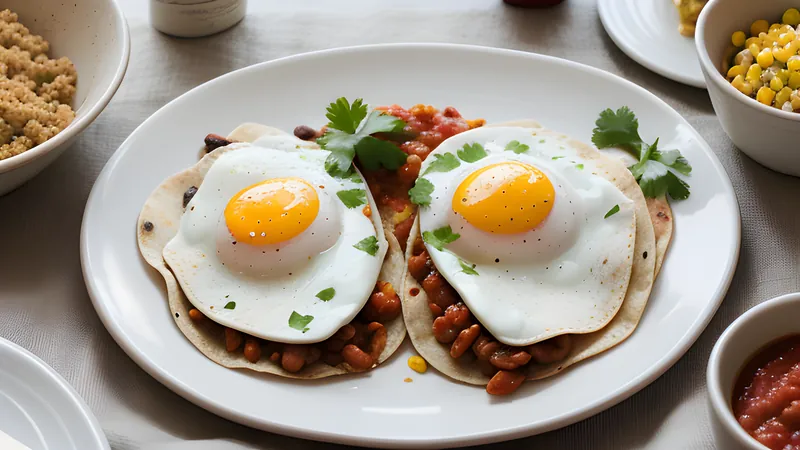
- Lay 2 warm tortillas on each plate, spread with beans, top with 2 eggs and spoon the hot salsa around the whites, clear of the yolks.
- Crumble over the feta, scatter with coriander and serve at once with lime wedges to squeeze over.
A breakfast off the ranch
The dish comes out of the almuerzo, the substantial late-morning meal eaten on Mexican haciendas and ranches between an early cup of coffee and a late afternoon dinner. Field hands needed real fuel, and eggs, tortillas, beans and a jar of salsa were what every rural kitchen had to hand. There was never one canonical recipe; every region and household had its own salsa and its own way. What travelled north across the border and onto restaurant menus is a somewhat tidied version of a genuinely humble farm plate.
The salsa is where the regional identity sits. The classic ranchera sauce is red, built on tomatoes, onion, garlic and chilli, cooked down and loosened to a spoonable consistency. In many kitchens the vegetables are charred first, on a comal or straight over the flame, which is the step that gives the sauce its faint smoke and depth. That green-salsa sibling of this dish, built on tomatillos rather than tomatoes, becomes chilaquiles verdes when the tortillas are simmered soft in it instead of kept whole. Here the tortillas stay intact and act as the plate.
Char is the whole flavour
If you take one idea from this recipe, take this: char the vegetables before you make the salsa. A raw blended tomato salsa tastes bright and thin and a little sour. Charred tomatoes, onion, chilli and garlic taste of woodsmoke, caramel and something almost meaty, and that transformation is what separates a memorable plate from a forgettable one.
Get a dry heavy frying pan or a griddle very hot. Put in the whole tomatoes, the halved onion, the whole chillies and the unpeeled garlic cloves, and leave them, turning occasionally, until they are blackened and blistered in patches all over and softening within. The tomato skins should split and blacken, the onion should take on dark edges, the chilli skins should char, and the garlic should soften inside its papery skin. This takes eight to ten minutes and you want real black, not shy tan; the burnt notes read as depth once blended.
Slip the garlic out of its skins. Tip the charred tomatoes, onion, chillies (stems removed, and seeds removed if you want it milder) and garlic into a blender or a bowl for a hand blender. Blitz to a slightly coarse sauce, keeping some texture. Heat a tablespoon of oil in the pan, pour in the salsa, and let it fry and bubble for five minutes to concentrate and cook out the raw edge, seasoning with salt. It should be thick enough to sit on an egg without sliding straight off, so cook it down further if it is watery, or loosen with a splash of water if it tightens too far.
The heat is yours to set: leaving the seeds and membranes in the charred chillies gives a real kick, while stripping them out keeps it warm. A spoonful of adobo from tinned chipotles, blitzed through, turns the sauce smokier if you want to lean that way.
Refried beans that are actually good
Tinned beans get an undeserved bad name, mostly because people just heat them through and stop. The word “refried” is a mistranslation anyway: frijoles refritos means “well-fried” beans, not fried twice, and frying is exactly the step that turns dull beans into something silky and savoury.
Heat a tablespoon of oil or, better, lard in a small pan over medium heat. Fry a little of the reserved onion if you like, then add the drained pinto beans and the cumin and let them sizzle for a minute. Now mash them, roughly, with the back of a fork or a potato masher, splashing in the reserved bean liquid a little at a time until you have a loose, creamy, spoonable purée. Keep it looser than you think you want, because beans thicken as they sit and stiff refried beans on a plate are a joyless thing. Taste and salt well. A good spoonful of these beans smeared under the tortilla also acts as glue and a moisture barrier, which is part of why the plate holds.
If you have the time, beans cooked from dried give a rounder, earthier result than tinned, and their cooking liquid loosens the mash far better than water or tinned brine: simmer soaked pintos with half an onion and a bay leaf until collapsing, then fry as above. Lard is traditional and the better fat here, though a good olive oil keeps the dish vegetarian. Whichever you use, fry the beans harder and longer than feels necessary; the caramelised edges where the mash catches the pan are where the flavour comes from.
Frying the eggs and warming the tortillas
Corn tortillas need to be warm and pliable, and a cold tortilla straight from the packet is a leathery disappointment. Warm each one for twenty or thirty seconds a side in a dry hot pan until it is soft, supple and smells toasty, then keep them wrapped in a clean cloth so they stay warm and steam-softened while you fry the eggs. Some cooks give the tortillas a quick shallow-fry in a little oil for a sturdier, slightly crisp base that stands up better under the salsa; it is a good move if you like more structure.
Fry the eggs in a little hot oil, spooning the oil over the whites or covering the pan briefly so the tops just set while the yolks stay liquid. Season them as they cook. For the neatest whites, crack each egg into a small cup and slide it in rather than dropping it from height. A knob of butter added in the last thirty seconds and spooned over the whites gives crisp edges that suit the smoky salsa. A runny yolk is the sauce that ties everything together at the table, so pull the eggs the moment the whites are set.
Building the plate
Assemble at the last possible second, because the enemy of this dish is time. Lay two warm tortillas overlapping on each plate, spread a little of the warm beans over them, and slide two fried eggs on top. Spoon the hot charred salsa generously around and over the whites, keeping it clear of the yolks so they stay bright. Add the rest of the beans to the side. Crumble over the feta or queso fresco, scatter with chopped coriander, and serve with lime wedges to squeeze over and a hit of acid that lifts the whole plate. Eat it immediately, breaking the yolks and dragging everything together.
Where it goes wrong
A watery, sliding plate almost always means the salsa was too thin or went on too early, so cook the sauce down until it holds and build right before eating. Bland salsa means the vegetables were not charred hard enough; push them to real blackness next time. Rubbery eggs mean they were cooked too long or too hot, and the yolks should be loose. Stiff, claggy beans need more liquid loosened through them. And a cold, cracking tortilla was never warmed properly; give them their thirty seconds a side.
Variations, make-ahead and serving
The salsa and the beans both keep and reheat beautifully, which makes this a fast weekday breakfast if you do the groundwork on Sunday. Char and blend a big batch of salsa and fridge it for up to five days or freeze it; do the same with a doubled batch of beans, loosening with a little water when you reheat. With those two ready, the plate comes together in the time it takes to fry an egg.
For a heartier version, add slices of avocado, a spoon of soured cream, or a scatter of pickled jalapeños. Swap pinto beans for black beans if that is what you have. If you want to lean into the leftovers, the same fried-egg-over-tortilla logic carries a whole family of Mexican breakfasts, from a loaded breakfast burrito with crispy potato and chipotle to a pan of crackling migas. Whatever you build on, the core stays the same: warm tortilla, smoky salsa, silky beans, a yolk waiting to be broken.
Related Content