Honey and Ricotta Phyllo Cups with Walnuts
Crisp, golden filo shells filled with whipped ricotta and walnuts
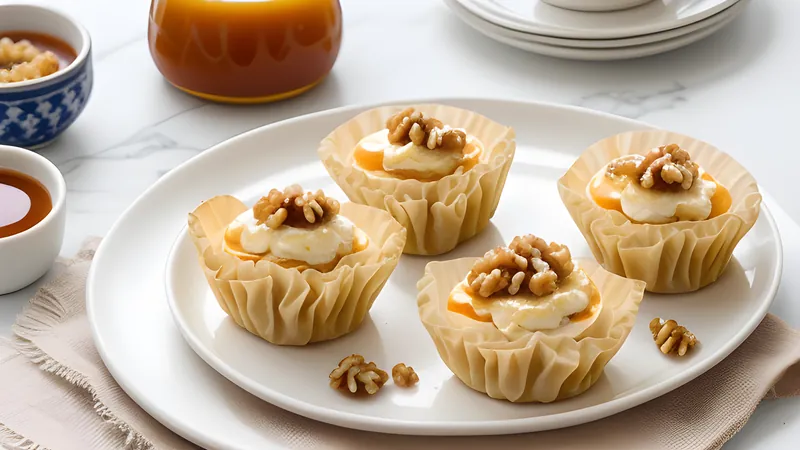
Honey and Ricotta Phyllo Cups with Walnuts
Ingredients
- 6 sheets of filo pastry
- 60g unsalted butter, melted
- 250g ricotta, well drained
- 3 tbsp honey, plus extra to finish
- Finely grated zest of 1 lemon
- 0.25 tsp ground cinnamon
- 1 pinch fine salt
- 60g walnuts, roughly chopped and lightly toasted
- A little orange blossom water (optional)
Method
- Heat the oven to 180C fan and lightly butter a 12-hole muffin tin.
- Lay one sheet of filo on the work surface, brush lightly with melted butter and top with a second sheet; repeat to make a stack of three buttered sheets, then make a second stack with the remaining three.
- Cut each stack into six squares, giving twelve squares in total.
- Gently press one square into each muffin hole, ruffling the corners upwards to form a cup.
- Bake the empty shells for 8 to 10 minutes until deep golden and crisp, then cool completely.
- Beat the drained ricotta with two tablespoons of the honey, the lemon zest, cinnamon, salt and a few drops of orange blossom water until smooth and light.
- Toast the walnuts in a dry pan until fragrant, then toss with the remaining tablespoon of honey.
- Spoon or pipe the ricotta into the cooled filo cups just before serving.
- Top with the honeyed walnuts and a final drizzle of honey.
These little cups are the answer to the question of how to make a dessert that looks like real effort while taking barely twenty minutes of actual work. Crisp, ruffled shells of filo pastry hold a cloud of whipped ricotta sweetened with honey and brightened with lemon, all crowned with honey-glossed walnuts. They are light, elegant and endlessly poppable, the sort of thing to set out after dinner with coffee or to pile onto a platter for a party. The small twist here is treating the ricotta like a savoury cheese given a sweet turn, whipping it smooth and perfuming it with cinnamon, lemon and a whisper of orange blossom.
1 A dessert from the crossroads of the Mediterranean
Filo, ricotta, honey and nuts are the founding ingredients of an enormous family of sweets that stretches across the eastern and southern Mediterranean. Wherever the Ottoman Empire once reached, from Greece and the Balkans through Turkey and into the Levant, you find paper-thin pastry layered with butter, stuffed with cheese or nuts, and bathed in honey or sugar syrup. Baklava is the most famous, but the same ingredients turn up in Greek galaktoboureko, Turkish künefe and countless regional pastries.
Ricotta itself belongs to the Italian side of this Mediterranean story. Its name means recooked, because it is traditionally made by reheating the whey left over from cheesemaking, coaxing out the last of the milk solids into soft, mild curds. Frugal and gentle, it became the backbone of southern Italian sweets, most gloriously in Sicilian cannoli and cassata, where sweetened ricotta meets candied fruit and nuts, an island cuisine itself shaped by centuries of Arab influence. These cups borrow freely from both traditions, the honey-and-walnut sweetness of the Levant married to the soft, sweet ricotta of Italy, in a format that needs no syrup-soaking and stays light.
2 Working with filo, and keeping it crisp
Filo intimidates people, but it is friendlier than it looks once you accept its one rule: keep it from drying out. Work with one stack at a time and cover the rest with a barely damp tea towel, because exposed filo turns brittle and shatters within minutes. Brush each sheet lightly with melted butter as you layer; this is what crisps and golds the pastry and glues the sheets together. You do not need to drench it, just a thin, even film.
The key technical point is to bake the shells empty and let them cool completely before filling. Filo is only crisp when dry, and any moisture, including the wet ricotta, softens it almost immediately. So bake the cups to a deep golden crisp, cool them, and fill them as close to serving as you can. A soggy filo cup is the one thing that can go wrong here, and this timing is the cure.
3 The filling and the finish
Drain the ricotta well; supermarket tubs can be quite wet, and excess liquid makes a slack filling. Beat it with honey, lemon zest, a little cinnamon and salt until smooth and aerated, light enough to spoon or pipe. Taste and adjust the honey to your liking and the brand of ricotta. A few drops of orange blossom water lift it into something special, but go gently, as it is potent.
Toast the walnuts before chopping; this wakes up their oils and chases off any hint of bitterness. Tossing them in a little honey while warm gives a glossy, sticky topping that contrasts beautifully with the cool, soft cheese and the shattering pastry.
4 Make-ahead and variations
You can have all three elements ready in advance and assemble at the last minute, which makes this a dream for entertaining. Bake the shells up to two days ahead and keep them airtight at room temperature; make the filling a day ahead and chill it; toast the walnuts whenever. Assemble only just before serving so the pastry stays crisp.
For variations, swap walnuts for toasted pistachios or pecans, or scatter over a few pomegranate seeds for a jewel-bright, tart finish. A drizzle of dark, bitter honey such as chestnut honey is wonderful against the sweet cheese. You could fold a little mascarpone into the ricotta for extra richness, or add a spoonful of finely chopped candied orange peel for a more cannoli-like result.
Related Content