Homemade Ricotta: Ten Minutes, Three Ingredients, Absurdly Good
warm milk, a squeeze of lemon, and soft clouds of curd
Homemade Ricotta: Ten Minutes, Three Ingredients, Absurdly Good
Ingredients
- 1 litre (4 cups) whole milk (not UHT)
- 120ml (1/2 cup) double cream (optional, for richness)
- 3 tbsp lemon juice (about 1 large lemon), or white wine vinegar
- 1/2 tsp fine sea salt
Method
- Line a sieve with a double layer of muslin or a clean tea towel and set it over a bowl.
- Pour the milk and cream into a heavy pan, add the salt, and heat gently, stirring now and then, until it reaches a bare simmer at about 90°C.
- Take the pan off the heat, pour in the lemon juice, and stir once gently; the milk will separate into curds and watery whey within a minute or two.
- Leave it undisturbed for 5 minutes to let the curds finish forming.
- Ladle the curds gently into the lined sieve and let them drain for 10 to 30 minutes, depending on how firm you want the ricotta.
- Tip into a bowl, season to taste, and use straight away or chill.
I held off making my own ricotta for years because it sounded like the sort of thing that required a thermometer, rennet, a cheese cave and a personality I do not have. Then one evening I had a litre of milk on the turn and a lemon, and twenty minutes later I had a bowl of warm, soft, faintly sweet ricotta that was so much better than anything from a tub that I actually laughed. It is, genuinely, one of the easiest impressive things you can make in a kitchen.
Three ingredients, ten minutes of active work, no special equipment beyond a sieve and a scrap of cloth. If you can boil milk and squeeze a lemon, you can make ricotta. And the version you make at home is in a completely different league: creamy, delicate, with a clean milky sweetness that the long-life supermarket tubs simply do not have.
1 What is actually happening
Strictly speaking, what we are making is not true ricotta. Traditional ricotta (the word means “recooked”) is made from the leftover whey of cheesemaking, gently reheated until the remaining proteins coagulate. What home cooks make is technically a fresh whole-milk cheese, closer to a quick farmhouse curd — but it is the same soft, ricotta-style result everyone wants, and “homemade ricotta” is what every Italian nonna’s grandchild calls it, so I will too.
The science is simple and rather satisfying. Milk is full of casein proteins held in suspension. When you heat the milk and add an acid — lemon juice or vinegar — the acid lowers the pH and causes those proteins to clump together into solid curds, separating from the watery whey. You scoop out the curds, drain them, and that is ricotta. That is the whole trick.
2 The one clever twist: a splash of cream
The single change that takes homemade ricotta from “very nice” to “absurdly good” is adding a slug of double cream to the milk before you heat it. It sounds almost too easy to count as a twist, but the difference is night and day. The extra fat gives the curds a luxurious, silky richness and a softer set, so instead of slightly crumbly curds you get something closer to whipped, spreadable clouds. A litre of milk and half a cup of cream is my standard ratio. If you want a lighter, more delicate ricotta, leave it out — but try it with the cream at least once and you will understand the fuss.
3 Making it, step by step
Choose your milk with a little care. It must not be UHT or long-life — the ultra-high-temperature processing changes the proteins so they will not curdle properly. Fresh whole milk is what you want; the higher fat gives a creamier result. Avoid milk labelled “filtered” or “long fresh” if you can, as those sometimes behave like UHT.
Line a sieve with a double layer of muslin (cheesecloth) or a clean, thin tea towel, and set it over a bowl to catch the whey. Pour the milk and cream into a heavy-based pan, add the salt, and warm it gently over a medium heat, stirring occasionally so the bottom does not catch. You want it just to a bare simmer — small bubbles around the edge, steam rising, about 90°C. A thermometer is handy but not essential; trust your eyes.
Take the pan off the heat and pour in the lemon juice. Give it one gentle stir and then leave it alone. Within a minute or two you will see the magic happen: the milk separates into soft white curds floating in pale, greenish-yellow whey. If it has not fully separated after a couple of minutes, add another tablespoon of lemon juice and wait. Let it sit undisturbed for five minutes so the curds firm up.
4 Draining and seasoning
Now ladle the curds gently into your lined sieve — a slotted spoon or ladle is kinder than tipping the whole pan, which can break up the curds. Let it drain. This is where you control the texture: ten minutes gives a loose, spoonable ricotta lovely for stirring into pasta; thirty minutes or more gives a firmer, drier curd you can slice or pipe. Do not press or squeeze it unless you want it very dense.
Tip the drained curds into a bowl, taste, and adjust the salt. That is it. Use it while still slightly warm for the best texture, or chill it for up to three days.
5 What to do with it
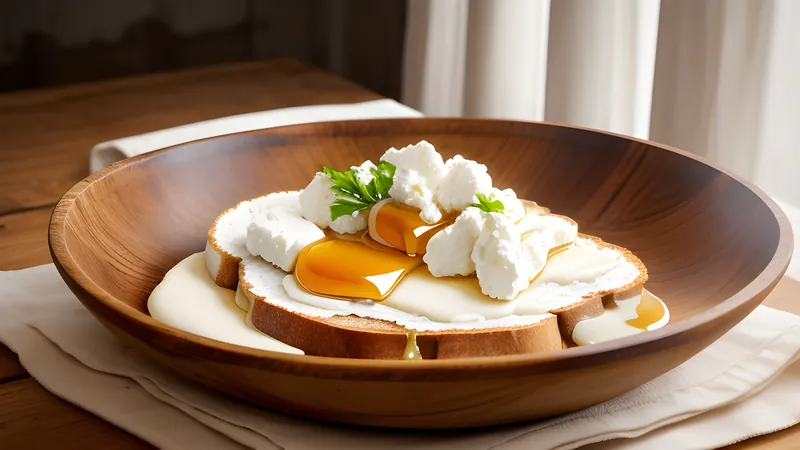
Spread it thickly on toast with a drizzle of honey and a crack of black pepper for the best breakfast of the week. Dollop it over roasted tomatoes, fold it through hot pasta with lemon zest and peas, layer it into lasagne, or sweeten it with a little sugar and vanilla to fill crêpes. And do not pour the whey down the sink — it is full of flavour and protein, and works beautifully in place of water in bread dough or as the liquid in a soup.
Ten minutes, three ingredients, and a bowl of something that tastes like a small culinary miracle. There are few cooking projects with a better effort-to-smugness ratio, and once you have made it once you will wonder why you ever bought the tubs.
Related Content