Homemade Lemonade with Mint and Basil
An oleo saccharum from the peels, herb syrup and freshly squeezed juice
Contents
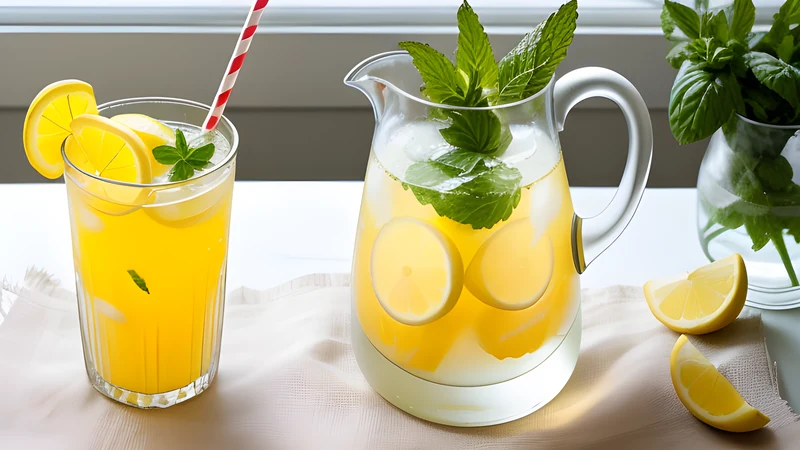
↓ Jump to recipeMost homemade lemonade is just lemon juice, sugar and water, and it is fine, in the way a thing can be fine while leaving all its best flavour in the bin. That best flavour lives in the peel. The clever move here is an oleo saccharum, an old bartender’s technique of steeping citrus peel in sugar to draw out its aromatic oils, and it turns an ordinary jug into something with real depth and perfume before a drop of juice goes in. Add a fresh mint and basil syrup and you have a lemonade that tastes of the whole lemon and a summer garden.
Homemade Lemonade with Mint and Basil
Ingredients
- 6–8 unwaxed lemons (about 250ml juice), plus the peel of 3 of them
- 150g caster sugar (100g for the oleo, 50g for the syrup)
- A large handful of fresh mint (about 15g)
- A small handful of fresh basil (about 8g)
- 800ml–1 litre cold water, still or sparkling
- Plenty of ice, to serve
- Extra lemon slices and herb sprigs, to garnish
Method
- Peel 3 of the lemons in wide strips with a vegetable peeler, avoiding the white pith, and put the peel in a bowl with 100g of the sugar.
- Muddle or rub the sugar into the peel, then leave for 30–60 minutes (or up to 2 hours) until the sugar turns damp and syrupy as it draws out the oils. This is your oleo saccharum.
- Meanwhile, make the herb syrup: gently warm 50g sugar with 100ml water until dissolved, take off the heat, add half the mint and basil, and leave to infuse for 15 minutes, then strain.
- Squeeze the lemons to get about 250ml of juice, catching the pips.
- Strip the peel out of the oleo saccharum and stir the collected syrup into the lemon juice until the sugar fully dissolves.
- Combine the oleo-and-juice mixture with the strained herb syrup in a large jug.
- Top up with 800ml to 1 litre of cold still or sparkling water, tasting as you go to balance sweet and sharp.
- Bruise the remaining fresh mint and basil leaves lightly and add to the jug with plenty of ice. Serve very cold, garnished with lemon slices.
Lemonade, older and broader than you think
Lemonade in some form is genuinely ancient. Lemons reached the Mediterranean and the Middle East by around the tenth century, and a sweetened lemon drink called qatarmizat was sold in medieval Cairo, with records of a Jewish community there trading in bottled lemon juice as early as the twelfth century. By the seventeenth century a sweetened, sometimes sparkling lemon drink was hugely fashionable in Paris, where vendors called limonadiers roamed the streets with tanks of it on their backs, and in 1676 they were organised enough to form their own guild. Some food historians have argued that this early habit of drinking citrus juice may even have helped Paris ward off plague, by encouraging the disposal of lemon peels that discouraged rats, though the story is more charming than proven.
There is also a lasting transatlantic split worth knowing. In Britain and much of Europe, “lemonade” now usually means a clear, fizzy, sweet soft drink, the sort that comes in bottles. In North America it means the cloudy, still, freshly squeezed drink made from actual lemons, sugar and water, the roadside-stand kind. This recipe is firmly the second sort, cloudy and alive, though you can make it sparkling by topping up with soda water. The mint and basil are a nod to the herb-scented lemonades of the eastern Mediterranean, where mint especially is a classic partner to lemon in a summer cooler.
Why the oleo saccharum matters
The single biggest flavour upgrade you can give a lemonade costs nothing extra, because you already own the peels. A lemon’s skin is packed with aromatic essential oils in tiny sacs just under the surface, and those oils carry a huge share of what we recognise as the smell and brightness of a lemon. The juice alone gives you sharp acidity and some flavour, but the peel gives you perfume and depth. An oleo saccharum, which simply means “oil sugar” in Latin, captures those oils: sugar is hygroscopic, meaning it pulls moisture and the volatile oils out of the peel over half an hour or so, dissolving into a thick, intensely lemon-scented syrup.
The technique matters in the detail. Peel the lemons with a vegetable peeler in wide strips and try hard to take only the yellow zest, because the white pith beneath is bitter and will make the syrup taste of it. Rubbing or muddling the sugar into the peel speeds things along by breaking the oil sacs, and time does the rest; an hour is plenty, though up to two hours draws out even more. When you lift the peels out you will find the sugar has slumped into a damp, fragrant, pale-yellow syrup, and that syrup is doing flavour work no amount of extra juice could match. It is the same trick that lifts a proper punch, and once you have made it once you will do it every time.
The recipe, step by step
Start with the oleo saccharum, since it needs time. Peel 3 of the lemons in wide strips, avoiding the pith, and put the strips in a bowl with 100g of caster sugar. Muddle the two together with the end of a rolling pin or just scrunch them with your fingers, then leave for 30 to 60 minutes, or up to two hours, until the sugar is syrupy.
While that steeps, make the herb syrup. Warm 50g of sugar with 100ml of water in a small pan over low heat, stirring just until the sugar dissolves, then take it off the heat. Add half your mint and basil, pressing the leaves under the surface, and leave to infuse for 15 minutes before straining the leaves out. Keep it warm and well below a boil: a rolling boil turns delicate fresh herbs stewed and dull, while gentle heat holds their flavour green and bright.
Squeeze 6 to 8 lemons to get about 250ml of juice, catching the pips. Lift the peels out of the oleo and stir the collected sugar syrup into the lemon juice until every grain dissolves. Combine this with the strained herb syrup in a large jug, then top up with 800ml to 1 litre of cold still or sparkling water, tasting as you go: you are balancing sharp against sweet, and lemons vary enough that a fixed number never quite works. Lightly bruise the remaining fresh mint and basil between your palms to release their oils and drop them into the jug with plenty of ice. Serve very cold, with a few lemon slices.
Balancing, sweetening and storing
Taste is everything with lemonade, and the balance point is personal. Start with less water, taste, and dilute up; you can always add more but you cannot take it back out once a jug is too weak. If your lemons are especially sharp you may want a touch more sugar dissolved in warm water and stirred through. A small pinch of salt, barely detectable, rounds the whole thing and makes the flavours pop, the same reason a pinch goes into so many sweet things. It is the sort of adjustment you make with a spoon in hand, tasting between each change until the glass makes you want a second sip.
Made ahead, the lemonade base without the fresh herbs keeps in the fridge for three or four days in a sealed jug, and arguably improves overnight as the flavours marry. Add the bruised fresh mint and basil and the fizzy water only when you serve, because herbs left sitting turn dark and bitter and sparkling water goes flat. For a crowd, make a double batch of the concentrated base and dilute glass by glass. The oleo saccharum can even be made a day ahead on its own and kept covered in the fridge, ready to stir into fresh juice whenever you want a jug.
Variations
Swap in limes for a sharper, more fragrant version, or use a mix of lemon and blood orange when they are in season. Rosemary or thyme make a more savoury, grown-up herb syrup; lavender is lovely in tiny amounts. A basil-heavy syrup with a little black pepper makes a strikingly savoury version that surprises people who expect lemonade to be simply sweet. For something a little more adventurous, muddle in a few strawberries or raspberries and press them through a sieve for a pink, fruity lemonade, or stir in a spoonful of the ginger syrup from my fermented ginger beer for a lemonade with a warm bite. And for another cooling, herb-and-citrus drink built for hot afternoons, the cucumber and lime cooler works the same magic with a completely different set of flavours. Once you start capturing the peel oils, plain juice-and-sugar lemonade will taste half-finished by comparison.
Related Content