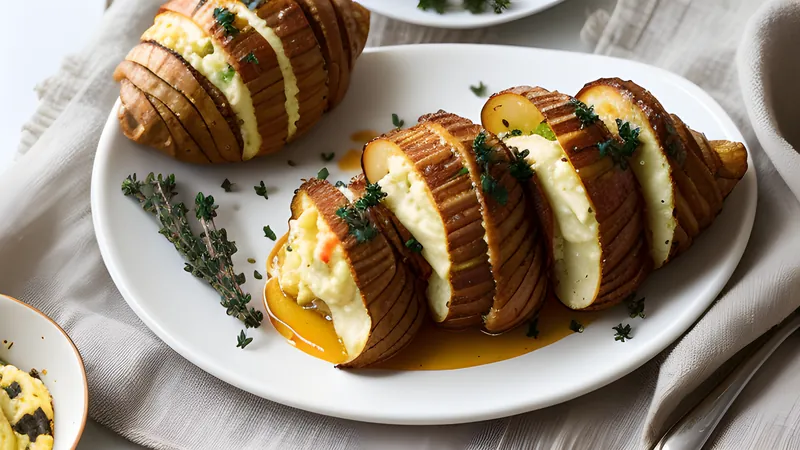
Hasselback Potatoes with Anchovy Butter
Every slice is a chance for more butter to get in
Contents
↓ Jump to reciperecipeInstructions:
- “Preheat the oven to 200C fan (220C conventional). Slice each potato crosswise at 3mm intervals, stopping before you cut all the way through, using chopsticks or wooden spoon handles either side as a guide.”
- “Mash the softened butter with the chopped anchovy and crushed garlic until evenly combined.”
- “Rub the potatoes all over with olive oil and a little salt, place cut-side up in a roasting dish, and roast for 40 minutes.”
- “Remove from the oven and brush or spoon the anchovy butter down into the cuts, working it between the slices. Return to the oven for 15-20 minutes more until the edges are deeply golden and crisp.”
- “If using breadcrumbs, scatter them over for the final 10 minutes to crisp further. Season with black pepper, scatter with chives, and serve hot.”
This is the recipe I make when someone claims they don’t like anchovies, because by the time the butter has melted down into every cut and roasted onto the potato skins, nobody can identify what’s making the dish taste so deeply savoury. I’ve served it at three separate dinners to people who swore off anchovies as children and had every one of them ask what the seasoning was. The answer surprises most of them.
Hasselback Potatoes with Anchovy Butter
Ingredients
- 8 medium waxy potatoes (Yukon Gold or similar), scrubbed
- 80g butter, softened
- 4 anchovy fillets in oil, very finely chopped
- 2 garlic cloves, crushed
- 2 tbsp olive oil
- Sea salt and black pepper
- 30g fine breadcrumbs (optional, for the last 10 minutes)
- Chopped chives or parsley, to finish
Method
A Swedish name, a global dish
Hasselback potatoes take their name from Hasselbacken, a restaurant in Stockholm’s Djurgården park where the technique was reportedly developed in the 1940s by chef Leif Elisson — fanning the potato into thin, still-attached slices so it roasts with vastly more crisp surface area than a whole potato ever could, while the base stays intact and holds everything together like a small accordion. The dish spread well beyond Sweden decades ago and turns up now on menus with all kinds of butters and toppings, but the core idea — maximise the crisp edges, keep the potato whole — hasn’t changed since Hasselbacken first served it.
The anchovy butter is my own addition and not a traditional Swedish touch, though Sweden’s relationship with cured and pickled fish makes it feel like it belongs. Swedish cooking treats anchovies (often the sweeter, spiced Scandinavian preserved sprat sold as ansjovis, a slightly different product from Mediterranean-style anchovies) as a background seasoning rather than a headline flavour, stirred into potato gratins like Jansson’s Temptation rather than served as a garnish on their own. This butter follows that same logic: the anchovy disappears into savoury depth rather than announcing itself as fish.
Getting the cuts right
The technique lives or dies on the slicing. Lay two wooden spoon handles or chopsticks on either side of the potato before you cut — they stop the knife going all the way through, so every slice remains attached at the base rather than falling apart into a stack of discs. Aim for cuts roughly 3mm apart. Much wider and the potato won’t fan out properly in the oven; much narrower and the slices are too fragile to hold their shape and tend to snap off during roasting.
Choose potatoes that are roughly the same size so they cook at an even rate, and pick a variety that holds its structure under heat — a waxy potato like Yukon Gold or a firm all-rounder works better here than a very floury baking potato, which can turn crumbly and fall apart at the cuts rather than fanning out cleanly. Scrub the skins well rather than peeling; the skin is what holds the whole structure together, and it crisps beautifully once it’s had an hour in a hot oven.
Why the butter goes in twice, not once
Anchovy butter brushed onto raw potatoes before roasting mostly burns off in the first twenty minutes at high heat, leaving little flavour behind and a slightly bitter, singed taste on top. Applying the butter about two-thirds of the way through cooking, once the cuts have already opened up and the potato has had time to firm up on the outside, means it has time to melt down between the slices and roast into the surface without scorching before serving. This two-stage approach — plain oil and salt first to get the potato roasting and the fan opening, then butter later to finish and flavour — is the single most useful thing to take from this recipe even if you never make the anchovy version again.
Method
Preheat the oven to 200C fan (220C conventional, gas mark 7). Slice each potato crosswise at roughly 3mm intervals, stopping just before the knife cuts all the way through, using chopsticks or spoon handles on either side as a stop.
While the oven heats, mash the softened butter with the finely chopped anchovy fillets and crushed garlic in a small bowl until evenly combined — do this well ahead of time if you like, since the butter keeps in the fridge for days.
Rub the potatoes all over with the olive oil and a little salt, working it gently into the cuts with your fingers so the fans start to open slightly. Place cut-side up in a roasting dish with a little space between each, and roast for 40 minutes, until they’re beginning to colour and the fans have opened up.
Remove from the oven and brush or spoon the anchovy butter generously over each potato, working it down into the cuts as best you can — it will melt and run further in as the potatoes go back in the heat. Return to the oven for 15–20 minutes more, until the edges of each slice are deeply golden and properly crisp. If using breadcrumbs for extra crunch, scatter them over for the final 10 minutes only, so they toast rather than burn. Season with black pepper, scatter with chopped chives, and serve hot, straight from the dish.
Pairing and serving
These stand up well next to roast chicken or a simple grilled fish, where the anchovy butter echoes rather than competes with the main. For a Scandinavian-leaning spread, they sit nicely alongside Swedish cardamom buns for dessert and a simple green salad dressed sharply with lemon to cut the richness. If you’re after a different potato side without the anchovy note, my crispy roast potatoes use a completely different method — parboiled and roughed up before roasting — worth comparing if you want to understand the range of what a potato can do in a hot oven.
Storage and reheating
Leftovers keep in the fridge for up to 3 days. Reheat in a hot oven, uncovered, for about 10–12 minutes rather than in a microwave, which turns the crisp edges soft and the whole thing slightly rubbery. They don’t freeze well; the texture that makes them worth eating depends entirely on freshly crisped edges, and freezing and thawing softens that completely.
Variations
If anchovies really aren’t for you, swap them for a tablespoon of finely grated Parmesan stirred into the butter along with the garlic — you lose the savoury depth but gain a different, cheesy crust as it roasts. A pinch of smoked paprika in the butter gives a smokier, more autumnal version that works particularly well alongside roast pork.
Getting the fan right, and where it goes wrong
The single skill in a hasselback is the cut, and it is worth slowing down for. Sit each potato in the bowl of a wooden spoon or between two chopsticks laid on the board; the rim stops the knife about three-quarters of the way down, so the slices fan without the potato falling into coins. Aim for slices two to three millimetres apart — thinner and the ridges scorch before the middle softens, thicker and they never crisp. A waxy or all-rounder potato (Maris Piper, Yukon Gold, or a firm Charlotte for smaller ones) holds the fan; a floury baker tends to splay and collapse.
The other failure point is timing the butter. If you brush the anchovy butter on at the start it burns, since anchovy is largely protein and salt and both catch fast in a hot oven. Roast the potatoes naked (or in plain oil) for the first thirty to forty minutes until the fans have begun to open and stiffen, then start basting: the melted butter runs down between the slices, and each baste prises them a little further apart, which is how you get the accordion of crisp edges rather than a soft lump with a greasy top. A final blast at 220°C in the last ten minutes sets the tips. If your anchovies are very salty, hold back any added salt until you have tasted one straight from the oven.
Leftovers, if you somehow have them, reheat better than most roast potatoes because the fanned structure crisps again fast: spread them cut-side up on a tray and give them ten minutes in a hot oven rather than a microwave, which steams the crisp edges soft. The anchovy butter can be made days ahead and kept in the fridge, or rolled in cling film and frozen in a log to slice off as needed — it is worth making double, since the same butter is extraordinary melted over steak, folded through green beans, or pushed under the skin of a roast chicken.
Related Content