Harissa Roasted Cauliflower with Tahini and Pomegranate
The vegetable side that quietly steals the whole dinner
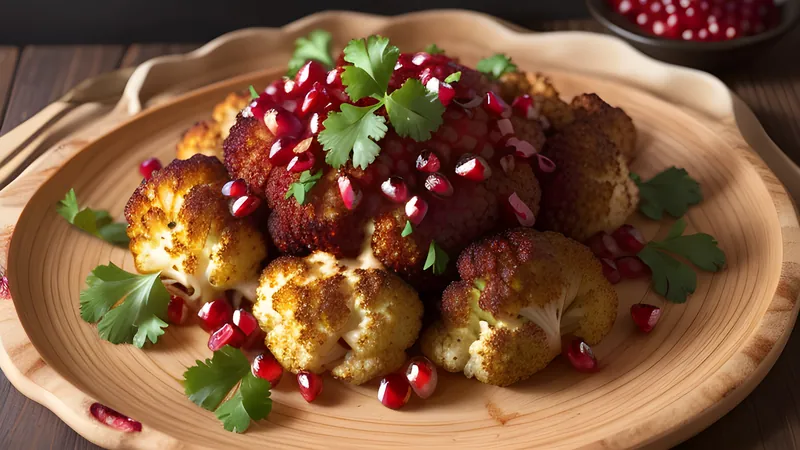
Harissa Roasted Cauliflower with Tahini and Pomegranate
Ingredients
- 1 large cauliflower (about 800g), broken into florets
- 3 tbsp olive oil
- 2 tbsp rose harissa (or plain harissa)
- 1 tsp ground cumin
- ½ tsp salt
- 3 tbsp tahini
- Juice of ½ lemon, plus more to taste
- 1 small garlic clove, grated
- 3–5 tbsp cold water
- Seeds of ½ pomegranate
- Small handful flat-leaf parsley, roughly chopped
- 1 tbsp toasted pine nuts or flaked almonds (optional)
- Pinch of sea salt flakes, to finish
Method
- Heat the oven to 220°C (200°C fan, gas 7).
- Whisk the olive oil, harissa, cumin and salt in a large bowl, then toss the cauliflower florets until evenly coated.
- Spread the florets in a single layer on a large tray and roast for 25 to 30 minutes, turning once, until deeply browned and tender.
- Whisk the tahini, lemon juice and grated garlic with a pinch of salt until thick and seized.
- Add cold water a tablespoon at a time, whisking, until the sauce loosens into a pourable pale cream; taste and balance.
- Pile the hot cauliflower onto a wide platter and spoon the tahini sauce generously over the top.
- Scatter over the pomegranate seeds, parsley, pine nuts and a pinch of flaky sea salt, and serve warm.
1 In praise of the brassica that finally got its due
For most of my childhood, cauliflower meant one thing: boiled into submission and drowned in a cheese sauce as an apology. It took me an embarrassingly long time to discover that this is a vegetable built for high, dry, ferocious heat. Roast it hard and the florets caramelise, the edges char, and that sulphurous boiled-cabbage smell turns into something nutty and sweet. Cauliflower stopped being a punishment and became, genuinely, one of my favourite things to cook.
This dish is what I make when I want a side that outshines whatever it’s sitting next to. The clever twist is building three contrasting layers onto that charred cauliflower: smoky-hot harissa baked right onto the florets, a cool nutty tahini sauce poured over, and sharp little jewels of pomegranate scattered on top. Heat, creaminess, crunch and a burst of sweet-sour all in one forkful. It looks like you tried very hard. You did not.
2 A quick word on harissa
Harissa is a North African chilli paste — Tunisian at heart, though now beloved across the whole region and well beyond. At its core it’s red chillies pounded with garlic, salt, and warm spices like cumin, coriander and caraway, slackened with oil. Rose harissa, which I reach for here, has dried rose petals blended in, which sounds like a gimmick and absolutely is not — it gives a gentle floral roundness that takes the edge off the heat and makes the whole thing taste a little more grown-up.
Tahini, meanwhile, is ground sesame paste, the backbone of so much Levantine cooking, and it does something magical when you whisk it with lemon and water: it seizes, panics, goes thick and grainy, and then — keep whisking, keep adding water — suddenly loosens into a silky, pale sauce. The first time it happens you’ll think you’ve ruined it. You haven’t. Trust the process.
3 Roasting the cauliflower
Crank your oven to 220°C (200°C fan, gas 7). A really hot oven is non-negotiable here; a timid one steams the cauliflower instead of charring it.
Break the cauliflower into florets of a roughly even size so they cook at the same rate, and don’t make them too small or they’ll burn before the insides soften. In a big bowl, whisk together the olive oil, harissa, cumin and salt, then tip in the florets and toss until every piece is slicked red. Use your hands; get into it.
Spread them out on a large tray in a single layer with space between them — crowd the tray and they’ll sweat rather than roast. Slide them in and leave for 25 to 30 minutes, turning once halfway, until they’re deeply browned at the edges and tender when you prod the stems with a knife. Those near-black tips are flavour, not failure.
4 Whisking the tahini sauce
While the cauliflower roasts, make the sauce. Put the tahini, lemon juice and grated garlic in a bowl with a pinch of salt and whisk. It will thicken and seize alarmingly — this is correct. Now add cold water a tablespoon at a time, whisking hard after each, until it loosens into a pourable, pale cream the texture of double cream. Taste and balance: more lemon for sharpness, more salt for depth, a touch more water if it’s stiff. It should be tangy and savoury and just pourable.
5 Bringing it together
This is a dish that lives and dies on assembly, so do it with a little care. Pile the hot cauliflower onto a wide platter — it always looks better spread out than heaped in a bowl. Spoon the tahini sauce generously over the top, letting it pool in the gaps. Scatter the pomegranate seeds across the lot; they should look like little rubies caught against the cream and the char. Finish with the chopped parsley, the pine nuts if you’re using them, and a pinch of flaky sea salt.
Serve it warm rather than scalding, which is when all three layers read clearly on the palate.
6 How I actually eat it
As written, it’s a side dish, and it’s brilliant alongside roast chicken, grilled lamb, or a big bowl of herby rice. But I’ll be honest: more often than not I bulk it up and call it dinner. Tip a tin of warmed chickpeas under the cauliflower, add some torn flatbread, and it’s a full plate.
Variations are easy. Swap pomegranate for raisins plumped in warm water if it’s not the season. Use almonds, hazelnuts or dukkah instead of pine nuts. Add a crumble of feta for salt and tang. And if you like real fire, a little extra harissa stirred into the tahini turns the whole thing properly spicy. It’s the rare side dish people actually fight over — keep this one in your back pocket.
Related Content