Harira: Morocco's Ramadan Soup, Any Night
A lentil-and-chickpea soup thickened with tadouira, the flour paste that gives it body
Contents
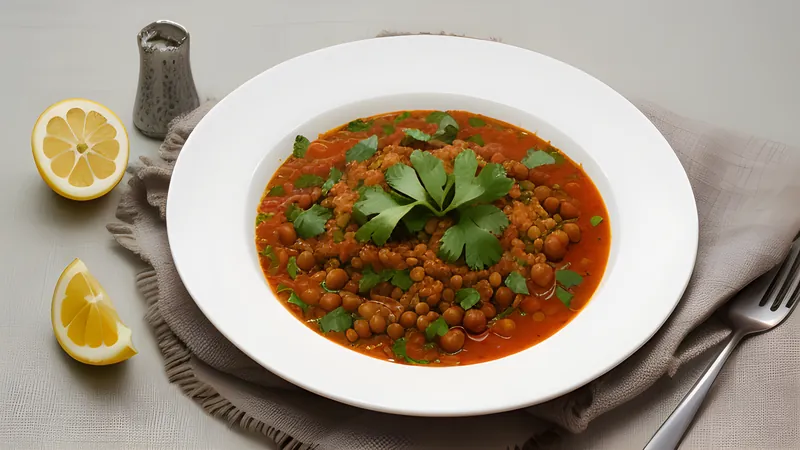
↓ Jump to recipeHarira is the soup that breaks the fast across Morocco during Ramadan, ladled out at sunset alongside dates and a boiled egg, and it’s built to do a specific job: after a day without food or water, you need something that rehydrates, gives quick energy from the pasta and lentils, and doesn’t sit too heavy. Outside Ramadan, it’s just as often eaten as an everyday soup, particularly in the colder months, and there’s no reason to wait for a religious calendar to make it.
What separates harira from a generic tomato-lentil soup is tadouira, a simple flour-and-water paste stirred in near the end of cooking that thickens the broth into something with real body, closer to a stew you eat with a spoon than a soup you sip from a cup. It’s a similar idea to the roux in Georgian chikhirtma, but simpler in method - no butter, no browning, just flour whisked smooth into cold water and stirred through at the last stage.
Harira: Morocco's Ramadan Soup, Any Night
Ingredients
- 2 tbsp olive oil
- 1 large onion, finely chopped
- 3 celery sticks, finely chopped
- 400 g lamb shoulder or neck, cut into 2 cm cubes (optional, see notes)
- 2 tsp ground ginger
- 1 tsp ground turmeric
- 1 tsp ground cinnamon
- 1/2 tsp ground black pepper
- 2 tbsp tomato puree
- 800 g tinned chopped tomatoes
- 1.5 litres water or lamb stock
- 200 g brown or green lentils, rinsed
- 1 x 400 g tin chickpeas, drained and rinsed
- 100 g vermicelli noodles, broken into short lengths
- 3 tbsp plain flour
- 150 ml cold water, for the tadouira
- Juice of 1 lemon
- 4 tbsp chopped fresh coriander
- 4 tbsp chopped fresh parsley
- Sea salt, to taste
Method
- Heat the olive oil in a large, heavy pot over medium heat. Add the onion and celery and cook for 8 minutes until softened.
- If using lamb, add it now and brown on all sides for 5-6 minutes. Stir in the ginger, turmeric, cinnamon and pepper and cook for 1 minute until fragrant.
- Add the tomato puree and cook for 2 minutes, stirring, to deepen its colour. Add the chopped tomatoes and cook for 5 minutes, breaking them up with a spoon.
- Pour in the water or stock and the lentils. Bring to the boil, then reduce to a simmer, cover partially, and cook for 40 minutes if using lamb (25 minutes if not), until the lentils are tender and the lamb is nearly falling apart.
- Stir in the chickpeas and vermicelli and simmer uncovered for 10 minutes until the pasta is cooked.
- Meanwhile, make the tadouira: whisk the flour into the 150 ml cold water in a small bowl until completely smooth, with no lumps.
- Whisking the soup constantly, pour in the tadouira in a thin stream. Simmer for 5 minutes, stirring often, until the soup visibly thickens - it should coat the back of a spoon.
- Stir in the lemon juice, coriander and parsley. Season with salt to taste and serve hot, with extra lemon wedges on the side.
The soup that ends the day’s fast
Harira’s association with Ramadan runs deep enough that in many Moroccan households the soup is barely made at any other time of year - it’s cooked daily throughout the month, usually by whoever gets home from work first, so it’s ready the moment the call to prayer signals sunset. The sequence at iftar is fairly fixed across the country: a few dates eaten first to raise blood sugar gently, then the harira, often alongside a hard-boiled egg and chebakia, the sesame-and-honey pastries sold in towers outside bakeries throughout the month.
The soup’s specific combination of lentils, chickpeas and a small amount of pasta isn’t accidental - it’s a considered piece of nutrition built up over generations of breaking a dawn-to-dusk fast, giving a mix of slow-release carbohydrate from the pulses and quick energy from the vermicelli, without the heaviness of a large meat-forward stew eaten on an empty stomach. Recipes vary from city to city and household to household - Fez versions lean more heavily on lamb, Marrakech kitchens sometimes add a spoonful of smen, a fermented, aged butter with a strong, tangy character - but the tomato-lentil-chickpea base and the tadouira thickening are close to universal.
Tadouira, and why it goes in last
Adding a flour-and-water slurry to a soup near the end of cooking, rather than building a roux at the start the way you would for a French-style soup, is a technique that shows up across North African cooking specifically because it’s forgiving and fast. There’s no risk of burning flour in hot fat, and no need to plan the thickening step before you know exactly how much liquid you’ll have left after nearly an hour of simmering.
The critical detail is mixing the flour into cold water completely smooth before it goes anywhere near the hot pot. Flour added directly to a simmering soup, or mixed with warm liquid, clumps into small dense lumps that never fully dissolve, no matter how long you simmer afterwards. Whisk the flour into cold water in a separate bowl first, checking there are no dry pockets left, and only then pour it into the soup - in a thin stream, whisking the pot constantly as you go.
Give the tadouira five minutes of gentle simmering once it’s in, stirring often. You’ll feel the soup’s texture change under the spoon - from a loose, brothy consistency into something with real cling, thick enough that a spoon dragged across the bottom of the pot leaves a brief trail. That’s the texture you want; a harira that’s still thin after the tadouira has had time to cook is under-thickened, and can take another small batch of the flour-water mixture if needed.
The lamb question
Traditional harira nearly always includes some meat - lamb most commonly, sometimes beef - browned at the start and simmered until it’s soft enough to fall apart under a spoon. It adds real depth to the broth as it cooks, in the same way a good stock does, but the soup works perfectly well without it too, particularly during Ramadan itself when many households make a vegetarian version to keep costs down across a month of daily cooking.
If you skip the lamb, use vegetable stock in place of water for a fuller-flavoured base, and consider adding a tablespoon of harissa or a pinch of extra ground ginger to make up some of the depth the meat would otherwise provide. The cooking time also drops considerably without meat to tenderise - 25 minutes at a simmer gets the lentils properly soft, rather than the 40 minutes needed to also break down lamb shoulder.
Layering the spices properly
Ginger, turmeric, cinnamon and black pepper form the backbone of harira’s spicing, and the order they go in matters. Blooming them in the fat, alongside the browned meat and before the tomatoes go in, wakes up their aromatic oils in a way that simply simmering them in liquid from the start doesn’t achieve - a minute in hot oil is enough, stirred constantly so nothing scorches, before the tomato puree goes in to stop further browning.
The tomato puree itself gets its own brief cooking step too - two minutes stirred into the pot before the tinned tomatoes go in, which deepens its colour and cooks out the slightly tinny, raw edge that tomato puree has straight from the tube. It’s a small step that’s easy to skip and noticeably improves the final flavour if you don’t.
Lentils, chickpeas and getting the timing right
Brown or green lentils hold their shape reasonably well through a long simmer, unlike red lentils, which break down into a near-puree and change the texture of the soup considerably - not wrong, exactly, but a different dish to the one this recipe is aiming for, where you want distinct lentils and chickpeas suspended in a thick, tomato-red broth rather than a smooth pulse soup.
Adding the tinned chickpeas later than the lentils, alongside the vermicelli, keeps them from turning mushy over the full simmering time - they only need ten minutes to warm through and pick up the broth’s flavour, since they’re already fully cooked from the tin. The vermicelli should go in at the same point for the same reason: pasta added too early will overcook and turn the broth starchy and cloudy rather than clean.
Finishing and serving
The lemon juice and fresh herbs go in right at the end, off any significant heat, so their brightness survives rather than cooking away. Coriander and parsley together is traditional and gives a fuller herbal note than either alone; if you only have one, use double the quantity rather than leaving the other out entirely.
Serve harira the traditional way, with dates on the side and a hard-boiled or soft-boiled egg to go with it, along with a plate of chebakia or other Ramadan sweets if you want to go all the way. Outside Ramadan, warm flatbread and a wedge of lemon on the side are all it really needs.
Getting the heat and consistency right for your table
Harira as served in most Moroccan homes isn’t fiery - the ginger and pepper give warmth rather than genuine heat, leaving room for anyone at the table to add their own harissa at the end if they want more of a kick. Keep a small dish of harissa alongside the lemon wedges when serving, rather than building extra chilli into the pot itself, so the soup stays approachable for everyone sharing the meal.
Consistency is worth double-checking before you serve, since the tadouira continues to thicken the soup for a few minutes after you take it off the heat as the starch fully hydrates. If it seems slightly thin straight after the five-minute simmer, give it another minute or two rather than immediately mixing a fresh batch of flour and water - it’s easy to over-thicken by adding a second round of tadouira before the first has finished doing its job.
Storage and make-ahead
Harira actually improves after a day in the fridge, as the lentils and chickpeas continue to soak up the spiced broth - it’s one of those soups worth making a day ahead on purpose. It keeps for four days refrigerated. The pasta will continue to soften and the soup will thicken further on standing, so when reheating, loosen it with a splash of water or stock and bring it back to a gentle simmer, stirring often since the thickened base can catch on the bottom of the pot. It also freezes well for up to three months, though it’s best to add the vermicelli fresh on reheating rather than freezing it in the soup, since defrosted pasta turns soft and a little slimy.
For another soup that leans on a legume base for its everyday, feed-a-crowd character, see Sopa de Lima: Yucatan’s Lime-and-Tortilla Soup, which uses citrus in a similarly essential, not-just-a-garnish role. And for another dish that uses a flour-and-liquid slurry to thicken a broth without a roux, compare with Georgian Chikhirtma: Lemon-and-Egg Chicken Soup, which takes the browned-butter route to a similar result.
Related Content