Halloumi, Watermelon and Za'atar
Salty griddled cheese, cold sweet melon and a herb-and-sumac hit
Contents
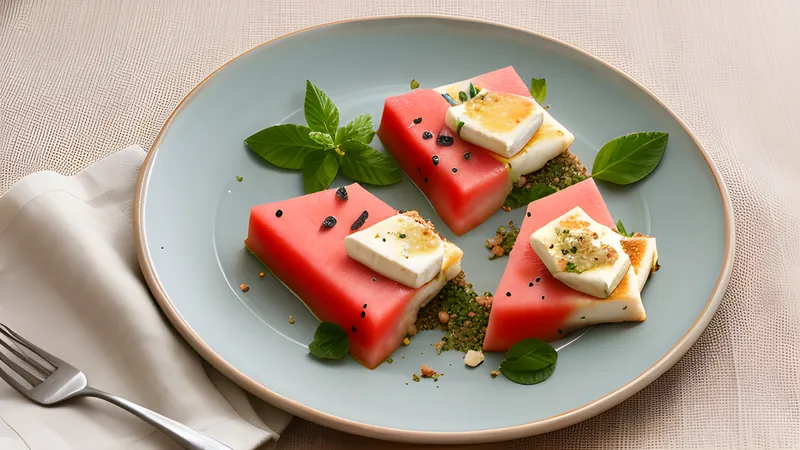
↓ Jump to recipeThis is the plate I reach for when it is too warm to think and someone still needs feeding. Salty, squeaky halloumi comes off the griddle hot and golden; cold watermelon goes on straight from the fridge; and a za’atar dressing ties the two together with the herby, tangy, faintly resinous flavour of that great Levantine spice blend. The clever part is temperature. You serve the cheese hot and the fruit cold on purpose, so each mouthful arrives as a small collision of warm and chilled, salty and sweet, that keeps the whole thing lively right to the last piece.
Halloumi, Watermelon and Za'atar
Ingredients
- 1kg wedge of ripe watermelon, chilled
- 250g block of halloumi
- 1 tbsp olive oil, for griddling
- 3 tbsp extra-virgin olive oil, for the dressing
- 1 tbsp lime juice (about 1 lime)
- 1 tbsp za'atar
- 1/2 tsp runny honey
- 1/4 tsp Aleppo pepper or a pinch of chilli flakes
- A large handful of mint leaves
- A small handful of flat-leaf parsley, roughly chopped
- Flaky salt, to finish
Method
- Cut the chilled watermelon away from its rind and into rough 3cm chunks, picking out any obvious seeds. Keep it in the fridge until the last moment.
- Whisk the extra-virgin olive oil, lime juice, za'atar, honey and Aleppo pepper into a loose dressing and set aside.
- Slice the halloumi into 1cm slabs and pat each one thoroughly dry with kitchen paper.
- Heat a griddle or non-stick pan over medium-high heat with the tablespoon of olive oil. Griddle the halloumi for 2 to 3 minutes a side, until deep golden with clear grill marks.
- Arrange the cold watermelon chunks on a platter and tuck the hot halloumi slices among them.
- Spoon over the za'atar dressing, scatter with mint and parsley, and finish with a little flaky salt.
The story
Halloumi is a cheese built for exactly this treatment. It comes from Cyprus, where it has been made for centuries from a mix of sheep’s and goat’s milk (and, these days, often some cow’s), and its defining trick is that it does not melt when it meets heat. The curd is heated and worked, then poached in whey before being salted and folded, often with mint, and that cooking of the curd sets the proteins so firmly that the finished cheese holds its shape on a grill or in a hot pan where any other cheese would collapse into a puddle. This is why halloumi turns up griddled, fried and skewered across Cyprus, the wider eastern Mediterranean and the Levant, browning on the outside while staying firm and squeaky within. In 2021 Cypriot halloumi was granted Protected Designation of Origin status by the European Union, which fixed both its name and, more contentiously, the ratio of milks that a cheese must contain to be sold as the real thing.
Za’atar is the other half of the plate’s identity, and it is worth understanding what you are actually spooning on. The word refers both to a wild herb of the oregano and thyme family that grows across the hills of the Levant, and to the spice blend built around it: dried za’atar herb (or a stand-in of thyme and oregano) mixed with toasted sesame seeds, ground sumac for sourness, and salt. Every family and region has its own proportions, and a good blend should smell green and tart at once. Sumac, the dark red berry that gives the mix its lemony edge, is what makes za’atar sing against rich or sweet things, which is precisely why it earns its keep here against the fatty cheese and the sugary melon.
Why the temperature contrast matters
The reason this plate works is a genuine bit of eating pleasure, not just presentation. Warm food reads as more intensely flavoured than cold, because heat lifts aromatic compounds into the air where your nose can catch them, and it also softens fat so the halloumi’s savoury richness spreads across the palate. Cold food, by contrast, refreshes and resets. Alternating the two in a single bowl keeps the palate from settling into one register, so the dish stays interesting to eat for far longer than a plate served all at one temperature. It is the same reason a scoop of cold ice cream on a hot pudding beats either alone. For this to land, though, the watermelon has to be properly cold, so keep it in the fridge until the halloumi is already sizzling, and griddle the cheese last so it hits the plate hot.
Getting the halloumi right
Two things make griddled halloumi great, and both are easy to get wrong. The first is drying the slices. Halloumi is stored in brine and comes out wet, and surface water has to evaporate before the cheese can brown; a wet slab steams pale and stays rubbery, while a well-blotted one takes on deep golden grill marks in a couple of minutes. Pat each piece firmly with kitchen paper before it goes near the pan. The second is not overcooking it. Halloumi is at its best just past golden, when the outside has crisped and the inside is hot and yielding; leave it too long over the heat and the moisture cooks out entirely, turning the cheese hard, dense and unpleasantly squeaky-to-the-point-of-tough. Two to three minutes a side over a good medium-high heat is plenty. Griddle in a single layer and do not crowd the pan, or the slices sweat rather than sear.
One more note: taste before you add salt at the end. Halloumi is a salty cheese to begin with, and za’atar contains salt too, so the flaky salt at the finish is there to season the sweet melon and lift the herbs rather than the cheese. A restrained pinch, tasted as you go, is all it wants.
What can go wrong
The commonest disappointment is a mealy, pale watermelon, which no dressing can rescue. Choose a melon that feels heavy for its size with a large, deep-yellow patch on one side where it sat ripening on the ground; a white or pale-green ground patch means it was picked early. Give it a knock, too: a ripe melon sounds hollow and deep rather than dull. Once cut, keep it cold and dry, since watermelon at room temperature turns flabby and gives up its water onto the plate.
The other failure is a soggy salad from dressing added too soon or from watermelon that has been sitting out weeping. Assemble at the very last moment, dress just before serving, and bring it to the table straight away. If you need to get ahead, chunk the melon and keep it chilled, make the dressing, dry and slice the halloumi, and do the griddling and assembly only when everyone is ready to eat.
Variations and make-ahead
The framework flexes happily. Feta, crumbled rather than griddled, gives a softer, brinier version if you would rather not stand over a pan. Cucumber alongside the melon adds cool crunch; a handful of black olives brings a salty depth that suits the sweet fruit. Pomegranate seeds scattered over the top give little bursts of tartness and look beautiful. A drizzle of pomegranate molasses in place of the honey deepens the whole thing towards something more autumnal. And if you want to turn it into a proper meal, pile it onto warm flatbread with a smear of thick yoghurt underneath.
If you love the sweet-and-salty melon idea, my watermelon, feta and mint with black olive is the cooler, no-griddle cousin of this plate. And for more on za’atar itself and what it does to bread and oil, my man’oushe with za’atar and olive oil is the classic Levantine breakfast built around exactly this blend.
Related Content