Halloumi and Vegetable Traybake with Harissa
One tin, roasting-hot, squeaky cheese and honeyed harissa
Contents
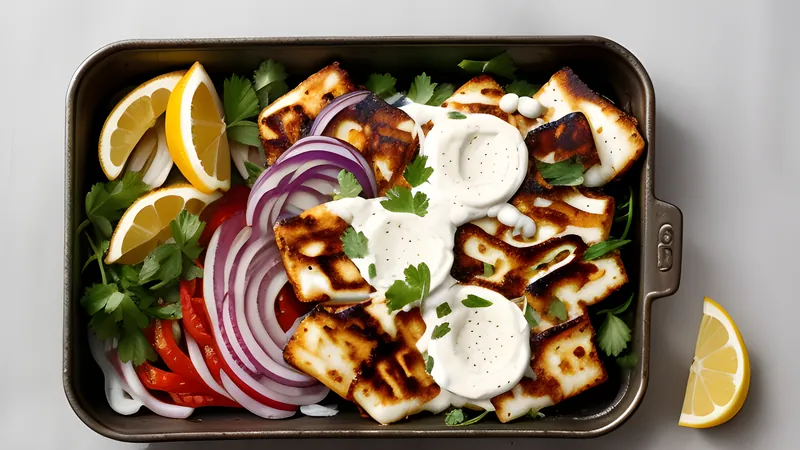
↓ Jump to recipeThere is a whole category of cooking I think of as tired-Tuesday food: one tin, one oven, minimal thinking, maximum reward. This halloumi traybake is the queen of that category. You chop a few vegetables, tip a tin of chickpeas on top, roast the lot hard until everything is blistered and sweet, and finish with squeaky, golden halloumi under a sticky harissa glaze. Fifteen minutes of work and the oven does the rest.
My small clever twist is the glaze. Harissa on roasted vegetables is hardly novel, but whisking a little extra harissa with honey and brushing it over the halloumi in the last stretch is what turns a decent traybake into one people ask about. The honey caramelises against the salty cheese and the chilli, so each slab comes out lacquered, sweet, hot and savoury all at once. It is a two-ingredient trick that punches far above its effort.
Halloumi and Vegetable Traybake with Harissa
Ingredients
- 2 x 225g blocks halloumi, cut into 2cm slabs
- 2 red peppers, cut into thick strips
- 2 courgettes, cut into 2cm half-moons
- 1 red onion, cut into wedges
- 1 x 400g tin chickpeas, drained
- 250g cherry tomatoes on the vine
- 3 tbsp olive oil
- 2 tbsp rose harissa, plus 1 tbsp for the glaze
- 1 tbsp runny honey
- 1 tsp ground cumin
- 1 tsp dried oregano
- 1/2 tsp salt
- 1 lemon, half juiced and half in wedges
- Handful fresh mint and parsley, torn
- 2 tbsp thick Greek yoghurt, to serve
Method
- Heat the oven to 220°C fan. In your largest roasting tin, toss the peppers, courgettes, red onion and chickpeas with 2 tbsp olive oil, 2 tbsp harissa, the cumin, oregano and salt.
- Roast for 20 minutes, tossing once halfway, until the vegetables are beginning to char at the edges.
- Pat the halloumi slabs dry. Whisk the remaining 1 tbsp harissa with the honey and 1 tbsp olive oil to make a glaze.
- Nestle the halloumi and the vine tomatoes among the vegetables. Brush the halloumi with the honey-harissa glaze.
- Return to the oven for 12–15 minutes until the halloumi is burnished and the tomatoes have burst.
- Squeeze over the lemon juice and scatter with torn mint and parsley.
- Serve straight from the tin with lemon wedges and a spoon of Greek yoghurt on the side.
Why a traybake, and why harissa
The traybake is a modern British kitchen institution for good reason: it makes the oven do the multitasking a cook otherwise does at the hob, and it concentrates flavour through dry, high heat. Roasting at 220°C drives off moisture and lets the natural sugars in peppers, onions and tomatoes caramelise, which is why traybaked vegetables taste sweeter and deeper than the same vegetables steamed or boiled.
Harissa is the North African chilli paste that has quietly become a staple on British shelves, and rose harissa in particular, softened with rose petals and a little warmth, is gentler and more fragrant than a straight chilli sauce. It brings smoky depth, gentle heat and a red glow to everything it touches. Paired with halloumi, the brined Cypriot cheese that holds its shape under heat and squeaks against the teeth, you get a proper vegetarian centrepiece that never feels like an afterthought.
If you like this easy, veg-forward, Mediterranean register, you will feel at home with stuffed peppers with rice, feta and herbs, which shares the sweet-roasted-pepper-and-salty-cheese logic, and with corn and courgette fritters with lime yoghurt when you want to use the same summer vegetables a different way.
The order of the tin
The single most common mistake with a traybake is putting everything in at once. Halloumi and cherry tomatoes cook far faster than peppers and onions, so if they all go in together the cheese turns rubbery and the tomatoes collapse to nothing while the vegetables are still raw. Stagger it.
The peppers, courgettes, onion and chickpeas go in first and get a 20-minute head start, long enough to soften and char at the edges. Give them a good toss halfway so they colour evenly rather than steaming in one damp corner. Then, and only then, nestle in the halloumi and the vine tomatoes for the final 12 to 15 minutes. The cheese needs just enough time to gild and warm through, and the tomatoes want to blister and burst but keep their shape on the vine.
Spread everything in a single layer. A crowded tin steams; a roomy tin roasts. If your largest tin still looks packed, use two, because that char at the edges is the whole point.
Handling the halloumi
Pat the halloumi properly dry before it goes in. It comes packed in brine and any surface water will steam rather than brown, giving you pale, squeaky cheese instead of the burnished slabs you want. Cut it into generous 2cm slabs; thinner slices dry out and toughen, while a chunky piece stays molten in the middle.
Brush the honey-harissa glaze on just before the halloumi goes into the oven, and if you like it really lacquered, give it a second coat with five minutes to go. The sugars in the honey want heat to caramelise but will scorch if left too long, so the back end of the cook is the right window. You are aiming for burnished and sticky, with a few darker spots where the glaze has caught.
Halloumi firms up as it cools and can go squeaky-hard within minutes, so this is a dish to serve straight from the tin while the cheese is still soft and giving. It does not sit around gracefully.
Making it a meal
As it stands, with the chickpeas folded in, this is a complete supper for four. But it stretches easily. Pile it over a bowl of warm couscous, giant couscous or bulgur wheat, letting the grains soak up the harissa-stained oil at the bottom of the tin, which is the best part and should never be left behind. Warm flatbreads torn and dragged through the juices do a similar job. For a bigger table, add a simple green salad sharpened with lemon.
The cool spoon of Greek yoghurt on the side is not optional in my house. Against all that heat and salt and sweetness, a plain, cold, tart dairy note pulls the whole plate together and lets you go back for more.
Tips, swaps and storage
- Vegetables are flexible. Aubergine, sweet potato (cut small so it cooks in time), fennel wedges, or broccoli florets all work. Just match the cut size to the cooking time, denser vegetables smaller and earlier.
- Heat level. Rose harissa is mild to medium. For more fire, use plain harissa or add a pinch of chilli flakes. For less, cut the harissa with a spoon of tomato purée.
- No halloumi? Firm feta baked in slabs, or paneer, both roast well, though neither browns quite like halloumi. Paneer will want a little extra oil.
- Make-ahead. Chop all the vegetables and mix the glaze a day ahead and keep them covered in the fridge; the actual assembly then takes five minutes. Leftovers keep two days and are excellent cold in a lunchbox with extra lemon, or stirred through a grain salad.
- Vegan version. Swap halloumi for firm marinated tofu and the honey for maple syrup or agave, and use a plant yoghurt to serve.
This is the kind of recipe that earns a permanent place in the rotation because it asks so little and delivers so much colour and flavour. One tin, a hot oven, and that sticky honey-harissa halloumi that disappears before it hits the table.
A second dinner from the leftovers
I rarely make this without a plan for what is left, because the roasted vegetables and chickpeas are almost more useful the next day than they are fresh. Chopped small and folded through beaten eggs, they make a fast, harissa-warmed frittata for lunch, the burst tomatoes and charred pepper doing all the seasoning work for you. Blitzed with a little stock and a spoon of yoghurt, the same vegetables become a smoky roasted soup that tastes as though it took real effort. Or pile the cold leftovers into a wrap with hummus and the reheated halloumi, which crisps up again nicely in a dry frying pan.
The lesson I keep relearning is that hard-roasted vegetables carry their flavour forward. A boiled courgette is a sad thing by day two; a charred, harissa-slicked one is a building block. So make the big tin, eat well tonight, and treat the remainder as a head start on tomorrow.
A note on the char
If your traybakes come out pale and a little soggy, the culprit is almost always the oven itself. Home ovens run cooler than their dials suggest, and a door opened too often loses heat fast. Get an oven thermometer if you suspect yours, preheat properly, and resist the urge to keep checking. That fierce, dry, top-of-the-oven heat is what turns the edges of the peppers and onions dark and sweet, and it is the difference between a traybake that tastes roasted and one that merely tastes cooked. When it is right, you will smell it: caramelising onion and toasting cumin, the harissa going smoky, and the honey just starting to catch on the cheese. That is the moment to pull it, squeeze over the lemon, and carry the whole gorgeous tin to the table.
Related Content