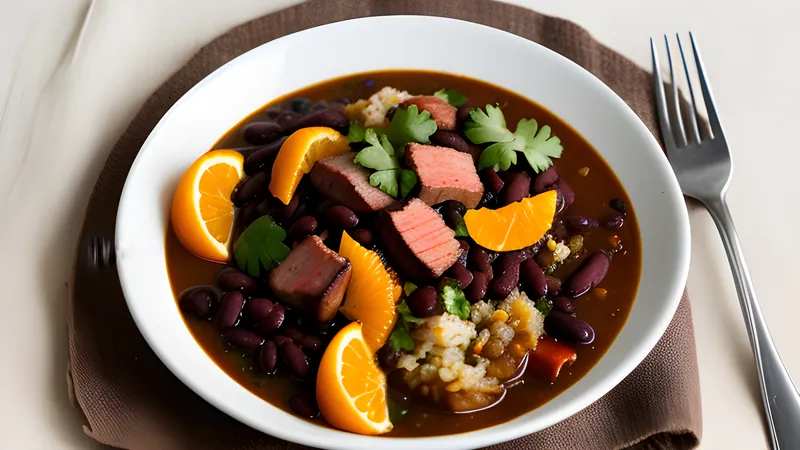
Haleem: Spiced Wheat-and-Meat Porridge
Wheat, lentils and slow-cooked meat pounded to velvet, with a nutty dry-roast twist
Contents
↓ Jump to recipeHaleem is a dish that tastes of celebration and takes the patience of a monk. It is a thick, savoury porridge of wheat, mixed lentils and slow-cooked meat, simmered and stirred and pounded until the individual ingredients dissolve into one another and lose their separate identities entirely, leaving a smooth, glossy, deeply spiced whole. You cannot tell where the meat ends and the grain begins, which is exactly the point. Across Pakistan, India, Bangladesh and the wider Muslim world it is a fixture of Ramadan, ladled out at sunset to break the fast because it is filling, restorative and slow to digest, carrying the eater gently through the evening.
Haleem: Spiced Wheat-and-Meat Porridge
Ingredients
- 800 g bone-in beef or lamb (shank or shoulder), plus 2 marrow bones
- 200 g cracked or whole wheat (dalia), soaked 4 hours
- 100 g chana dal (split chickpeas), soaked
- 50 g each red lentils, moong dal and pearl barley, soaked
- 3 large onions, thinly sliced
- 6 garlic cloves, grated
- 1 thumb (30 g) ginger, grated, plus julienne to serve
- 150 ml ghee, plus extra to finish
- 2 tbsp Kashmiri chilli powder
- 1 tsp ground turmeric
- 2 tsp ground cumin
- 2 tsp ground coriander
- 1 tbsp garam masala
- 2.5 litres water, plus more as needed
- 1.5 tsp salt, or to taste
- 2 green chillies, sliced, to serve
- 1 lemon, cut into wedges, to serve
- 1 small bunch coriander and mint, chopped, to serve
Method
- Dry-roast the soaked and drained wheat, barley and lentils in a wide pan over medium heat for 4 to 5 minutes until nutty and fragrant, then set aside.
- Heat the ghee in a large pot and fry the onions for 15 minutes until deep brown; remove two-thirds to garnish.
- Add the garlic and ginger, then the chilli, turmeric, cumin and coriander, and toast for 30 seconds.
- Add the meat and marrow bones, sear briefly, add 2.5 litres water and 1.5 tsp salt, cover and simmer 2 hours until the meat is falling apart.
- Lift out the meat, shred it finely and discard the bones (reserve the marrow).
- Add the roasted grains and lentils to the broth and simmer 1 hour, stirring often, until everything is soft and collapsing, topping up with water as needed.
- Blend or mash the mixture to a thick, velvety porridge, return the shredded meat and reserved marrow, and stir in the garam masala.
- Cook a further 20 minutes, stirring constantly so it does not catch, then finish with a ladle of hot ghee and serve with the garnishes.
An old and travelled dish
Haleem descends from harees or harisa, an ancient Arabian and Levantine dish of wheat and meat cooked to a paste, versions of which appear in some of the earliest surviving Arabic cookbooks over a thousand years ago. It travelled east with trade and empire, and in the kitchens of the Deccan, especially Hyderabad, it was enriched with more lentils, more spice and more ghee until it became the haleem we know. Hyderabadi haleem is now so prized that it has been granted a Geographical Indication tag, the same kind of protected status that guards Champagne or Parmesan.
Traditionally it was a communal labour. Huge cauldrons would be tended for hours in the courtyards of mosques and grand houses, the mixture beaten with a wooden paddle called a ghotni to break down the meat and grain into that signature silk. Some commercial haleem is still cooked overnight, stirred continuously by relays of cooks. A home version cannot match that scale, but with soaked grains, a good long simmer and a stick blender standing in for the paddle, you can get remarkably close.
The twist, and the trick to texture
My one small change is to dry-roast the soaked grains and lentils in a hot pan for a few minutes before they go into the pot. Toasting them until they smell nutty and faintly popcorn-like adds a warm, roasty depth to the finished haleem that plain boiled grains never develop. It is a tiny extra step with an outsized effect, and it costs you five minutes at the start.
The other key to texture is the mixed lentils. Haleem uses a handful of different pulses, never just one, each contributing something: chana dal for body and bite, red lentils and moong for creaminess, pearl barley and cracked wheat for that pleasant, slightly chewy backbone. Soak them all for a few hours first so they cook evenly and break down willingly. Skimp on the soaking and you will be stirring for a very long time indeed while stubborn grains refuse to soften.
A word on the grains and meat
Do not be daunted by the length of the grain list; the mix is forgiving, and the principle is simply variety, a range of pulses that break down at different rates and give the finished porridge both creaminess and a little chew. If you cannot find every one, chana dal, red lentils and cracked wheat alone will make a perfectly good haleem, and pot barley stands in nicely for the wheat if that is what your cupboard holds. For the meat, choose a cut with plenty of collagen, shank or shoulder on the bone, because it is that dissolved gelatine that gives haleem its luxurious, almost sticky body; a lean cut leaves the porridge tasting thin no matter how long you cook it. The marrow bones are worth chasing down for the same reason, their soft centres melting invisibly into the whole.
Cooking it down
The method has three acts. First, build a spiced broth: brown the onions hard in ghee, saving most of them to garnish, bloom the spices in the fragrant fat, then simmer the bone-in meat and marrow bones for a good two hours until the meat is surrendering from the bone. Lift the meat out, shred it finely with two forks, and set it aside.
Second, cook the grains into that same rich broth. Add your dry-roasted, soaked wheat, barley and lentils and let them simmer for an hour, stirring often and topping up with water whenever it threatens to stick, until everything has slumped into a thick, shaggy mass. Third, break it all down. A few minutes with a stick blender, or a vigorous session with a masher or whisk, turns the grain into a smooth porridge; then the shredded meat and the reserved marrow go back in, along with the garam masala, and the whole lot cooks gently for a final twenty minutes.
That last stretch needs constant attention, because a thick porridge full of starch and dissolved gelatine will catch and scorch the instant you turn your back. Keep the heat low, keep the spoon moving, scrape the bottom, and pour in a ladle of hot ghee at the very end, which is traditional and which gives the surface its glossy, festive sheen.
Where it can go wrong
Two problems come up again and again. The first is scorching, always from a heat too high or a spoon left idle once the mixture has thickened; a heavy-based pot, a low flame and diligent stirring are your defence. The second is a grainy, unresolved texture, where the wheat has not fully broken down. That means it needed either longer cooking or more soaking, so if your haleem is still gritty, add a splash of water and keep simmering and mashing until it turns velvety. It should fall from the spoon in a thick, smooth ribbon.
Seasoning is the final adjustment. Because haleem is so substantial, it needs a confident hand with salt and, above all, its garnishes, which are an essential part of the dish rather than mere decoration. Taste at the end, correct the salt, and remember that the lemon and chilli on top will wake the whole bowl up.
Serving, storing and variations
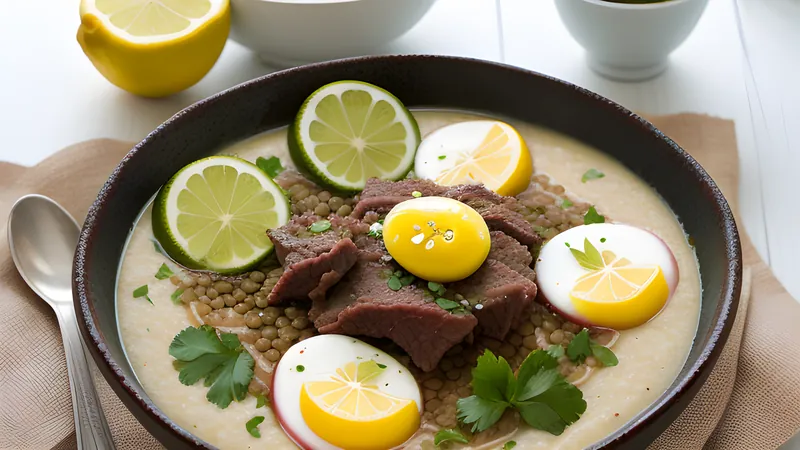
Haleem is served hot with a deliberate scatter of toppings: crisp fried onions, fine ginger julienne, chopped mint and coriander, sliced green chilli, and a firm squeeze of lemon that cuts cleanly through all that richness. A drizzle of extra ghee never hurts. It is filling enough to stand alone, though warm naan for scooping is welcome. As a great communal make-ahead feast it belongs in the same company as nihari and a properly layered chicken dum biryani.
It keeps for four days in the fridge, thickening considerably as it sits, so reheat it with a good splash of water and a fresh knob of ghee to bring it back to a spoonable consistency; it also freezes well for three months. The flavour, like most slow-cooked spiced dishes, deepens overnight.
For variations, chicken haleem is quicker and lighter and popular in many households, and a vegetarian version built on extra lentils, mushrooms and a little jackfruit for texture is genuinely satisfying if you want to skip the meat, in the same resourceful spirit as a good dal makhani. However you make it, haleem rewards the one thing modern cooking is always short of, which is time; give it that, and it gives everything back.
Related Content