Grilled Octopus with Smoked Paprika and Potato
Tender inside, charred at the tips, dressed while it steams
Contents
↓ Jump to recipeFor years I thought octopus was restaurant food, one of those things you order out because getting it right at home seemed like a dark art. Then I cooked one, and discovered the dark art amounts to a single instruction: cook it long and gently until it is completely tender, and only then think about the grill. Everything that makes octopus rubbery, tough and disappointing comes from rushing that first step. Everything that makes it magnificent comes from respecting it.
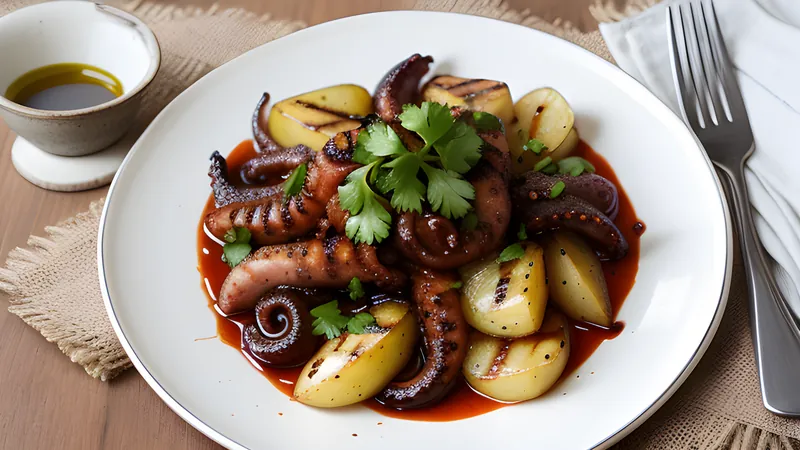
What you are after is a tentacle that yields like the softest braised meat on the inside, its skin caramelised and crisp where the fire has caught it, all of it slippery with an oil stained brick-red by smoked paprika. Set that over waxy potatoes so the dressing pools into them, and you have one of the great plates of the Iberian coast, made in a domestic kitchen with no special kit.
Grilled Octopus with Smoked Paprika and Potato
Ingredients
- 1 whole octopus, 1.2-1.5kg, cleaned (fresh or defrosted frozen)
- 1 onion, halved
- 2 bay leaves
- 1 tsp black peppercorns
- 500g waxy potatoes (Charlotte or new potatoes)
- 5 tbsp extra virgin olive oil, plus more for the grill
- 2 tsp smoked paprika (pimentón, sweet or a mix of sweet and hot)
- 1 garlic clove, crushed
- 1 tsp sherry vinegar
- Flaky sea salt
- Chopped flat-leaf parsley, to finish
Method
- If using fresh octopus, freeze it overnight then defrost; freezing tenderises the flesh. Rinse well.
- Bring a large pot of unsalted water to the boil with the onion, bay leaves and peppercorns. Dip the octopus in and out three times to set the tentacles, then lower it in fully.
- Simmer very gently, partly covered, for 45-60 minutes until a knife slides easily into the thickest part of a tentacle. Leave to cool in the liquid for 20 minutes.
- Meanwhile, simmer the potatoes whole in salted water until tender, 15-18 minutes. Drain and, when cool enough, slice into 1cm rounds.
- Lift out the octopus and cut the tentacles from the head. Pat the tentacles dry.
- Mix 4 tbsp olive oil with the smoked paprika, crushed garlic and sherry vinegar to make a dressing.
- Heat a griddle or barbecue until very hot. Brush the tentacles with oil and char for 2-3 minutes each side until crisp at the edges and lightly blistered.
- Arrange the potato rounds on a warm plate, top with the charred octopus, spoon over the paprika oil, and finish with flaky salt and parsley. Serve warm.
Pulpo, and the tavern tradition
This dish descends from pulpo a la gallega, the octopus of Galicia in Spain’s rain-soaked northwest. There it is a near-sacred thing, cooked by pulpeiras, women who specialised in nothing else, at fairs and festivals across the region. The classic version, pulpo á feira (“fair-style octopus”), is boiled in great copper cauldrons, snipped into coins with scissors, laid over sliced potato, doused in olive oil and dusted heavily with pimentón, then eaten off round wooden plates with a toothpick and a cup of young Ribeiro wine. No grill, no vinegar, just the purity of good octopus and good paprika.
My version leans a little south and takes the tentacles to a hot grill after their poach, borrowing the char you find in Portuguese and Andalusian kitchens. The fire adds a smoky, bittersweet edge and a contrast of textures the boiled version does not have. I hope Galicia forgives me; the potatoes and the pimentón, at least, are exactly where they should be.
Pimentón deserves a word of its own. Smoked Spanish paprika is made from peppers dried slowly over smouldering oak, which is where its deep, resinous smoke comes from. It arrived in Spain from the Americas in the sixteenth century, carried back by returning explorers and cultivated in the monastery gardens of Extremadura. It comes sweet (dulce), bittersweet (agridulce) and hot (picante); for this I use sweet, with a pinch of hot stirred in if I want warmth. Good pimentón is the difference between a nice plate and a memorable one, so buy a proper tin and keep it somewhere dark, because it fades and loses its smoke within a few months of opening. The best-known name is Pimentón de la Vera, from Extremadura, and it has protected status for good reason.
Choosing and preparing your octopus
Fresh octopus is a treat if your fishmonger has it, but frozen is genuinely better for this, and here is the surprising reason: freezing ruptures the muscle fibres and does much of the tenderising work for you. Galician cooks who catch their own octopus often freeze it first on purpose. So if you buy fresh, freeze it overnight and defrost before cooking. If you buy frozen, you are already ahead.
A whole octopus of around 1.2 to 1.5 kilos feeds four as a starter and looks alarming on the worktop, all tentacles and beak. Most are sold cleaned, with the beak and innards already removed; if not, ask the fishmonger to do it, or turn the head inside out, pull out the guts, and cut out the hard beak from the centre of the tentacles. Rinse it well under cold water.
The poach, where tenderness is won
Bring a big pot of water to the boil with an onion, bay and peppercorns. Notice there is no salt: salting the poaching water can toughen the flesh, and there is plenty of seasoning to come. Now for the one theatrical flourish that actually does something. Holding the octopus by the head, dip the tentacles into the boiling water for a few seconds, lift them out, and repeat three times. This “scares” the tentacles, setting them into a neat curl and helping the skin stay attached rather than sloughing off in the pot. Then lower the whole thing in.
Simmer it gently, never at a rolling boil, which would batter the flesh, for 45 to 60 minutes depending on size. The test is simple: slide a thin knife into the thickest part of a tentacle where it meets the head. When it goes in with almost no resistance, the octopus is done. Undercook it and it fights back; overcook it and it starts to fall apart and go mushy. Then, crucially, turn off the heat and let it cool in its own liquid for twenty minutes. This gentle finish keeps it succulent rather than drying it out.
Char, dress, serve
Simmer the potatoes separately until tender and slice them into thick rounds while the octopus rests. Cut the cooled tentacles away from the head and pat them thoroughly dry; a wet surface will not char, it will steam.
Get a griddle pan or barbecue as hot as it will go. Brush the tentacles with oil and lay them on the fire, leaving them undisturbed for a couple of minutes so the skin blisters and crisps, then turning for the same on the other side. You want blackened tips and a lacquered, slightly crunchy exterior against the soft interior beneath. This is a quick job; the octopus is already cooked through, so you are only chasing colour and smoke.
While it chars, stir together the dressing: olive oil, smoked paprika, a little crushed garlic and a teaspoon of sherry vinegar. The vinegar is my small departure from strict tradition, a bright acidic lift that stops the richness from cloying and wakes the whole plate up. Lay the potato rounds on a warm platter, pile the charred octopus on top, and spoon the warm paprika oil over everything while it is still steaming, so the potatoes drink it in. Finish with flaky salt and parsley, and serve warm rather than hot, the temperature at which the flavours are fullest.
Tips, storage and variations
- Get ahead. Poach the octopus up to a day in advance and keep it, in a little of its oil, in the fridge. Bring to room temperature and char just before serving; this actually makes the dish easier to host.
- No barbecue? A cast-iron griddle pan, smoking hot, does the job indoors. A very hot, dry frying pan works at a push.
- The poaching liquid. Do not tip it away. Strained, it is a superb, savoury base for a fish stew or a paella; freeze it in tubs.
- Scaling. Two smaller octopuses cook faster and more evenly than one giant; start checking at 35 minutes.
- Serving. A cold fino sherry or a chilled albariño is the drink, and good bread to mop the paprika oil is non-negotiable.
- A little heat. For a spicier plate, use half sweet and half hot pimentón in the dressing, or finish with a pinch of dried chilli flakes; the smoke and the burn suit the char beautifully.
Octopus sits in the same sun-and-smoke corner of the kitchen as bacalhau à Brás, the Portuguese salt cod, egg and potato, and if you love the quick crunch of fried seafood with a chilli kick you will want salt and pepper squid with chilli next. For another whole-creature showpiece dressed with a green, herby sauce, try grilled whole sea bass with salsa verde.
Cook one octopus properly and the mystique falls away for good. Long and slow, then hot and fast, dressed while it steams: that is the whole trick, and it turns a strange grey creature into the best thing on the table.
Related Content