Green Goddess Dressing with Herbs and Anchovy
the herbiest dressing there is, with a savoury backbone
Contents
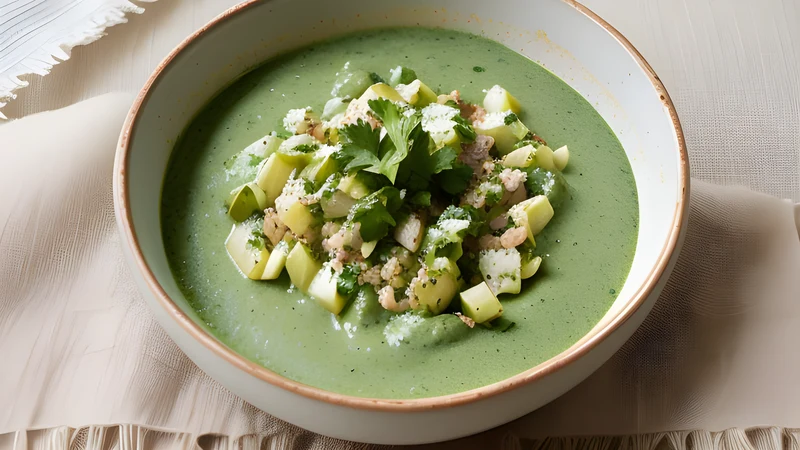
↓ Jump to recipeGreen goddess is a dressing with a founding myth attached, which is rare for something you keep in a jam jar in the fridge door. The usual story places it at the Palace Hotel in San Francisco in the early 1920s, whipped up by the chef in honour of the actor George Arliss, who was in town starring in a play called The Green Goddess. Whether that tale is exact or polished by a century of retelling, the dressing itself is real and it is very good: a thick, pourable, aggressively herby emulsion, pale jade in colour, with a quiet savoury hum underneath that most people cannot name. That hum is anchovy, and it is the whole point.
I make this when the herb drawer is threatening to turn. A bunch of parsley going soft at the edges, chives flopping, a few sprigs of tarragon left from something else — all of it goes in, and twenty minutes later I have a dressing good enough to build a lunch around. It coats little gem leaves like paint, it turns a plate of cold new potatoes into a proper salad, and it makes a dip that people hover over. If you already keep ranch in your repertoire, think of green goddess as its grown-up cousin: same creamy base, far more herbs, and a savoury depth that ranch only gestures at.
Green Goddess Dressing with Herbs and Anchovy
Ingredients
- 1 small bunch flat-leaf parsley, leaves and fine stalks (about 30g)
- 1 small bunch chives (about 20g)
- Leaves from 4–5 sprigs fresh tarragon (about 8g)
- 1 small bunch basil, leaves only (about 15g)
- 6 tinned anchovy fillets in oil, drained
- 1 fat garlic clove, peeled
- 150g good mayonnaise
- 100g soured cream (or Greek yoghurt)
- 2 tsp white miso paste
- Juice of 1 lemon (about 3 tbsp)
- 1 tbsp white wine vinegar
- 2 ice cubes
- Freshly ground black pepper
Method
- Strip the herbs from any tough stalks and roughly chop the chives so the blender can catch them.
- Put the anchovies, garlic, miso, lemon juice and vinegar in a blender and blitz to a rough paste.
- Add the mayonnaise, soured cream and all the herbs, then drop in the ice cubes.
- Blend on high for a full 30–40 seconds until the dressing is smooth and pale green, stopping to scrape down the sides once.
- Taste and adjust with more lemon, a grind of pepper, or a little water to loosen.
- Chill for at least 30 minutes before serving; the flavour settles and the herbs bloom.
What actually makes it green
The colour is doing a lot of work here, and it is easy to get wrong. A dull, khaki green goddess tastes fine but looks tired, and half of why we eat this dressing is that it looks alive. Two things keep it vivid. The first is not overloading it with too much acid too early, which can shock the chlorophyll in the leaves and mute the colour. The second is temperature. Blending generates heat through friction, and heat is what turns bright green herbs into that sad army-surplus shade. This is why I drop a couple of ice cubes into the blender: they keep the mixture cold while the blades do their work, so the herbs stay emerald all the way through. It is a small trick borrowed from restaurant kitchens that blanch and shock their herbs for green oils, done the lazy home way.
Use soft herbs and use a lot of them. Parsley is the backbone because it is mild and gives volume. Chives bring a gentle onion note. Basil rounds everything with sweetness. And tarragon is the one that makes people close their eyes and try to work out what it is — that faint aniseed perfume is the signature of the original recipe, and skipping it gives you a nice green dressing that is missing its soul. If you cannot find tarragon, a little chervil or dill will carry a similar lift, though the character shifts.
The clever twist: a spoonful of miso
The anchovy is traditional and does the heavy lifting on savour, dissolving completely into the base so nobody tastes fish, only a rounded depth that makes the whole thing taste seasoned rather than raw. My addition is two teaspoons of white miso alongside it. Miso is fermented soya bean paste, packed with glutamates, the same family of savoury compounds that make parmesan and ripe tomatoes so moreish. It reinforces the anchovy from a different direction, so the dressing tastes deeper and more complete without tasting salty or Japanese. Nobody has ever guessed it is in there. They just say this batch is better than the last, and I let them.
If you want a vegetarian version, drop the anchovy and lean harder on the miso, adding an extra teaspoon plus a few capers for that briny top note. It is genuinely close, and worth knowing for feeding a mixed table.
Getting the texture right
Green goddess should coat the back of a spoon and cling to a leaf without sliding off, so the ratio of thick base to liquid matters. I use mayonnaise for richness and body and soured cream for tang and a lighter feel; all-mayonnaise is heavy and all-yoghurt is thin and sour. If you only have Greek yoghurt, it works well in place of the soured cream and gives a fresher, sharper result that I actually prefer in high summer.
Blend for longer than feels necessary. A quick pulse leaves you with speckled dressing full of visible herb flecks, which tastes fine but reads as unfinished. A full thirty to forty seconds on high breaks the herbs down completely and pulls the colour out into the base, so the whole thing turns a uniform soft green. Stop once to scrape the sides, because chives in particular like to climb the walls of the blender and escape the blades.
If it comes out too thick to pour, loosen it a teaspoon of water at a time rather than more lemon, or you will tip it over into sour. If it is too thin, a spoonful more mayonnaise brings it back. Season at the end with black pepper and check the lemon; the salt is almost entirely coming from the anchovy and miso, so you rarely need to add any.
How I actually eat it
This is a dressing that wants to be a dip as much as a dressing. Thick, it is a bowl for crudités, radishes and chicory spears, or a smear under grilled chicken. Loosened with a little water, it dresses a chopped salad, cold poached salmon, or a plate of jersey royals still warm from the pan. I spoon it over halved soft-boiled eggs on toast and call it lunch. It is also very good as the sauce in a wrap or a chicken sandwich, where its herby punch does more than plain mayo ever could.
For a composed plate, it earns its keep against anything roasted or charred, where the cool herby cream plays off the caramelised edges. Try it alongside loaded potato skins instead of the usual soured cream, or as the fresh green counterpoint to something rich from the fryer. It also belongs in the same family as a good salsa verde — both are herb-forward, both use anchovy and both wake up a plate — so if you like one you will reach for the other.
Storage and make-ahead
Green goddess keeps in the fridge for three to four days in a sealed jar. The colour will dull a shade over time as the acid slowly works on the herbs, and the flavour deepens as the garlic mellows and spreads. Give it a stir before serving and taste for lemon, since the acidity softens as it sits. It does not freeze; the emulsion splits and the herbs go grey.
Make it a few hours ahead if you can. Straight out of the blender it tastes sharp and slightly disjointed, all bright acid and raw garlic. Thirty minutes in the cold pulls it together, and by the next day it is properly harmonious, the herbs and savour and cream reading as one thing rather than a list of ingredients.
Variations worth trying
Swap the herb mix to suit what you have. Coriander and mint push it towards something you would spoon over grilled lamb or fold into a rice bowl. A handful of watercress or rocket blended in adds a peppery bite. For an avocado green goddess, blitz in half a ripe avocado and slacken with extra water — it turns lush and almost mousse-like, wonderful on toast though it browns faster, so eat it the same day.
Whatever route you take, keep the anchovy and keep the tarragon. Those two are what separate a green goddess from a generic herb dip, and they are the reason a dressing invented for an actor a hundred years ago is still the best thing you can do with a tired bunch of parsley.
Related Content