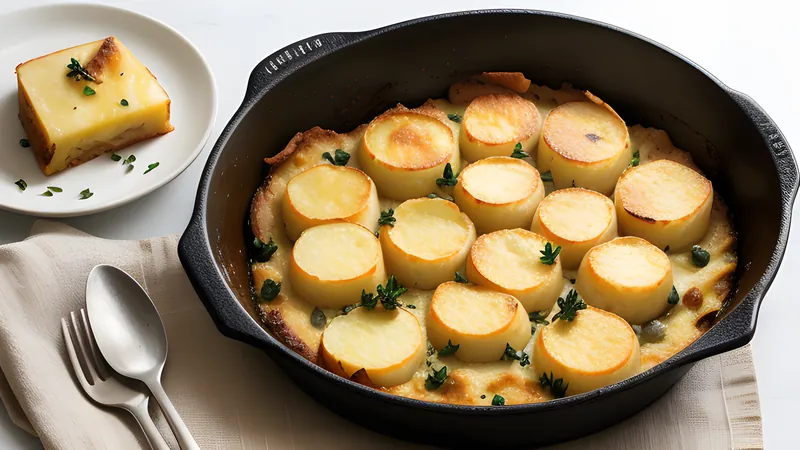
Gratin Dauphinois with Garlic and Thyme
Potatoes, cream and patience, and absolutely no cheese
Contents
↓ Jump to recipeThere is a version of gratin dauphinois in almost every British pub and half the recipe books on my shelf that involves raw sliced potatoes, a splash of cream and a thick blanket of grated cheese, baked until the top browns and the middle is still hard in the centre. That dish can be very good. It is not gratin dauphinois. The real thing from the Dauphiné, in the French Alps, has no cheese at all, and its silkiness comes from a single technique that almost everyone skips: you cook the potatoes in the cream on the hob before they ever see the oven.
Gratin Dauphinois with Garlic and Thyme
Ingredients
- 1.2kg floury or all-rounder potatoes (Maris Piper or King Edward)
- 500ml double cream
- 200ml whole milk
- 3 garlic cloves, 1 halved and 2 crushed
- 3 sprigs fresh thyme, leaves picked
- 1 bay leaf
- Whole nutmeg, for grating
- 40g cold butter, plus extra for the dish
- 1.5 tsp fine salt
- Black pepper, to taste
Method
- Preheat the oven to 150C fan (170C conventional). Rub a wide baking dish all over with the cut face of the halved garlic clove, then butter it generously.
- Peel the potatoes and slice them 3mm thick, ideally on a mandoline. Do not rinse the slices; the surface starch is what thickens the gratin.
- Put the cream, milk, crushed garlic, thyme leaves, bay leaf, salt and a good grating of nutmeg into a wide pan. Add the potato slices and bring gently to a simmer, stirring carefully, then cook for 8 to 10 minutes until the liquid has thickened and the slices are just bendable.
- Discard the bay leaf, then tip the potatoes and their cream into the prepared dish, arranging the top layer neatly and pressing everything level so the liquid just covers the potatoes. Grate a little more nutmeg over and dot with the cold butter.
- Bake for about 75 minutes until the top is deeply bronzed, the sides are bubbling, and a knife slides through with no resistance. Rest for 15 minutes before serving so the gratin sets enough to hold a clean edge.
What makes it dauphinois
The gratin dauphinois has a surprisingly firm identity for a dish that is essentially potatoes and dairy. The classic definition, the one French cooks will defend at length, is sliced potatoes cooked slowly in cream and milk, seasoned with garlic and nutmeg, and finished in the oven until the top browns. No cheese, no eggs, no stock. Its close cousin the gratin savoyard, from the neighbouring Savoie, does use cheese and stock, and the two are endlessly confused; the presence of a cheese layer is the clearest line between them. The dish is documented in the region as far back as the late eighteenth century, served, so the story goes, at a municipal dinner in Gap in 1788, and it has changed remarkably little since.
The garlic is treated with restraint, which is unusual for me, because subtlety is the point. You rub the dish with a cut clove and crush a little more into the cream, so the whole thing smells faintly of garlic without any of it dominating the potato. The nutmeg does the same quiet work, adding warmth you would miss if it were gone but could never quite name if you did not know it was there.
The one step that changes everything
Here is the technique that separates a proper gratin from a hard-centred disappointment: you simmer the sliced potatoes in the cream and milk on the hob for eight or ten minutes before you bake them. This does two things. It starts cooking the potatoes evenly in liquid, so they never end up raw in the middle while the top scorches, and it draws surface starch off the slices into the cream, thickening it into a loose sauce that clings rather than a thin liquid that boils and splits in the oven.
This is also why you must never rinse the potato slices, a habit drilled into most of us for roast potatoes and chips, where you want to wash starch away for crispness. Here the starch is the thickener and the glue. Rinse it off and your gratin will be watery and loose, the layers sliding apart on the plate. Slice, and go straight into the cream. It is the single most important instruction in the whole recipe, and the one most often left out.
My small twist: thyme and a bay-scented cream
Traditional dauphinois keeps to garlic and nutmeg, and it is perfect that way. My one addition is to infuse the cream with fresh thyme leaves and a bay leaf as it simmers, which lends a faint herbal, almost woodland note underneath the richness that I find keeps the dish from feeling heavy. It stays in the background as the faintest herbal hum; you should finish a forkful and not be quite sure why it tastes a little greener and more savoury than you expected. Pull the bay out before baking, since it turns bitter if it cooks on in the concentrated cream, and pick the thyme leaves off the stalks so nobody gets a woody twig.
Choosing and slicing the potatoes
Use a floury or all-rounder potato such as Maris Piper or King Edward. They have enough starch to thicken the cream and to soften into that yielding, almost custardy texture the gratin is prized for. A waxy potato stays firm and slightly slippery, and the slices refuse to knit together into a single set slab. Slice them three millimetres thick, thin enough to cook through and layer densely, and a mandoline is genuinely worth it here for even slices that cook at the same rate; uneven slices give you a gratin that is mush in one spot and crunch in another. Keep the peeled potatoes out of water while you work, since soaking would rinse away the starch you need.
Method, step by step
Set the oven to 150C fan. Rub a wide, shallow baking dish all over with the cut face of a halved garlic clove, then butter it well so the gratin lifts cleanly and the edges catch. Peel the potatoes and slice them thinly, straight into the pan rather than into a bowl of water. Pour in the cream and milk, add the crushed garlic, thyme leaves, bay leaf, salt and a generous grating of nutmeg, and bring gently to a simmer, stirring carefully now and then so the slices do not stick and the bottom does not catch. Simmer for eight to ten minutes, until the liquid has visibly thickened and coats the slices, and a potato bends without snapping.
Fish out the bay leaf. Tip everything into the buttered dish, using a spoon to arrange the top layer neatly and pressing the whole thing down so it is level and the cream just covers the potatoes. Grate a little more nutmeg over the top, add a grind of pepper, and dot with the cold butter so it bastes the surface as it melts. Bake for around seventy-five minutes, until the top is deeply bronzed and blistered, the cream is bubbling up the sides, and a knife meets no resistance anywhere. If the top browns too fast, lay a sheet of foil loosely over it for the last stretch.
The rest at the end is not optional. Give the gratin fifteen minutes out of the oven before you cut it, and the cream sets from a molten pool into a sliceable, layered set that holds a clean edge on the plate. Cut it hot from the oven and it slumps into a delicious but shapeless puddle.
What can go wrong
A watery gratin means the potatoes were rinsed, the wrong variety, or not simmered long enough on the hob to release their starch; all three are fixable next time. A raw centre means the slices were too thick or the hob step was skipped, so the oven had to do work it cannot do gently. A split, greasy top usually means the oven was too hot and the cream boiled hard rather than baking slowly; keep it low and slow, and the fat stays emulsified into a silky sauce.
Make-ahead, storage and variations
Gratin dauphinois reheats beautifully, arguably better than fresh, which makes it a gift for a dinner party. Bake it a day ahead, cool, and refrigerate; reheat covered at 160C fan for twenty-five minutes, uncovering for the last ten to re-crisp the top. It keeps three days in the fridge and freezes acceptably, though the texture loosens slightly on thawing.
This is the potato dish for a proper roast, and it sits happily on the same table as cauliflower cheese with a mustard crumb if you want two rich, oven-baked sides, though I would balance them with something sharp and green. For a completely different potato technique built on butter and crispness rather than cream, my pommes Anna, pressed, buttered and crisp-edged is worth a look, and creamed spinach with nutmeg and Parmesan makes a natural partner that shares the same warm nutmeg backbone. For an alpine flourish that edges towards a tartiflette, tuck a few strips of cooked lardons between the layers before baking.
Related Content